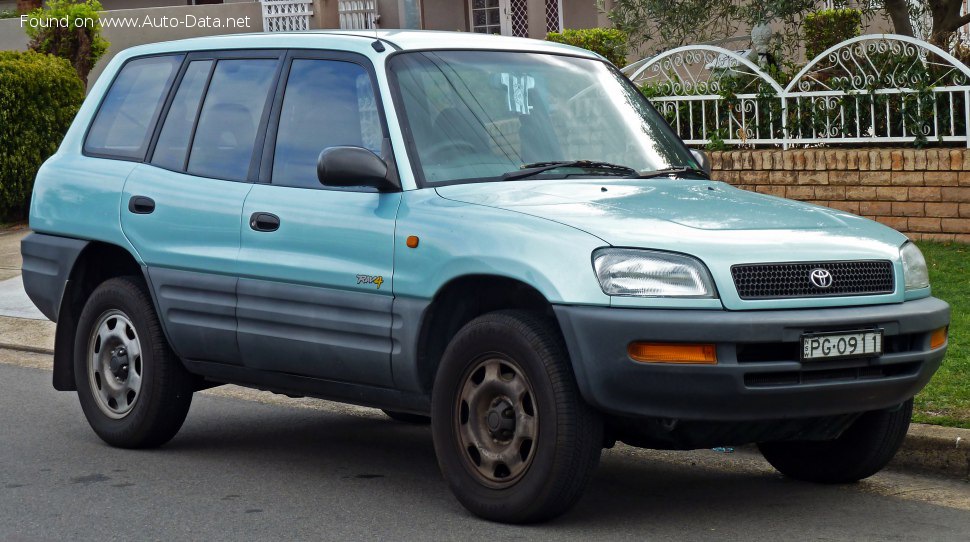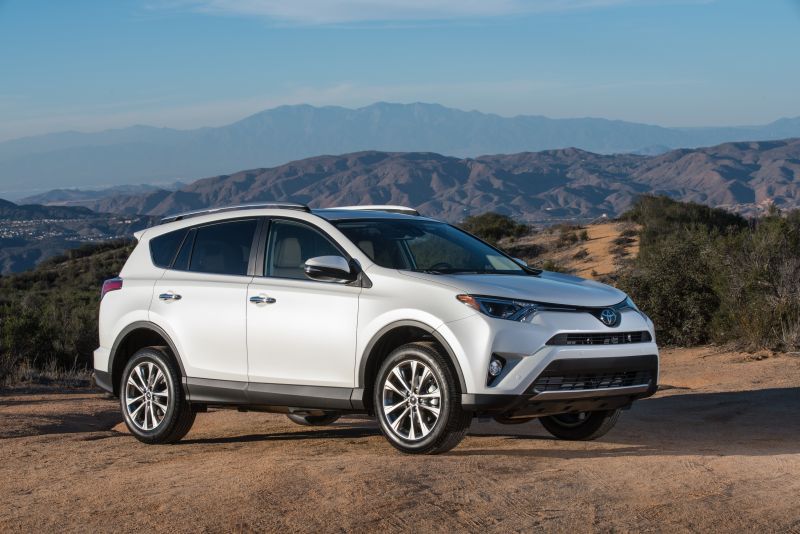
Toyota RAV4 IV (facelift 2015) 2.5 (176 Hp) Automatic
The Toyota RAV4, an acronym for “Recreational Activity Vehicle: 4-wheel drive,” has long been a trailblazer in the compact SUV segment. The fourth generation, introduced in 2013, received a significant refresh for the 2015 model year, carrying into the 2016-2018 production period. This updated model, particularly the Toyota RAV4 IV (facelift 2015) 2.5 (176 Hp) Automatic variant, continued to solidify the RAV4’s reputation as a practical, reliable, and fuel-efficient crossover. Designed primarily for the urban explorer and families seeking versatility without the bulk of a larger SUV, the facelifted RAV4 brought enhanced styling, improved interior quality, and refined driving dynamics to a highly competitive market segment.
Positioned as a global best-seller, the RAV4 IV (facelift 2015) retained its core appeal as a comfortable daily driver capable of light adventure. While this specific variant details a front-wheel-drive configuration, the RAV4 line offered all-wheel-drive options, further broadening its appeal. Its blend of car-like handling, generous cargo space, and Toyota’s renowned dependability made it a perennial favorite among consumers in North America and beyond. The 2015 facelift was instrumental in keeping the model fresh and competitive, bridging the gap until the arrival of the fifth-generation RAV4.
Engine and Performance of the Toyota RAV4 IV (facelift 2015) 2.5 (176 Hp) Automatic
At the heart of the Toyota RAV4 IV (facelift 2015) 2.5 (176 Hp) Automatic lies Toyota’s robust 2AR-FE engine, a 2.5-liter naturally aspirated inline-four cylinder unit. This powerplant is a staple in many Toyota models, known for its balance of power, efficiency, and exceptional reliability. With a displacement of 2,494 cubic centimeters (152.19 cubic inches), the engine delivers a respectable 176 horsepower at 6,000 revolutions per minute. Torque output stands at 233 Nm, or 171.85 lb.-ft., available at 4,100 rpm, providing ample thrust for daily driving, merging onto highways, and light towing duties.
The engine features a DOHC (Double Overhead Camshaft) valvetrain with VVT-i (Variable Valve Timing with intelligence), optimizing valve overlap for improved performance and fuel economy across the rev range. Fuel is delivered via a multi-port manifold injection system, a proven and reliable method for gasoline engines. With a compression ratio of 10.4:1 and four valves per cylinder, the 2AR-FE is engineered for smooth operation and longevity.
Power is channeled to the front wheels through a smooth-shifting 6-speed automatic transmission. This drivetrain architecture, while not offering the traction advantages of all-wheel drive, contributes to better fuel efficiency and a lighter curb weight. The vehicle’s weight-to-power ratio of 8.9 kg/Hp (112.3 Hp/tonne) and a weight-to-torque ratio of 6.7 kg/Nm (148.7 Nm/tonne) indicate a well-balanced power delivery for its class.
In terms of fuel economy, the Toyota RAV4 IV (facelift 2015) 2.5 (176 Hp) Automatic offered competitive figures for its segment. Urban consumption was rated at 10.2 liters per 100 kilometers (23.1 US mpg), while extra-urban driving could achieve 7.8-8.1 liters per 100 kilometers (30.2-29 US mpg). The combined cycle averaged 9.0-9.4 liters per 100 kilometers (26.1-25 US mpg), making it an economical choice for a compact SUV. The 60-liter (15.85 US gallon) fuel tank provided a practical cruising range for long trips.
Design and Features
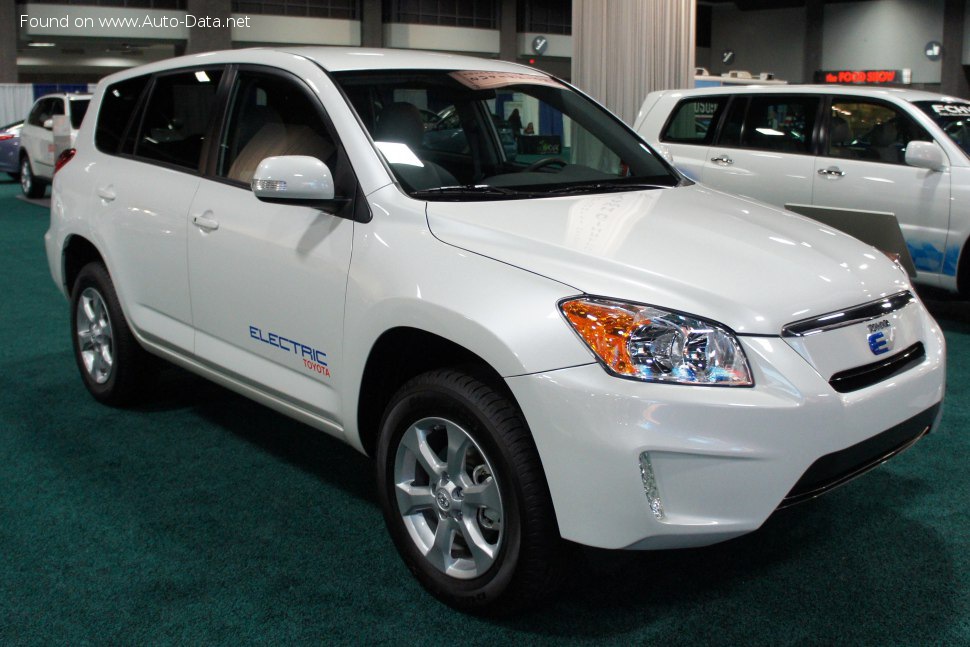
The 2015 facelift brought a more assertive and modern aesthetic to the RAV4 IV. The exterior received a comprehensive refresh, including a redesigned front fascia with a more prominent grille, sleeker headlights—often incorporating LED daytime running lights—and a restyled bumper. The rear was also updated with new taillights and a revised bumper, contributing to a more cohesive and upscale appearance. The SUV body type, with its five doors and five seats, emphasized practicality and ease of access for passengers and cargo.
Dimensionally, the RAV4 measured 4,661 mm (183.5 inches) in length, 1,844 mm (72.6 inches) in width, and 1,704-1,715 mm (67.09-67.52 inches) in height. Its wheelbase of 2,659 mm (104.69 inches) contributed to a stable ride and a spacious cabin. The ground clearance of 155 mm (6.1 inches) was adequate for navigating city streets and light unpaved roads, consistent with its crossover mission.
Inside, the RAV4 continued its focus on user-friendliness and comfort. The facelift introduced higher-quality materials, improved sound insulation, and an updated infotainment system, often featuring a touchscreen display, Bluetooth connectivity, and available navigation. Standard safety features for the era included ABS (Anti-lock Braking System), multiple airbags, and stability control systems, reinforcing its family-friendly credentials.
Utility was a strong suit for the RAV4. With the rear seats in place, it offered a substantial 1,087 liters (38.39 cubic feet) of trunk space. Folding the rear seats expanded this to an impressive 2,078 liters (73.38 cubic feet), rivaling larger SUVs and making it ideal for hauling luggage, groceries, or sports equipment. The vehicle’s kerb weight ranged from 1,567-1,597 kg (3,454.64-3,520.78 lbs), with a maximum permissible weight of 2,053 kg (4,526.09 lbs), allowing for a maximum load of 456-486 kg (1,005.31-1,071.45 lbs). It also had a permitted trailer load with brakes of 680 kg (1,499.14 lbs).
The suspension system featured an independent McPherson strut setup with coil springs and an anti-roll bar at the front, paired with a double wishbone rear suspension. This configuration provided a comfortable ride while maintaining competent handling characteristics. Braking was handled by ventilated discs at the front and solid discs at the rear, complemented by ABS for confident stopping power. Steering was managed by an electric power-assisted rack and pinion system, offering light effort for urban maneuvering.
Technical Specifications
| Category | Specification |
|---|---|
| General Information | |
| Brand | Toyota |
| Model | RAV4 |
| Generation | RAV4 IV (facelift 2015) |
| Engine Type | 2.5 (176 Hp) Automatic |
| Production Start | 2016 year |
| Production End | 2018 year |
| Powertrain Architecture | Internal Combustion Engine |
| Body Type | SUV |
| Seats | 5 |
| Doors | 5 |
| Performance Specifications | |
| Fuel Consumption (Urban) | 10.2 l/100 km (23.1 US mpg) |
| Fuel Consumption (Extra Urban) | 7.8-8.1 l/100 km (30.2 – 29 US mpg) |
| Fuel Consumption (Combined) | 9.0-9.4 l/100 km (26.1 – 25 US mpg) |
| Fuel Type | Petrol (Gasoline) |
| Weight-to-Power Ratio | 8.9 kg/Hp (112.3 Hp/tonne) |
| Weight-to-Torque Ratio | 6.7 kg/Nm (148.7 Nm/tonne) |
| Engine Specifications | |
| Power | 176 Hp @ 6000 rpm |
| Power per Liter | 70.6 Hp/l |
| Torque | 233 Nm @ 4100 rpm (171.85 lb.-ft. @ 4100 rpm) |
| Engine Layout | Front, Transverse |
| Engine Model/Code | 2AR-FE |
| Engine Displacement | 2494 cm³ (152.19 cu. in.) |
| Number of Cylinders | 4 |
| Engine Configuration | Inline |
| Cylinder Bore | 89.9 mm (3.54 in.) |
| Piston Stroke | 98 mm (3.86 in.) |
| Compression Ratio | 10.4:1 |
| Valves per Cylinder | 4 |
| Fuel Injection System | Multi-port manifold injection |
| Engine Aspiration | Naturally aspirated engine |
| Valvetrain | DOHC, VVT-i |
| Engine Oil Capacity | 4.4 l (4.65 US qt) |
| Coolant Capacity | 6.8 l (7.19 US qt) |
| Space, Volume, and Weights | |
| Kerb Weight | 1567-1597 kg (3454.64 – 3520.78 lbs) |
| Max. Weight | 2053 kg (4526.09 lbs) |
| Max. Load | 456-486 kg (1005.31 – 1071.45 lbs) |
| Trunk Space (Minimum) | 1087 l (38.39 cu. ft.) |
| Trunk Space (Maximum) | 2078 l (73.38 cu. ft.) |
| Fuel Tank Capacity | 60 l (15.85 US gal) |
| Permitted Trailer Load (with brakes, 12%) | 680 kg (1499.14 lbs) |
| Dimensions | |
| Length | 4661 mm (183.5 in.) |
| Width | 1844 mm (72.6 in.) |
| Height | 1704-1715 mm (67.09 – 67.52 in.) |
| Wheelbase | 2659 mm (104.69 in.) |
| Front Track | 1560-1570 mm (61.42 – 61.81 in.) |
| Rear Track | 1560-1570 mm (61.42 – 61.81 in.) |
| Ride Height (Ground Clearance) | 155 mm (6.1 in.) |
| Minimum Turning Circle | 10.6-11.2 m (34.78 – 36.75 ft.) |
| Approach Angle | 28° |
| Departure Angle | 20-21° |
| Drivetrain, Brakes, and Suspension | |
| Drivetrain Architecture | Internal Combustion Engine drives front wheels |
| Drive Wheel | Front wheel drive |
| Gearbox | 6 gears, automatic transmission |
| Front Suspension | Independent, McPherson with coil spring and anti-roll bar |
| Rear Suspension | Double wishbone |
| Front Brakes | Ventilated discs |
| Rear Brakes | Disc |
| Assisting Systems | ABS (Anti-lock Braking System) |
| Steering Type | Steering rack and pinion |
| Power Steering | Electric Steering |
| Tire Size | 225/65 R17; 235/55 R18 |
| Wheel Rims Size | 6.5J x 17; 7.5J x 18 |
Legacy and Market Impact
The Toyota RAV4 has consistently been a benchmark in the compact SUV segment since its inception. The fourth-generation model, and particularly the facelifted 2015-2018 variants like the Toyota RAV4 IV (facelift 2015) 2.5 (176 Hp) Automatic, played a crucial role in maintaining this dominance. Its legacy is built upon a foundation of unwavering reliability, a hallmark of the Toyota brand, coupled with practical functionality and strong resale value. For many consumers, the RAV4 represented a sensible and dependable choice, offering peace of mind and low ownership costs.
In the North American market, the RAV4 faced fierce competition from rivals such as the Honda CR-V, Nissan Rogue, Ford Escape, and Mazda CX-5. However, the RAV4 consistently held its own, often leading sales charts thanks to its spacious interior, comfortable ride, and reputation for trouble-free ownership. The 2015 facelift ensured it remained visually appealing and technologically relevant against newer entrants, proving that a solid, well-executed update could significantly extend a model’s competitive lifespan.
The RAV4’s impact is also evident in its role in popularizing the crossover concept, blurring the lines between traditional SUVs and passenger cars. It offered the elevated driving position and versatility of an SUV without the associated fuel economy penalties or cumbersome driving dynamics. This particular front-wheel-drive variant underscored its appeal to a broader audience who prioritized efficiency and urban maneuverability over off-road capability, though all-wheel-drive options were available for those needing extra traction.
The 2.5-liter engine, while not a powerhouse, was perfectly suited to the RAV4’s mission, providing adequate performance for most situations while delivering commendable fuel economy. This balance, combined with Toyota’s extensive dealer network and reputation for customer satisfaction, cemented the RAV4’s position as a segment leader. The 2015 facelifted RAV4 is remembered as a mature and highly competent iteration of a vehicle that has fundamentally shaped the automotive landscape and continues to be a top choice for families and individuals seeking a practical and dependable compact SUV. Its success paved the way for the even more advanced and diverse fifth-generation RAV4, including its popular hybrid and plug-in hybrid variants, further expanding its legacy of innovation and market relevance.