The Toyota RAV4 V 2.0 (175 Hp): A Global Contender in the Compact SUV Segment
The Toyota RAV4 V, representing the fifth generation of Toyota’s groundbreaking Recreational Activity Vehicle 4-wheel drive, introduced a bolder design and a more refined driving experience when it debuted in 2019. This specific variant, the Toyota RAV4 V 2.0 (175 Hp), manufactured from January 2019 to September 2021, served as a key model in numerous international markets, particularly in Europe and Asia, offering a traditional gasoline powertrain in a segment increasingly dominated by electrification. While the North American market primarily focused on the more potent 2.5-liter gasoline engine and the highly popular hybrid variants, this 2.0-liter, naturally aspirated, front-wheel-drive model with a manual transmission provided a compelling blend of efficiency, practicality, and Toyota’s renowned reliability to a diverse global audience.
Built on the Toyota New Global Architecture (TNGA-K) platform, the fifth-generation RAV4 represented a significant evolution from its predecessors. It moved towards a more rugged and truck-like aesthetic while retaining the car-like driving dynamics that made the RAV4 a pioneer in the compact SUV category. The 2.0-liter engine variant was strategically positioned to offer a balance of performance and fuel economy, catering to consumers who sought a conventional internal combustion engine option without sacrificing modern efficiency standards. Its design, engineering, and market positioning cemented its role as a versatile and globally significant vehicle within Toyota’s extensive lineup.
Engine and Performance of the Toyota RAV4 V
At the heart of the Toyota RAV4 V 2.0 (175 Hp) lies Toyota’s M20A-FKS engine, a sophisticated 2.0-liter (1987 cm³ or 121.25 cubic inches) inline-four cylinder unit. This naturally aspirated gasoline engine is a testament to Toyota’s engineering prowess, featuring a DOHC (Double Overhead Camshaft) valvetrain and a high compression ratio of 13:1. It employs an advanced fuel injection system that combines both direct injection and multi-port manifold injection, optimizing fuel delivery for both power and efficiency across the rev range. This setup contributes to cleaner emissions and improved fuel atomization.
The engine generates a respectable 175 horsepower at 6600 rpm, providing ample power for daily driving and highway cruising. Torque output stands at 153.41 lb.-ft. (208 Nm), available between 4300 and 5200 rpm, ensuring responsive acceleration and sufficient pulling power. Paired with a 6-speed manual transmission, this powertrain delivers an engaging driving experience, a rarity in the compact SUV segment during its production run. The RAV4 V 2.0 (175 Hp) accelerates from 0 to 60 mph in a brisk 9.3 seconds (or 0-100 km/h in 9.8 seconds) and can reach a maximum speed of 118 mph (190 km/h).
Fuel economy for this variant is impressive, thanks to the efficient engine design and manual transmission. The combined fuel consumption is rated at 38.6 to 39.2 US mpg (6.0-6.1 l/100 km). In urban driving conditions, it achieves 30.9 to 31.4 US mpg (7.5-7.6 l/100 km), while extra-urban (highway) driving yields an excellent 44.4 to 45.2 US mpg (5.2-5.3 l/100 km). These figures, combined with CO2 emissions of 138-140 g/km, highlight its compliance with the Euro 6 d-TEMP emission standard, making it a responsible choice for environmentally conscious drivers in its primary markets.
Design and Features
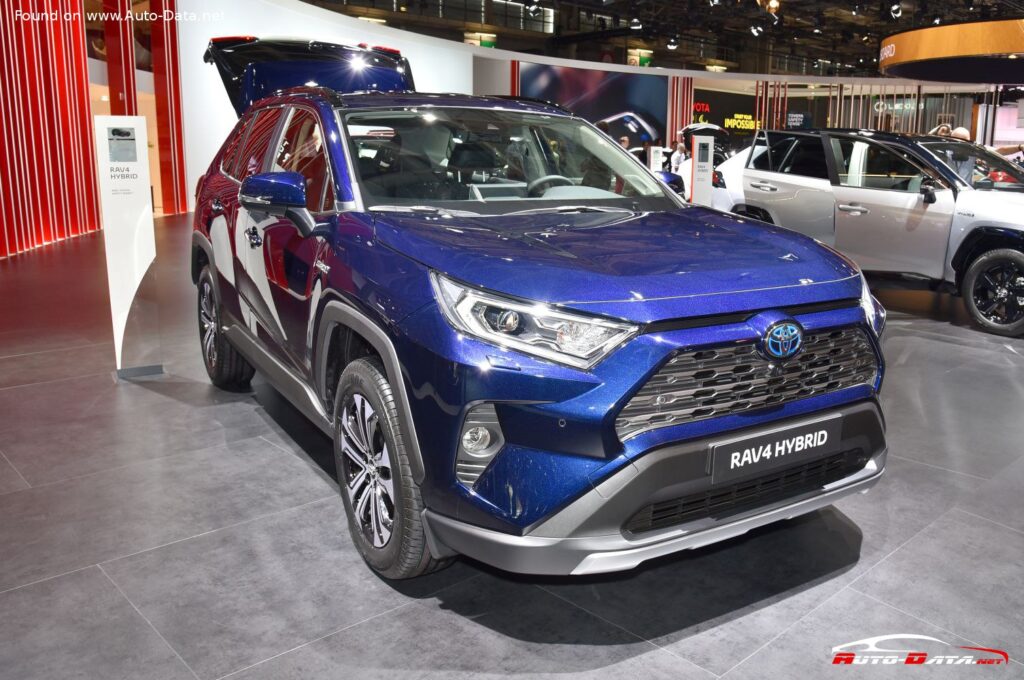
The fifth-generation Toyota RAV4 V marked a significant departure in design language from its predecessors, adopting a more angular, rugged, and muscular aesthetic inspired by Toyota’s truck lineup, such as the Tacoma and 4Runner. This SUV body type, with its 5 doors and seating for 5 occupants, exudes a confident and adventurous stance. Its dimensions—181.1 inches in length, 73.03 inches in width, and 66.34 inches in height, with a substantial 105.91-inch wheelbase—contribute to a spacious interior and a stable road presence. The ground clearance of 7.68 inches (195 mm) is adequate for light off-road excursions and navigating challenging urban terrain.
Inside, the RAV4 V prioritizes practicality and comfort. The cabin is designed with durable materials and thoughtful ergonomics. Cargo space is generous, offering a minimum of 20.48 cubic feet (580 liters) with all seats in place, expanding to an impressive 59.68 cubic feet (1690 liters) when the rear seats are folded down, making it highly versatile for families and adventurers alike. The fuel tank capacity of 14.53 US gallons (55 liters) provides a good cruising range.
From a chassis perspective, the RAV4 V 2.0 (175 Hp) features an independent McPherson strut front suspension with coil springs and an anti-roll bar, paired with a sophisticated double wishbone rear suspension. This setup provides a comfortable ride quality while maintaining responsive handling. Braking is handled by ventilated discs measuring 328 mm (12.91 inches) at the front and solid discs measuring 317 mm (12.48 inches) at the rear, complemented by an Anti-lock Braking System (ABS) for enhanced safety. The electric power steering, a rack and pinion system, offers precise control and ease of maneuverability, with a minimum turning circle of 38.71 feet (11.8 meters). While specific interior technology details are not provided in the raw data, as a 2019 model, it would have featured modern infotainment systems, connectivity options, and a suite of safety features typical of Toyota’s global offerings, even in entry-level trims.
Technical Specifications: Toyota RAV4 V 2.0 (175 Hp)
| Category | Specification |
|---|---|
General Information |
|
| Brand | Toyota |
| Model | RAV4 |
| Generation | RAV4 V |
| Engine Type | 2.0 (175 Hp) |
| Production Start | January, 2019 |
| Production End | September, 2021 |
| Powertrain Architecture | Internal Combustion Engine |
| Body Type | SUV |
| Seats | 5 |
| Doors | 5 |
Performance Specifications |
|
| Fuel Consumption (Urban) | 30.9 – 31.4 US mpg (7.5-7.6 l/100 km) |
| Fuel Consumption (Extra Urban) | 44.4 – 45.2 US mpg (5.2-5.3 l/100 km) |
| Fuel Consumption (Combined) | 38.6 – 39.2 US mpg (6.0-6.1 l/100 km) |
| CO2 Emissions | 138-140 g/km |
| Fuel Type | Petrol (Gasoline) |
| Acceleration 0-60 mph | 9.3 sec |
| Acceleration 0-100 km/h | 9.8 sec |
| Maximum Speed | 118.06 mph (190 km/h) |
| Emission Standard | Euro 6 d-TEMP |
| Weight-to-Power Ratio | 8.3 kg/Hp, 120.7 Hp/tonne |
| Weight-to-Torque Ratio | 7 kg/Nm, 143.4 Nm/tonne |
Engine Specifications |
|
| Power | 175 Hp @ 6600 rpm |
| Power per Liter | 88.1 Hp/l |
| Torque | 153.41 lb.-ft. @ 4300-5200 rpm (208 Nm) |
| Engine Layout | Front, Transverse |
| Engine Model/Code | M20A-FKS |
| Engine Displacement | 2.0 liters (1987 cm³, 121.25 cu. in.) |
| Number of Cylinders | 4 |
| Engine Configuration | Inline |
| Cylinder Bore | 3.17 in. (80.5 mm) |
| Piston Stroke | 3.84 in. (97.6 mm) |
| Compression Ratio | 13:1 |
| Valves per Cylinder | 4 |
| Fuel Injection System | Direct injection and Multi-port manifold injection |
| Engine Aspiration | Naturally aspirated engine |
| Valvetrain | DOHC |
| Engine Oil Capacity | 4.54 US qt (4.3 l) |
| Coolant Capacity | 6.76 US qt (6.4 l) |
| Engine Systems | Particulate filter |
Space, Volume and Weights |
|
| Kerb Weight | 3196.7 – 3450.23 lbs. (1450-1565 kg) |
| Max. Weight | 4519.48 lbs. (2050 kg) |
| Max Load | 1069.24 – 1322.77 lbs. (485-600 kg) |
| Trunk (Boot) Space – Minimum | 20.48 cu. ft. (580 l) |
| Trunk (Boot) Space – Maximum | 59.68 cu. ft. (1690 l) |
| Fuel Tank Capacity | 14.53 US gal (55 l) |
| Permitted Trailer Load with Brakes (12%) | 4409.25 lbs. (2000 kg) |
| Permitted Trailer Load without Brakes | 1653.47 lbs. (750 kg) |
Dimensions |
|
| Length | 181.1 in. (4600 mm) |
| Width | 73.03 in. (1855 mm) |
| Height | 66.34 in. (1685 mm) |
| Wheelbase | 105.91 in. (2690 mm) |
| Front Track | 63.39 in. (1610 mm) |
| Rear Track | 64.57 in. (1640 mm) |
| Front Overhang | 36.42 in. (925 mm) |
| Rear Overhang | 38.78 in. (985 mm) |
| Ride Height (Ground Clearance) | 7.68 in. (195 mm) |
| Drag Coefficient (Cd) | 0.32 |
| Minimum Turning Circle | 38.71 ft. (11.8 m) |
| Approach Angle | 17.5° |
| Departure Angle | 20° |
Drivetrain, Brakes and Suspension |
|
| Drivetrain Architecture | Front-wheel drive (ICE drives front wheels) |
| Drive Wheel | Front wheel drive |
| Number of Gears and Type of Gearbox | 6 gears, manual transmission |
| Front Suspension | Independent, McPherson with coil spring and anti-roll bar |
| Rear Suspension | Double wishbone |
| Front Brakes | Ventilated discs, 12.91 in. (328 mm) |
| Rear Brakes | Disc, 12.48 in. (317 mm) |
| Assisting Systems | ABS (Anti-lock braking system) |
| Steering Type | Steering rack and pinion |
| Power Steering | Electric Steering |
Legacy and Market Impact of the Toyota RAV4 V
The Toyota RAV4 has a long-standing legacy as one of the pioneers of the compact SUV segment, effectively creating the crossover category when it first launched in the mid-1990s. The fifth-generation Toyota RAV4 V, including the 2.0 (175 Hp) variant, continued this tradition of innovation and market leadership. Its introduction on the TNGA-K platform brought significant improvements in rigidity, handling, and ride comfort, elevating the driving experience to new levels for the model. The more aggressive and rugged styling also resonated strongly with consumers looking for an SUV that looked capable, even if its primary use was urban and suburban.
While the 2.0-liter, naturally aspirated, front-wheel-drive manual transmission variant was not a primary offering in the North American market, where the 2.5-liter gasoline and hybrid options dominated, it played a crucial role in other international markets. In regions like Europe, parts of Asia, and Australia, this specific powertrain configuration offered a compelling entry point into the RAV4 lineup. It appealed to buyers who preferred the direct engagement of a manual gearbox, or those for whom the hybrid premium was less attractive, but still desired the efficiency and reliability synonymous with the Toyota brand. Its Euro 6 d-TEMP compliance also made it a strong contender in markets with stringent emission regulations.
The RAV4 V competed fiercely with established rivals such as the Honda CR-V, Mazda CX-5, Nissan Qashqai (Rogue Sport), Volkswagen Tiguan, and Kia Sportage. Against these competitors, the RAV4 V 2.0 (175 Hp) distinguished itself with its proven Toyota reliability, strong resale values, and a well-balanced combination of fuel efficiency and practical performance. Its robust build quality and comprehensive safety features (including standard ABS and likely a suite of advanced driver-assistance systems depending on the market and trim level) further solidified its reputation as a dependable family vehicle.
The legacy of the Toyota RAV4 V 2.0 (175 Hp) lies in its ability to cater to a specific segment of the global market that still valued traditional gasoline powertrains and manual transmissions within the modern compact SUV landscape. It demonstrated Toyota’s commitment to offering diverse options to meet varied consumer preferences worldwide, all while upholding the core values of durability, efficiency, and safety that have made the RAV4 a global best-seller for decades. Its production run, though relatively short for this specific variant, contributed significantly to the overall success and widespread appeal of the fifth-generation RAV4, cementing its status as an iconic and influential vehicle in the automotive industry.