The Toyota RAV4 V 2.0 (175 Hp) AWD: A Global Compact SUV Stalwart
The Toyota RAV4 V 2.0 (175 Hp) AWD represents a significant iteration of one of the world’s most popular and influential compact sport utility vehicles (SUVs). Introduced in January 2019 as part of the fifth generation (XA50) RAV4, this particular variant, equipped with a 2.0-liter naturally aspirated engine and all-wheel drive, underscores Toyota’s commitment to offering a versatile and efficient vehicle for diverse global markets. While the RAV4 has always been a strong contender in the compact SUV segment, this generation, built on the Toyota New Global Architecture (TNGA-K) platform, brought a more rugged design, enhanced driving dynamics, and improved efficiency. This specific model, produced until September 2021, catered to markets where a conventional gasoline engine and a manual transmission remained highly desirable, distinguishing it slightly from the hybrid-focused lineup often seen in North America.
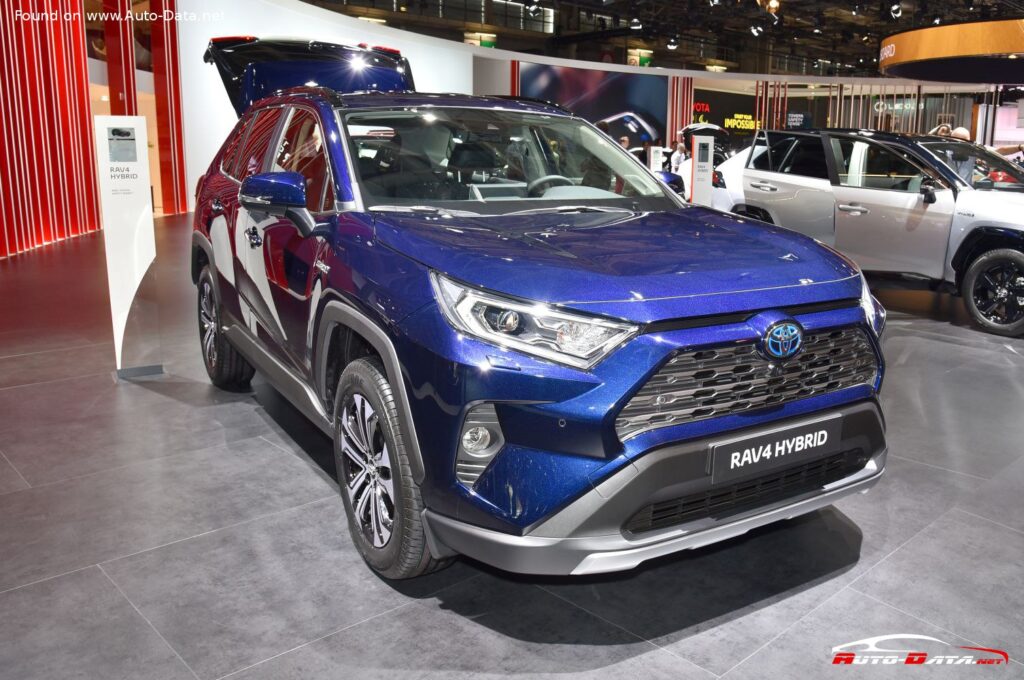
The RAV4 V’s introduction marked a pivotal moment for the nameplate, moving away from the softer, more car-like aesthetics of its predecessors towards a bolder, more truck-inspired design. Yet, it retained the car-like driving characteristics that made the original RAV4 a trailblazer, effectively blending SUV utility with passenger car comfort. This 2.0-liter AWD version embodies the core principles of the RAV4: reliability, practicality, and capable all-weather performance, making it a compelling choice for families and adventurers alike in its primary markets.
Engine and Performance: Powering the Toyota RAV4 V 2.0 (175 Hp) AWD
Under the hood, the Toyota RAV4 V 2.0 (175 Hp) AWD features Toyota’s M20A-FKS engine, a 2.0-liter (1987 cm³, or 121.25 cu. in.) inline-four gasoline unit. This naturally aspirated engine is a testament to Toyota’s engineering prowess, delivering a robust 175 horsepower at 6600 rpm. Its power per liter stands at 88.1 Hp/l, showcasing efficient power extraction for a non-turbocharged unit. Torque output is equally impressive for its displacement, peaking at 153.41 lb.-ft. (208 Nm) across a broad range from 4300 to 5200 rpm, which contributes to its flexible and responsive character in everyday driving.
The M20A-FKS engine benefits from a sophisticated fuel injection system, combining both direct injection and multi-port manifold injection. This dual-injection strategy optimizes fuel atomization and delivery, enhancing both performance and fuel efficiency across the engine’s operating range. With a high compression ratio of 13:1 and a DOHC (Double Overhead Camshaft) valvetrain with four valves per cylinder, the engine is designed for optimal combustion and breathing.
Paired with a 6-speed manual transmission, this powertrain allows the RAV4 V to achieve a respectable acceleration of 0 to 60 mph in approximately 9.4 seconds (0-100 km/h in 9.9 seconds). The top speed is rated at 118.06 mph (190 km/h), making it perfectly adequate for highway cruising and overtaking. Fuel economy figures are commendable for an all-wheel-drive SUV of this size and power, with a combined rating of 37.9 – 36.8 US mpg (6.2-6.4 l/100 km). Urban consumption is quoted at 30.5 – 30.2 US mpg, while extra-urban driving can yield up to 43.6 – 42.8 US mpg. These figures, coupled with CO2 emissions of 142-145 g/km and adherence to the Euro 6 d-TEMP emission standard, highlight its environmental consciousness for the period. The all-wheel-drive system ensures confident traction and stability, whether on slippery roads or light off-road trails.
Design and Features of the RAV4 V
The fifth-generation Toyota RAV4, including this 2.0-liter AWD variant, boasts a distinctive and assertive design language. Its body type is a classic SUV, featuring five doors and comfortable seating for five occupants. The exterior dimensions contribute to its commanding presence: a length of 181.1 inches (4600 mm), a width of 73.03 inches (1855 mm), and a height of 66.34 inches (1685 mm). The wheelbase measures 105.91 inches (2690 mm), providing a stable platform and contributing to a spacious cabin. With a ground clearance of 7.68 inches (195 mm), the RAV4 V offers ample clearance for navigating various road conditions, while approach and departure angles of 17.5° and 20° respectively hint at its mild off-road capabilities.
Inside, the RAV4 V focuses on ergonomics, quality materials, and practicality. The cabin is designed to be intuitive and user-friendly, with controls logically placed. Storage space is generous, and the rear seats offer comfortable accommodation for adults. Cargo capacity is a significant strong suit for the RAV4, offering a minimum trunk space of 20.48 cu. ft. (580 liters), which expands to an impressive 59.68 cu. ft. (1690 liters) with the rear seats folded down. This flexibility makes it ideal for hauling luggage, sports equipment, or everyday groceries.
Safety and driver assistance features are paramount in modern Toyota vehicles. While not exhaustively detailed in the raw data, as a contemporary model (2019-2021), this RAV4 V would typically be equipped with a comprehensive suite of active and passive safety systems. These would include multiple airbags, ABS (Anti-lock Braking System), and likely Toyota’s advanced driver-assistance systems (ADAS) such as pre-collision systems, adaptive cruise control, lane departure alerts, and road sign assist, depending on the market and trim level. The robust chassis, underpinned by independent McPherson strut front suspension and a double wishbone rear suspension, ensures a comfortable ride and predictable handling. Ventilated disc brakes up front (328 mm) and solid discs at the rear (317 mm) provide confident stopping power.
Technical Specifications: Toyota RAV4 V 2.0 (175 Hp) AWD
| General Information | |
|---|---|
| Brand | Toyota |
| Model | RAV4 |
| Generation | RAV4 V |
| Type (Engine) | 2.0 (175 Hp) AWD |
| Start of production | January, 2019 year |
| End of production | September, 2021 year |
| Powertrain Architecture | Internal Combustion engine |
| Body type | SUV |
| Seats | 5 |
| Doors | 5 |
| Performance Specs | |
| Fuel consumption (economy) – urban | 30.5 – 30.2 US mpg (7.7-7.8 l/100 km) |
| Fuel consumption (economy) – extra urban | 43.6 – 42.8 US mpg (5.4-5.5 l/100 km) |
| Fuel consumption (economy) – combined | 37.9 – 36.8 US mpg (6.2-6.4 l/100 km) |
| CO2 emissions | 142-145 g/km |
| Fuel Type | Petrol (Gasoline) |
| Acceleration 0 – 60 mph | 9.4 sec |
| Acceleration 0 – 100 km/h | 9.9 sec |
| Maximum speed | 118.06 mph (190 km/h) |
| Emission standard | Euro 6 d-TEMP |
| Weight-to-power ratio | 8.6 kg/Hp, 115.9 Hp/tonne |
| Weight-to-torque ratio | 7.3 kg/Nm, 137.7 Nm/tonne |
| Engine Specs | |
| Power | 175 Hp @ 6600 rpm. |
| Power per liter | 88.1 Hp/l |
| Torque | 153.41 lb.-ft. @ 4300-5200 rpm. (208 Nm) |
| Engine layout | Front, Transverse |
| Engine Model/Code | M20A-FKS |
| Engine displacement | 2.0 l (1987 cm³, 121.25 cu. in.) |
| Number of cylinders | 4 |
| Engine configuration | Inline |
| Cylinder Bore | 3.17 in. (80.5 mm) |
| Piston Stroke | 3.84 in. (97.6 mm) |
| Compression ratio | 13:1 |
| Number of valves per cylinder | 4 |
| Fuel injection system | Direct injection and Multi-port manifold injection |
| Engine aspiration | Naturally aspirated engine |
| Valvetrain | DOHC |
| Engine oil capacity | 4.54 US qt (4.3 l) |
| Coolant | 7.29 US qt (6.9 l) |
| Engine systems | Particulate filter |
| Space, Volume and Weights | |
| Kerb Weight | 3328.98 – 3560.47 lbs. (1510-1615 kg) |
| Max. weight | 4640.73 lbs. (2105 kg) |
| Max load | 1080.27 – 1311.75 lbs. (490-595 kg) |
| Trunk (boot) space – minimum | 20.48 cu. ft. (580 l) |
| Trunk (boot) space – maximum | 59.68 cu. ft. (1690 l) |
| Fuel tank capacity | 14.53 US gal (55 l) |
| Permitted trailer load with brakes (12%) | 4409.25 lbs. (2000 kg) |
| Permitted trailer load without brakes | 1653.47 lbs. (750 kg) |
| Dimensions | |
| Length | 181.1 in. (4600 mm) |
| Width | 73.03 in. (1855 mm) |
| Height | 66.34 in. (1685 mm) |
| Wheelbase | 105.91 in. (2690 mm) |
| Front track | 63.39 in. (1610 mm) |
| Rear (Back) track | 64.57 in. (1640 mm) |
| Front overhang | 36.42 in. (925 mm) |
| Rear overhang | 38.78 in. (985 mm) |
| Ride height (ground clearance) | 7.68 in. (195 mm) |
| Drag coefficient (Cd) | 0.32 |
| Minimum turning circle (turning diameter) | 38.71 ft. (11.8 m) |
| Approach angle | 17.5° |
| Departure angle | 20° |
| Drivetrain, Brakes and Suspension Specs | |
| Drive wheel | All wheel drive (4×4) |
| Number of gears and type of gearbox | 6 gears, manual transmission |
| Front suspension | Independent, type McPherson with coil spring and anti-roll bar |
| Rear suspension | Double wishbone |
| Front brakes | Ventilated discs, 328 mm |
| Rear brakes | Disc, 317 mm |
| Assisting systems | ABS (Anti-lock braking system) |
| Steering type | Steering rack and pinion |
| Power steering | Electric Steering |
Legacy and Market Impact of the Toyota RAV4 V
The Toyota RAV4’s legacy as one of the pioneers of the compact SUV segment is undeniable. Since its debut in the mid-1990s, it has consistently set benchmarks for reliability, practicality, and efficiency. The fifth-generation RAV4, including the 2.0-liter AWD manual variant, continued this tradition, solidifying its position as a global sales leader in the segment. While hybrid powertrains and automatic transmissions often dominate the North American market for the RAV4, this specific 2.0-liter gasoline engine with a manual gearbox played a crucial role in markets like Europe, Asia, and Australia, where such configurations remain popular for their engaging driving experience and sometimes lower entry price points.
In its primary markets, the Toyota RAV4 V 2.0 (175 Hp) AWD faced stiff competition from a diverse array of compact SUVs. Key rivals included the Honda CR-V, Volkswagen Tiguan, Nissan Qashqai (Rogue Sport in some markets), Hyundai Tucson, Kia Sportage, and Mazda CX-5. What allowed the RAV4 to stand out was its reputation for bulletproof reliability, strong resale value, and Toyota’s extensive dealer network. The fifth generation’s more rugged styling also resonated with buyers looking for a more traditional SUV aesthetic combined with modern car dynamics.
The TNGA-K platform was a game-changer for the RAV4 V, significantly improving its chassis rigidity, handling, and ride comfort. This architectural shift allowed Toyota to imbue the RAV4 with a more engaging driving character than previous generations, without sacrificing its renowned comfort and refinement. The availability of an efficient naturally aspirated engine, paired with a manual transmission, offered a direct and connected driving experience that appealed to enthusiasts and practical drivers alike who preferred more control over their vehicle’s power delivery.
The RAV4’s success is not just about sales figures; it’s about its influence on the automotive landscape. It effectively demonstrated that SUVs could be practical family vehicles, fuel-efficient, and comfortable for daily commuting, rather than just rugged off-roaders. The 2.0-liter AWD variant of the fifth generation reinforced this versatility, offering a compelling blend of performance, economy, and all-weather capability. Its production run from 2019 to 2021 saw it maintain its competitive edge, contributing to the RAV4’s enduring legacy as a benchmark in the compact SUV segment and a testament to Toyota’s commitment to diverse powertrain offerings for its global customer base.