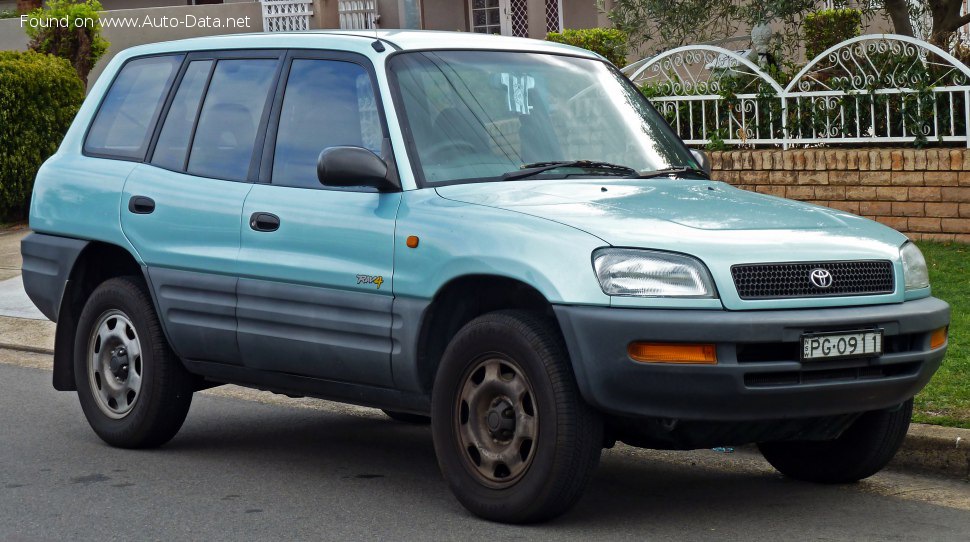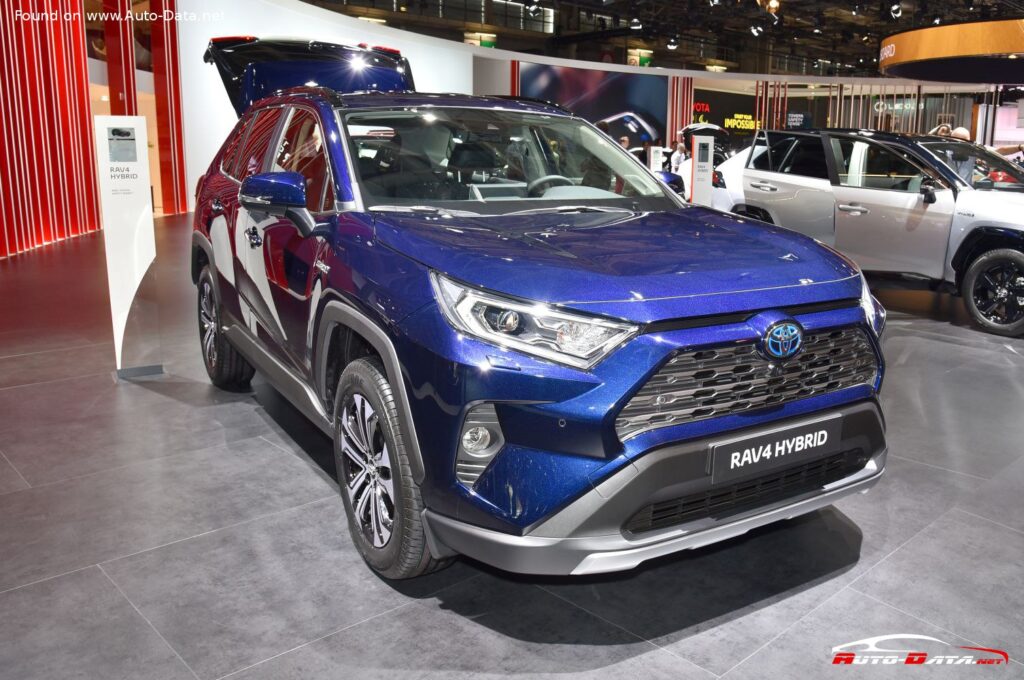
Introduction to the Toyota RAV4 V 2.5 (200 Hp) AWD Automatic
The Toyota RAV4, a pioneer in the compact SUV segment, has consistently evolved to meet the demands of a global market craving versatility, reliability, and efficiency. The fifth generation, known internally as the XA50 series, represented a significant leap forward for the nameplate, embracing Toyota’s New Global Architecture (TNGA-K) platform. The specific variant under review, the Toyota RAV4 V 2.5 (200 Hp) AWD Automatic, produced from November 2019 to September 2021, embodies this generation’s commitment to a more engaging driving experience, enhanced capability, and modern aesthetics.
Positioned as a mainstream compact SUV, the RAV4 V competes in one of the most fiercely contested automotive segments, particularly in the North American market. This iteration of the RAV4 aimed to break away from its traditionally conservative image, adopting a more rugged and adventurous design language while retaining its core values of practicality and fuel economy. This particular 2.5-liter, 200 horsepower, all-wheel-drive model with an automatic transmission offered a compelling blend of power, all-weather capability, and the renowned Toyota dependability that consumers have come to expect. It played a crucial role in maintaining the RAV4’s dominance and appeal to a broad spectrum of buyers, from urban commuters to adventurous families seeking a capable and comfortable vehicle.
Engine & Performance: The Heart of the Toyota RAV4 V 2.5 (200 Hp) AWD Automatic
At the core of this variant of the Toyota RAV4 V 2.5 (200 Hp) AWD Automatic is a robust and efficient 2.5-liter inline-four gasoline engine, internally designated as the A25A-FKS. This naturally aspirated powerhouse delivers a respectable 200 horsepower at 6600 rpm, showcasing Toyota’s mastery in extracting significant power from a non-turbocharged unit. With a compression ratio of 13:1 and direct fuel injection, the engine is designed for optimal combustion efficiency, contributing to both its power output and fuel economy figures. Torque peaks at 243 Nm (179.23 lb.-ft.) across a broad range of 4000-5000 rpm, providing ample pulling power for various driving conditions.
The engine’s power is seamlessly managed by an advanced 8-speed automatic transmission, which is meticulously calibrated to provide smooth shifts and maximize efficiency. This transmission works in conjunction with Toyota’s intelligent All-Wheel Drive (AWD) system, ensuring excellent traction and stability in diverse environments, from slippery roads to light off-road trails. The combination allows the RAV4 V 2.5 (200 Hp) AWD Automatic to accelerate from 0 to 60 mph in a brisk 8.1 seconds, with a top speed electronically limited to 124.27 mph (200 km/h). These performance figures position it competitively within its segment, offering a satisfying blend of responsiveness for daily driving and enough grunt for highway passing.
Fuel efficiency is another strong suit for this powertrain. Despite its AWD system and respectable horsepower, the RAV4 V 2.5 (200 Hp) AWD Automatic achieves a combined fuel economy of 7.2 l/100 km, which translates to an impressive 32.7 US mpg. Urban consumption is rated at 9.2 l/100 km (25.6 US mpg), while extra-urban driving yields an even more efficient 6.0 l/100 km (39.2 US mpg). These figures underscore Toyota’s commitment to environmental responsibility, with CO2 emissions rated at 163 g/km, meeting Euro 5 emission standards. The vehicle also boasts a favorable weight-to-power ratio of 8.4 kg/Hp (119 Hp/tonne), highlighting its efficient power delivery relative to its curb weight, which ranges from 3703.77 to 3714.79 lbs (1680-1685 kg).
Design & Features
The fifth-generation Toyota RAV4 marked a significant departure from its predecessors in terms of design. Adopting a more rugged and angular aesthetic, the RAV4 V presented a bolder and more adventurous stance, aligning with the growing trend for SUVs that look capable as well as practical. This design philosophy is evident in its prominent grille, sharp lines, and flared wheel arches, giving it a commanding presence on the road. As an SUV, it features a 5-door, 5-seat configuration, prioritizing passenger comfort and cargo versatility.
Measuring 181.1 inches (4600 mm) in length, 73.03 inches (1855 mm) in width, and 66.54 inches (1690 mm) in height, the RAV4 V offers a substantial footprint without being overly cumbersome for urban environments. Its 105.91-inch (2690 mm) wheelbase contributes to a stable ride and generous interior space. With a ground clearance of 7.87 inches (200 mm), it is well-equipped to handle various road conditions and light off-road excursions. The interior is designed with practicality and comfort in mind, featuring high-quality materials and an intuitive layout. Key features for this era would include a modern infotainment system, advanced driver-assistance systems (though specific details are not provided in the raw data, ABS is confirmed), and a focus on ergonomic design for both driver and passengers.
Cargo capacity is a strong selling point for the RAV4, with a minimum trunk space of 20.48 cubic feet (580 liters), expandable for larger items. The vehicle also offers considerable towing capabilities, with a permitted trailer load of 3306.93 lbs (1500 kg) with brakes, and 1653.47 lbs (750 kg) without brakes, further enhancing its utility for active lifestyles. The suspension system, featuring independent McPherson struts with coil springs and an anti-roll bar at the front and independent coil springs at the rear, ensures a comfortable and composed ride, absorbing road imperfections effectively. Braking performance is handled by ventilated discs at the front and solid discs at the rear, complemented by an Anti-lock Braking System (ABS) for enhanced safety. The electric power steering system provides precise control and ease of maneuverability, with a minimum turning circle of 36.09 feet (11.0 m). Standard tire size is 225/60 R18, balancing grip and ride comfort.
Technical Specifications
| Category | Specification | Value |
|---|---|---|
General Information |
||
| Brand | Toyota | |
| Model | RAV4 | |
| Generation | RAV4 V | |
| Type (Engine) | 2.5 (200 Hp) AWD Automatic | |
| Start of production | November, 2019 | |
| End of production | September, 2021 | |
| Powertrain Architecture | Internal Combustion engine | |
| Body type | SUV | |
| Seats | 5 | |
| Doors | 5 | |
Performance Specifications |
||
| Fuel consumption (economy) – urban | 9.2 l/100 km (25.6 US mpg) | |
| Fuel consumption (economy) – extra urban | 6.0 l/100 km (39.2 US mpg) | |
| Fuel consumption (economy) – combined | 7.2 l/100 km (32.7 US mpg) | |
| CO2 emissions | 163 g/km | |
| Fuel Type | Petrol (Gasoline) | |
| Acceleration 0 – 60 mph | 8.1 sec | |
| Acceleration 0 – 100 km/h | 8.5 sec | |
| Maximum speed | 200 km/h (124.27 mph) | |
| Emission standard | Euro 5 | |
| Weight-to-power ratio | 8.4 kg/Hp (119 Hp/tonne) | |
| Weight-to-torque ratio | 6.9 kg/Nm (144.6 Nm/tonne) | |
Engine Specifications |
||
| Power | 200 Hp @ 6600 rpm | |
| Power per liter | 80.4 Hp/l | |
| Torque | 243 Nm @ 4000-5000 rpm (179.23 lb.-ft.) | |
| Engine layout | Front, Transverse | |
| Engine Model/Code | A25A-FKS | |
| Engine displacement | 2487 cm3 (2.5 liters / 151.77 cu. in.) | |
| Number of cylinders | 4 | |
| Engine configuration | Inline | |
| Cylinder Bore | 87.5 mm (3.44 in.) | |
| Piston Stroke | 103.5 mm (4.07 in.) | |
| Compression ratio | 13:1 | |
| Number of valves per cylinder | 4 | |
| Fuel injection system | Direct injection | |
| Engine aspiration | Naturally aspirated engine | |
| Valvetrain | DOHC | |
| Engine oil capacity | 4.5 l (4.76 US qt) | |
| Engine oil specification | Not specified | |
| Coolant capacity | 6.9 l (7.29 US qt) | |
| Engine systems | Particulate filter | |
Space, Volume and Weights |
||
| Kerb Weight | 1680-1685 kg (3703.77 – 3714.79 lbs.) | |
| Max. weight | 2125 kg (4684.82 lbs.) | |
| Max load | 440-445 kg (970.03 – 981.06 lbs.) | |
| Trunk (boot) space – minimum | 580 l (20.48 cu. ft.) | |
| Fuel tank capacity | 55 l (14.53 US gal) | |
| Permitted trailer load with brakes (12%) | 1500 kg (3306.93 lbs.) | |
| Permitted trailer load without brakes | 750 kg (1653.47 lbs.) | |
Dimensions |
||
| Length | 4600 mm (181.1 in.) | |
| Width | 1855 mm (73.03 in.) | |
| Height | 1690 mm (66.54 in.) | |
| Wheelbase | 2690 mm (105.91 in.) | |
| Front track | 1600 mm (62.99 in.) | |
| Rear (Back) track | 1630 mm (64.17 in.) | |
| Front overhang | 925 mm (36.42 in.) | |
| Rear overhang | 985 mm (38.78 in.) | |
| Ride height (ground clearance) | 200 mm (7.87 in.) | |
| Minimum turning circle (turning diameter) | 11.0 m (36.09 ft.) | |
Drivetrain, Brakes and Suspension Specifications |
||
| Drive wheel | All wheel drive (4×4) | |
| Number of gears and type of gearbox | 8 gears, automatic transmission | |
| Front suspension | Independent, type McPherson with coil spring and anti-roll bar | |
| Rear suspension | Independent coil spring | |
| Front brakes | Ventilated discs | |
| Rear brakes | Disc | |
| Assisting systems | ABS (Anti-lock braking system) | |
| Steering type | Steering rack and pinion | |
| Power steering | Electric Steering | |
| Tires size | 225/60 R18 | |
Legacy & Market Impact
The Toyota RAV4 has a long and storied legacy, dating back to its introduction in 1994 as one of the original compact crossover SUVs. The fifth-generation RAV4, including the 2.5 (200 Hp) AWD Automatic variant, continued to build upon this foundation, solidifying its position as a segment leader. In the North American market, where the RAV4 consistently ranks among the best-selling vehicles, this generation was particularly impactful. It successfully navigated a market shift towards more rugged, SUV-like aesthetics, moving away from the softer, car-like styling of some previous iterations. This bold new design, combined with Toyota’s reputation for unwavering reliability and strong resale values, ensured its continued popularity.
The 2.5-liter naturally aspirated engine, while not offering the turbocharged punch of some competitors, provided a smooth, dependable, and efficient power delivery that resonated with a wide audience. Its 200 horsepower output was more than adequate for most daily driving scenarios and highway cruising, while the standard 8-speed automatic transmission and capable all-wheel-drive system enhanced its appeal for those living in varied climates or seeking light off-road adventures.
Competitors in this highly competitive segment include formidable rivals such as the Honda CR-V, Mazda CX-5, Nissan Rogue, Subaru Forester, and Ford Escape. Against these contenders, the RAV4 V differentiated itself with its distinctive styling, the proven reliability of its TNGA-K platform, and a comprehensive suite of safety features (typical for Toyota models of this era, even if not explicitly detailed in the provided data beyond ABS). Its strong fuel economy, especially the combined 32.7 US mpg, was a significant draw for cost-conscious consumers.
Historically, the RAV4’s significance lies in its pioneering role in the compact SUV segment and its consistent ability to adapt to changing consumer preferences. The fifth generation, with its more assertive styling and focus on both efficiency and capability, reinforced its status as a benchmark. The Toyota RAV4 V 2.5 (200 Hp) AWD Automatic variant, in particular, represented a sweet spot in the lineup, offering a compelling blend of performance, practicality, and Toyota’s hallmark quality, ensuring its enduring relevance and strong market presence throughout its production run and for years to come on the used vehicle market. Its success underscores the continued demand for versatile, reliable, and efficient compact SUVs that can handle the demands of modern life.