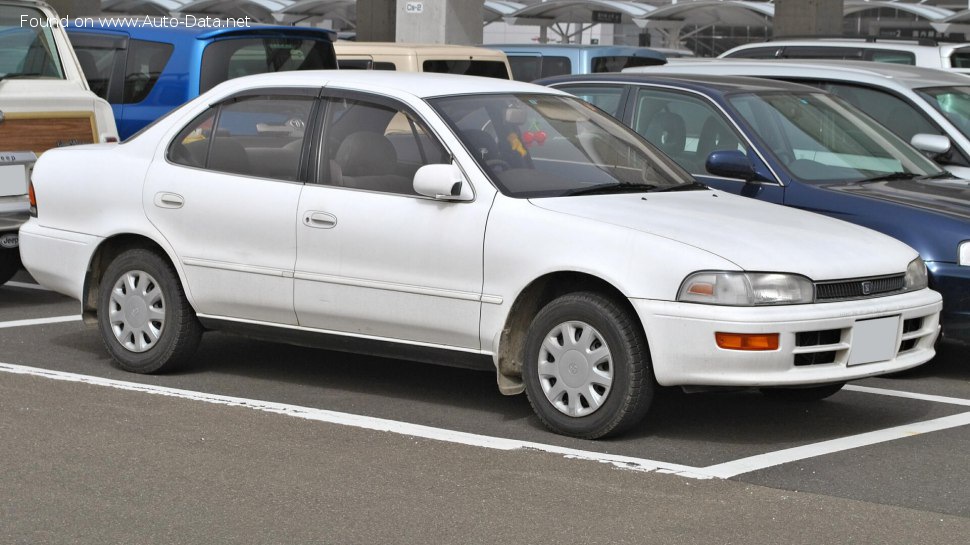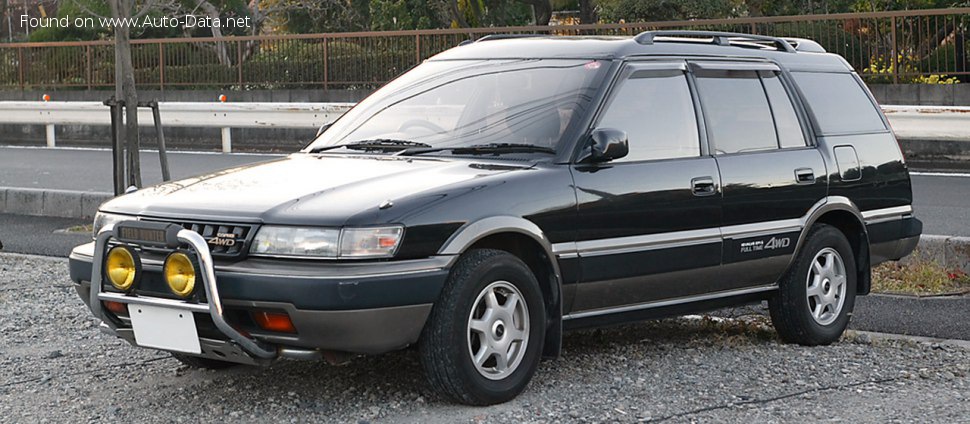
The Toyota Sprinter Carib 1.6i (110 Hp), a distinctive and highly practical station wagon, represents a significant chapter in Toyota’s history of producing reliable and versatile vehicles. Primarily marketed in Japan and other select international markets, particularly Europe, from its introduction in 1987 through its production run until 1995, the Sprinter Carib carved out a niche for itself as a robust and economical family hauler. This particular generation, often associated with the AE95 chassis code, was part of the Corolla/Sprinter lineage, renowned globally for its durability and engineering integrity. While not widely sold in the United States, its design philosophy and mechanical underpinnings share much with the contemporary Corolla models that cemented Toyota’s reputation for dependability stateside. The Sprinter Carib was designed to offer a blend of passenger comfort, cargo utility, and efficient performance, making it an ideal choice for families and individuals seeking a dependable daily driver capable of handling a variety of tasks.
Engineering and Performance of the Toyota Sprinter Carib
At the heart of the Toyota Sprinter Carib 1.6i (110 Hp) lies a meticulously engineered powertrain designed for efficiency and longevity. This variant features a 1.6-liter (1598 cm3 or 97.52 cu. in.) naturally aspirated, inline four-cylinder engine. A key highlight of this engine is its Double Overhead Camshaft (DOHC) valvetrain with four valves per cylinder, a relatively advanced feature for a mainstream compact vehicle of its era. This configuration allows for optimized airflow and combustion, contributing to both power output and fuel efficiency. The engine delivers a respectable 110 horsepower at 6000 revolutions per minute (rpm), translating to a power per liter ratio of 68.8 Hp/l. Torque is equally impressive for its displacement, peaking at 150 Nm (110.63 lb.-ft.) at 4800 rpm, providing ample pulling power for daily driving and light hauling.
The engine’s layout is front, transverse, driving the front wheels through a 5-speed manual transmission. This front-wheel-drive (FWD) architecture was a common and efficient choice for compact vehicles of the time, offering good traction in varying conditions and maximizing interior space. The compression ratio stands at 10.5:1, indicating a well-tuned engine designed to extract maximum energy from regular gasoline (petrol) fuel. Fuel delivery is handled by a multi-port manifold injection system, a significant upgrade over earlier carbureted systems, providing precise fuel metering for improved performance, emissions, and cold-start reliability. The overall powertrain architecture emphasizes a balance of performance and economy, with a weight-to-power ratio of 10.9 kg/Hp (91.7 Hp/tonne) and a weight-to-torque ratio of 8 kg/Nm (125 Nm/tonne), suggesting a lively yet manageable driving experience for its class.
Design and Features
The Toyota Sprinter Carib adopts a classic station wagon (or estate) body type, a design choice that prioritizes practicality and utility. With five doors and seating for five occupants, it was inherently designed to be a versatile family vehicle. Its exterior dimensions – a length of 4380 mm (172.44 in.), a width of 1655 mm (65.16 in.), and a height of 1450 mm (57.09 in.) – position it firmly within the compact segment, making it maneuverable in urban environments while still offering a generous interior for both passengers and cargo. The 2430 mm (95.67 in.) wheelbase contributes to a stable ride, and the relatively tight minimum turning circle of 9.8 meters (32.15 ft.) further enhances its city driving credentials.
From a design perspective, the Sprinter Carib featured a clean, functional aesthetic characteristic of Toyota vehicles from the late 1980s and early 1990s. Its boxy yet aerodynamic profile maximized interior volume, particularly the rear cargo area, which was a primary selling point for station wagons. The vehicle’s kerb weight of 1200 kg (2645.55 lbs.) indicates a robust yet not overly heavy construction, contributing to its fuel efficiency and handling characteristics. Safety features for the era included ventilated disc brakes at the front, offering superior stopping power compared to solid discs, complemented by traditional drum brakes at the rear. The vehicle rode on 185/70 R13 tires mounted on 5J x 13 wheel rims, a common and practical tire and wheel combination for a vehicle of this size and intended purpose, providing a comfortable ride and predictable handling. The fuel tank capacity of 50 liters (13.21 US gallons) offered a decent range, suitable for both daily commuting and longer journeys without frequent stops for refueling.
The interior, while functional, focused on durability and ease of use, with controls and instrumentation laid out logically. The five-seat configuration provided ample space for a small family, and the rear seats likely folded down to further expand the cargo capacity, a hallmark of station wagon utility. Given its market positioning, the Sprinter Carib prioritized reliability and affordability over luxury, offering essential features that were well-executed and long-lasting. It embodied Toyota’s philosophy of building cars that simply worked, day in and day out, contributing to its strong reputation in markets where it was sold.
Technical Specifications: Toyota Sprinter Carib 1.6i (110 Hp)
| Brand | Toyota |
| Model | Sprinter |
| Generation | Sprinter Carib |
| Type (Engine) | 1.6i (110 Hp) |
| Start of production | 1987 year |
| End of production | 1995 year |
| Powertrain Architecture | Internal Combustion engine |
| Body type | Station wagon (estate) |
| Seats | 5 |
| Doors | 5 |
| Fuel Type | Petrol (Gasoline) |
| Weight-to-power ratio | 10.9 kg/Hp, 91.7 Hp/tonne |
| Weight-to-torque ratio | 8 kg/Nm, 125 Nm/tonne |
| Power | 110 Hp @ 6000 rpm |
| Power per liter | 68.8 Hp/l |
| Torque | 150 Nm @ 4800 rpm (110.63 lb.-ft. @ 4800 rpm) |
| Engine layout | Front, Transverse |
| Engine displacement | 1598 cm3 (97.52 cu. in.) |
| Number of cylinders | 4 |
| Engine configuration | Inline |
| Cylinder Bore | 79 mm (3.11 in.) |
| Piston Stroke | 81.5 mm (3.21 in.) |
| Compression ratio | 10.5:1 |
| Number of valves per cylinder | 4 |
| Fuel injection system | Multi-port manifold injection |
| Engine aspiration | Naturally aspirated engine |
| Valvetrain | DOHC |
| Kerb Weight | 1200 kg (2645.55 lbs.) |
| Fuel tank capacity | 50 l (13.21 US gal) |
| Length | 4380 mm (172.44 in.) |
| Width | 1655 mm (65.16 in.) |
| Height | 1450 mm (57.09 in.) |
| Wheelbase | 2430 mm (95.67 in.) |
| Front track | 1440 mm (56.69 in.) |
| Rear (Back) track | 1380 mm (54.33 in.) |
| Minimum turning circle (turning diameter) | 9.8 m (32.15 ft.) |
| Drivetrain Architecture | The Internal combustion engine (ICE) drives the front wheels of the vehicle. |
| Drive wheel | Front wheel drive |
| Number of gears and type of gearbox | 5 gears, manual transmission |
| Front brakes | Ventilated discs |
| Rear brakes | Drum |
| Tires size | 185/70 R13 |
| Wheel rims size | 5J x 13 |