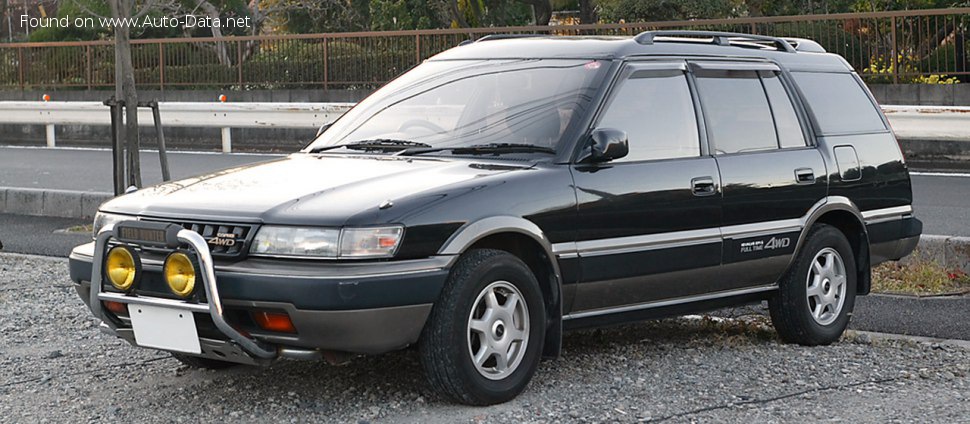
The Toyota Sprinter Carib 1.6i (110 Hp) represents a significant chapter in Toyota’s history of producing versatile and dependable vehicles for the Japanese domestic market (JDM) and select international regions. Spanning its production run from 1995 to 2002, this particular generation of the Sprinter Carib solidified its reputation as a highly practical and efficient station wagon, catering to families and individuals seeking utility without compromising on Toyota’s renowned reliability. Positioned within the compact segment, it offered a compelling blend of spaciousness, fuel economy, and a straightforward, functional design, making it a popular choice in its primary markets where such attributes were highly valued. Unlike many of its contemporaries, the Sprinter Carib was not officially sold in the United States, carving out its niche in regions where compact, durable wagons were a cornerstone of everyday transportation.
The Toyota Sprinter Carib: A Practical Performer
The Toyota Sprinter Carib was conceived as an evolution of the Sprinter line, specifically designed to meet the growing demand for multi-purpose vehicles that offered more cargo space than traditional sedans, but were more car-like to drive than larger SUVs. This generation, produced from 1995 to 2002, epitomized this philosophy. It was built on a robust and proven platform, sharing components with other successful Toyota models of the era, which contributed to its inherent dependability and ease of maintenance. The “Carib” designation itself hinted at a vehicle ready for adventure, though its core appeal lay in its everyday utility. Its five-door station wagon body style, with seating for five occupants, provided ample room for passengers and luggage, making it an ideal family vehicle or a practical workhorse for small businesses. The market segment it occupied was fiercely competitive, but the Sprinter Carib distinguished itself through its pragmatic approach, offering sensible engineering and a focus on long-term ownership value rather than flashy aesthetics or extreme performance.
Its design language, while unmistakably Toyota of the mid-to-late 1990s, leaned towards understated functionality. Smooth lines, a relatively compact footprint, and a purposeful stance defined its exterior, reflecting a period when automotive design prioritized aerodynamics and interior volume. The vehicle’s dimensions – a length of 171.65 inches, a width of 66.54 inches, and a height of 58.66 inches – allowed for easy maneuverability in urban environments while still providing a comfortable ride on longer journeys. The wheelbase of 97.05 inches contributed to a stable ride and maximized interior space within its compact exterior. Toyota’s engineering philosophy for the Sprinter Carib was clearly centered on creating a vehicle that was easy to live with, offering predictable handling and a comfortable, albeit not luxurious, cabin experience. This focus on practicality and reliability ensured its enduring popularity throughout its production run and beyond, cementing its status as a workhorse in its respective markets.
Powertrain and Performance Dynamics
At the heart of the Toyota Sprinter Carib 1.6i (110 Hp) was a meticulously engineered 1.6-liter naturally aspirated internal combustion engine. This inline four-cylinder unit, displacing 1587 cubic centimeters (96.84 cu. in.), was a testament to Toyota’s mastery of efficient and durable small-displacement engines. Featuring a Double Overhead Camshaft (DOHC) valvetrain with four valves per cylinder, it was designed for smooth operation and respectable power delivery. The engine produced a peak output of 110 horsepower at 6000 rpm, which for a compact station wagon of its era, provided ample motivation for daily driving tasks. This power output translated to a healthy 69.3 horsepower per liter, indicating an efficient design for its time. Torque figures stood at 145 Newton-meters (106.95 lb.-ft.) at 4800 rpm, ensuring sufficient pulling power for merging onto highways or navigating inclines, especially when laden with passengers or cargo.
Fuel delivery was managed by a multi-port manifold injection system, a sophisticated technology for the mid-90s that offered precise fuel metering, contributing to both efficiency and reduced emissions. The engine’s compression ratio of 9.5:1 was well-suited for regular gasoline. With a cylinder bore of 3.19 inches and a piston stroke of 3.03 inches, the engine exhibited a slightly oversquare design, generally favoring higher-revving characteristics and good power output. The powertrain architecture was front-transverse, driving the front wheels through a five-speed manual transmission. This front-wheel-drive (FWD) setup was a common and effective choice for compact cars, offering packaging efficiency, good traction in various conditions, and a straightforward driving experience. The combination of a relatively light curb weight of 2403.04 lbs. (1090 kg) and its 110 horsepower engine resulted in a weight-to-power ratio of 9.9 kg/Hp, or 100.9 Hp/tonne, indicating a lively and economical performance for a vehicle of its class and purpose. The Sprinter Carib was not engineered for outright speed, but rather for reliable, economical, and predictable performance, attributes it delivered consistently throughout its production lifespan.
Design, Ergonomics, and Features
The design of the Toyota Sprinter Carib 1.6i (110 Hp) was characterized by its emphasis on utility and spaciousness. As a five-door station wagon, its primary function was to transport people and cargo efficiently. The exterior styling was clean and unadorned, reflecting the prevailing design trends of the mid-1990s, where practicality often took precedence over extravagant aesthetics. Its relatively upright stance and expansive glass area contributed to excellent outward visibility, a key safety and convenience feature. The body-colored bumpers and subtle grille were integrated seamlessly, giving the vehicle a cohesive and unpretentious look.
Inside, the Sprinter Carib was designed with user-friendliness in mind. The cabin offered comfortable seating for five adults, with a focus on durable materials and straightforward ergonomics. The dashboard layout was logical, with easily accessible controls for the climate system and audio. While specific luxury features might have varied by trim level in its domestic market, the core offering focused on functionality: ample storage compartments, practical cup holders, and a versatile cargo area. The rear seats typically featured a split-folding design, allowing owners to extend the already generous cargo volume when needed, transforming it from a passenger carrier to a capable hauler. This adaptability was a cornerstone of the station wagon’s appeal, making it suitable for everything from grocery runs to weekend excursions requiring extra gear. Safety features for the era would have included standard seatbelts for all occupants and likely front airbags, depending on market specifications, aligning with the evolving safety standards of the late 20th century. The robust construction and Toyota’s reputation for build quality also contributed to a sense of security.
Chassis and Driving Experience
The chassis and suspension setup of the Toyota Sprinter Carib were engineered to provide a comfortable and predictable driving experience, befitting its role as a practical family vehicle. While specific suspension details are not provided, it is typical for front-wheel-drive Toyota models of this era to employ an independent front suspension (such as MacPherson struts) and a semi-independent rear setup (like a torsion beam axle). This configuration strikes an excellent balance between ride comfort, handling stability, and cost-effectiveness, making it well-suited for a compact station wagon.
Braking performance was handled by a combination of ventilated discs at the front and drum brakes at the rear. This setup was standard for many vehicles in its class during the 1990s, providing adequate stopping power for its intended use. Ventilated discs at the front helped dissipate heat more effectively under heavy braking, while the simpler drum brakes at the rear were sufficient given the vehicle’s weight distribution and performance characteristics. The vehicle rode on 185/60 R14 tires, mounted on 5.5J x 14 wheel rims. This tire and wheel combination offered a good compromise between ride comfort, grip, and affordability, ensuring predictable handling and reasonable replacement costs. The front track measured 57.48 inches, with the rear track slightly narrower at 56.69 inches, contributing to the vehicle’s stable footprint. The manual five-speed transmission further enhanced driver engagement and offered better fuel economy compared to automatic options of the time. Overall, the Sprinter Carib provided a reassuring and straightforward driving experience, prioritizing reliability and ease of use, which were key factors in its sustained success in its target markets.
Technical Specifications: Toyota Sprinter Carib 1.6i (110 Hp)
| Brand | Toyota |
| Model | Sprinter |
| Generation | Sprinter Carib |
| Type (Engine) | 1.6i (110 Hp) |
| Start of production | 1995 year |
| End of production | 2002 year |
| Powertrain Architecture | Internal Combustion engine |
| Body type | Station wagon |
| Seats | 5 |
| Doors | 5 |
| Fuel Type | Gasoline |
| Weight-to-power ratio | 9.9 kg/Hp, 100.9 Hp/tonne |
| Weight-to-torque ratio | 7.5 kg/Nm, 133 Nm/tonne |
| Power | 110 Hp @ 6000 rpm. |
| Power per liter | 69.3 Hp/l |
| Torque | 145 Nm @ 4800 rpm. (106.95 lb.-ft. @ 4800 rpm.) |
| Engine layout | Front, Transverse |
| Engine displacement | 1587 cm3 (96.84 cu. in.) |
| Number of cylinders | 4 |
| Engine configuration | Inline |
| Cylinder Bore | 81 mm (3.19 in.) |
| Piston Stroke | 77 mm (3.03 in.) |
| Compression ratio | 9.5:1 |
| Number of valves per cylinder | 4 |
| Fuel injection system | Multi-port manifold injection |
| Engine aspiration | Naturally aspirated engine |
| Valvetrain | DOHC |
| Kerb Weight | 1090 kg (2403.04 lbs.) |
| Fuel tank capacity | 50 l (13.21 US gal) |
| Length | 4360 mm (171.65 in.) |
| Width | 1690 mm (66.54 in.) |
| Height | 1490 mm (58.66 in.) |
| Wheelbase | 2465 mm (97.05 in.) |
| Front track | 1460 mm (57.48 in.) |
| Rear (Back) track | 1440 mm (56.69 in.) |
| Drivetrain Architecture | The Internal combustion engine (ICE) drives the front wheels of the vehicle. |
| Drive wheel | Front wheel drive |
| Number of gears and type of gearbox | 5 gears, manual transmission |
| Front brakes | Ventilated discs |
| Rear brakes | Drum |
| Tires size | 185/60 R14 |
| Wheel rims size | 5.5J x 14 |