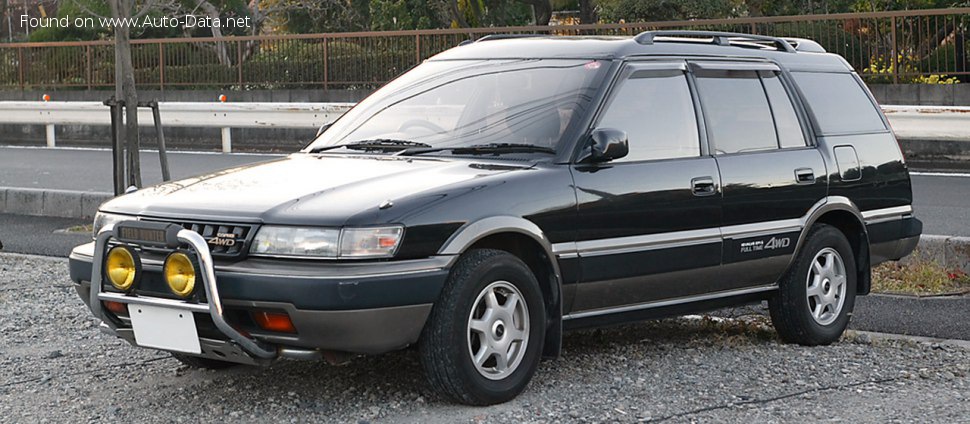
The Toyota Sprinter Carib, specifically the 1.6i (110 Hp) Automatic variant produced between 1987 and 1995, represented a significant offering in Toyota’s global lineup, particularly within the Japanese domestic market (JDM) and various European and Asian regions. While not officially sold in the United States, the Sprinter Carib, known as the Corolla Wagon in some markets, epitomized Toyota’s commitment to reliability, practicality, and efficient engineering during an era of significant automotive evolution. This generation of the Sprinter Carib, built on the robust E90 platform shared with the venerable Corolla, carved out a niche as a versatile and economical station wagon, perfectly suited for families and individuals seeking a dependable vehicle capable of handling diverse daily demands. Its design ethos was centered around maximizing interior space and utility within a compact footprint, a characteristic highly valued in its primary markets. The {original_title} was designed to offer a comfortable ride, predictable handling, and legendary Toyota durability, establishing it as a workhorse that could reliably serve for many years. Its introduction marked a period where Toyota was refining its front-wheel-drive architecture, moving away from rear-wheel-drive for its compact models, thereby optimizing packaging and interior volume.
Engine and Performance of the Toyota Sprinter Carib
At the heart of the 1987-1995 Toyota Sprinter Carib 1.6i (110 Hp) Automatic lay a meticulously engineered 1.6-liter (1598 cm3 or 97.52 cu. in.) inline four-cylinder engine. This powertrain was a testament to Toyota’s advanced engine technology of the late 1980s, featuring a Double Overhead Camshaft (DOHC) valvetrain with four valves per cylinder. While many contemporary vehicles in this segment might have utilized simpler SOHC designs, Toyota’s choice of DOHC underscored its commitment to efficiency and performance, allowing for better airflow and combustion, ultimately translating into more responsive power delivery. The engine was naturally aspirated and employed a multi-port manifold injection system, a sophisticated fuel delivery method for its time that ensured precise fuel metering and improved fuel economy compared to carbureted setups. It produced a respectable 110 horsepower at 6000 rpm and 110.63 lb.-ft. of torque at 4800 rpm. This power output, especially for a 1.6-liter engine in the late 1980s, was quite competitive, delivering a sprightly driving experience for a vehicle of its class and intended purpose.
Mated to this capable engine was a 4-speed automatic transmission, designed to provide smooth and effortless shifts, enhancing the Carib’s appeal as a comfortable daily driver. The front-wheel-drive architecture, with the engine mounted transversely, was a standard configuration for compact vehicles of this era, maximizing interior space and offering predictable handling characteristics. The power-to-weight ratio of 10.9 kg/Hp (or 91.7 Hp/tonne) and a torque-to-weight ratio of 8 kg/Nm (or 125 Nm/tonne) indicate that the Sprinter Carib was adequately powered for its curb weight of 2645.55 lbs. It was not designed as a performance car but rather as a highly efficient and reliable means of transport. The engine’s DOHC design, combined with its multi-port injection, also contributed to its longevity and reputation for robust reliability, hallmarks of Toyota engineering. Fueling the vehicle was a 13.21 US gallon (50-liter) tank, providing a decent range for extended journeys, a practical consideration for a family-oriented station wagon. The 10.5:1 compression ratio further optimized combustion efficiency, contributing to both power and fuel economy on regular gasoline.
Design and Features of the Toyota Sprinter Carib
The Toyota Sprinter Carib was conceived as a highly functional and practical station wagon (also known as an estate car), a body style that resonated strongly with consumers in markets where versatility was paramount. Its five-door configuration provided excellent access to both front and rear passenger compartments, as well as the generous cargo area. With seating for five occupants, the interior was designed for comfort and utility, offering ample headroom and legroom for its class. The exterior dimensions—a length of 172.44 inches, a width of 65.16 inches, and a height of 57.09 inches—placed it firmly in the compact wagon segment, making it maneuverable in urban environments while still providing substantial interior volume. The wheelbase of 95.67 inches contributed to a stable ride, a critical factor for family transport. The design language was typical of Toyota in the late 1980s and early 1990s: clean, understated lines prioritizing functionality over flamboyant styling. The relatively large glass area ensured good visibility, an important safety and convenience feature.
From a chassis perspective, the Sprinter Carib featured a robust setup for dependable performance. The front track measured 56.69 inches, with the rear track at 54.33 inches, contributing to its stable road manners. Its minimum turning circle of 32.15 feet made it surprisingly agile for a wagon, aiding in parking and navigating tight city streets. For braking, the vehicle was equipped with ventilated disc brakes at the front, offering effective stopping power and resistance to fade, while the rear utilized drum brakes, a common and cost-effective solution for the rear axle in vehicles of this segment during that period. The Sprinter Carib rode on 185/70 R13 tires mounted on 5J x 13 wheel rims. This tire and wheel combination provided a comfortable ride quality and adequate grip for everyday driving conditions, further emphasizing its role as a practical, no-nonsense vehicle. While advanced safety features like airbags or anti-lock brakes were not standard on many vehicles in this segment at the time, Toyota focused on structural integrity and passive safety through sound engineering, typical of the era. The Sprinter Carib’s enduring popularity in its target markets was a testament to its well-rounded design, robust construction, and the unwavering reliability that Toyota had become synonymous with globally.
Technical Specifications
| Brand | Toyota |
| Model | Sprinter |
| Generation | Sprinter Carib |
| Type (Engine) | 1.6i (110 Hp) Automatic |
| Start of production | 1987 year |
| End of production | 1995 year |
| Powertrain Architecture | Internal Combustion engine |
| Body type | Station wagon (estate) |
| Seats | 5 |
| Doors | 5 |
| Fuel Type | Petrol (Gasoline) |
| Weight-to-power ratio | 10.9 kg/Hp, 91.7 Hp/tonne |
| Weight-to-torque ratio | 8 kg/Nm, 125 Nm/tonne |
| Power | 110 Hp @ 6000 rpm. |
| Power per litre | 68.8 Hp/l |
| Torque | 150 Nm @ 4800 rpm. (110.63 lb.-ft. @ 4800 rpm.) |
| Engine layout | Front, Transverse |
| Engine displacement | 1598 cm3 (1.6 l / 97.52 cu. in.) |
| Number of cylinders | 4 |
| Engine configuration | Inline |
| Cylinder Bore | 79 mm (3.11 in.) |
| Piston Stroke | 81.5 mm (3.21 in.) |
| Compression ratio | 10.5:1 |
| Number of valves per cylinder | 4 |
| Fuel injection system | Multi-port manifold injection |
| Engine aspiration | Naturally aspirated engine |
| Valvetrain | DOHC |
| Kerb Weight | 1200 kg (2645.55 lbs.) |
| Fuel tank capacity | 50 l (13.21 US gal | 11 UK gal) |
| Length | 4380 mm (172.44 in.) |
| Width | 1655 mm (65.16 in.) |
| Height | 1450 mm (57.09 in.) |
| Wheelbase | 2430 mm (95.67 in.) |
| Front track | 1440 mm (56.69 in.) |
| Rear (Back) track | 1380 mm (54.33 in.) |
| Minimum turning circle (turning diameter) | 9.8 m (32.15 ft.) |
| Drivetrain Architecture | The Internal combustion engine (ICE) drives the front wheels of the vehicle. |
| Drive wheel | Front wheel drive |
| Number of gears and type of gearbox | 4 gears, automatic transmission |
| Front brakes | Ventilated discs |
| Rear brakes | Drum |
| Tires size | 185/70 R13 |
| Wheel rims size | 5J x 13 |