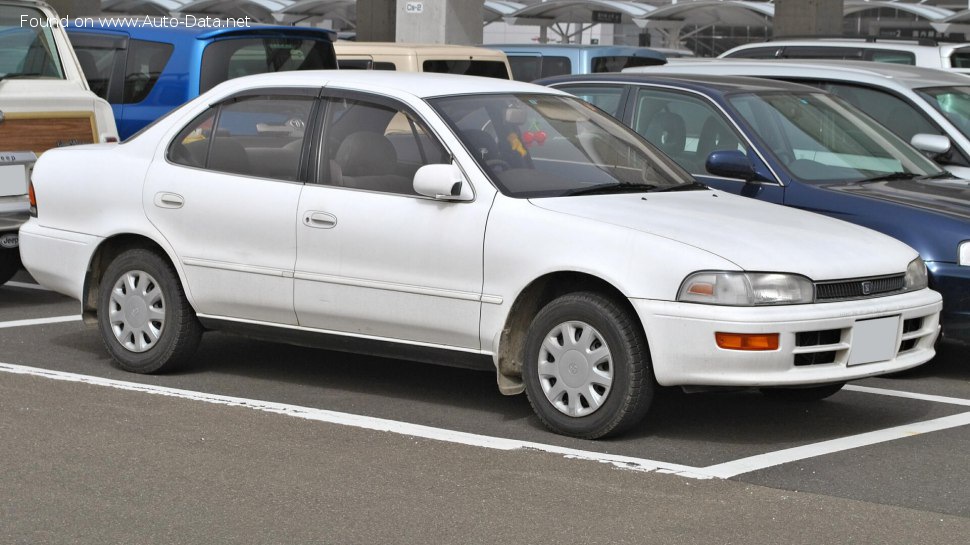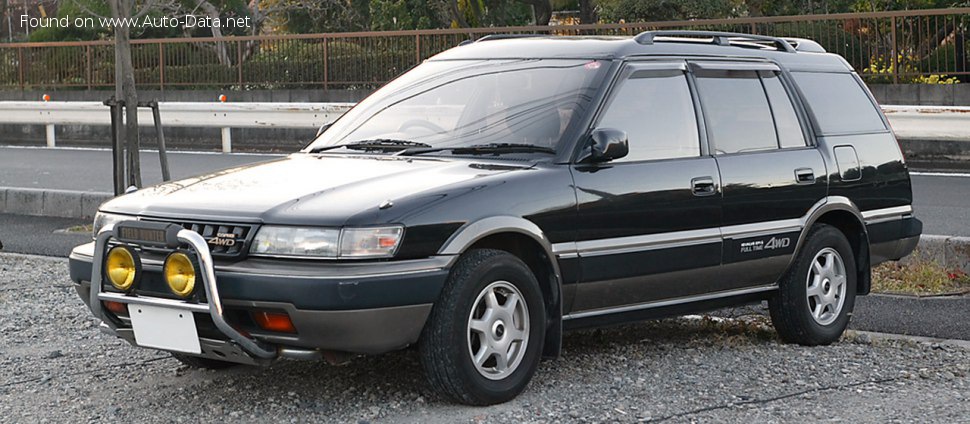
The Toyota Sprinter Carib 1.6i (165 Hp) Automatic, a distinctive compact station wagon, represents a fascinating chapter in Toyota’s history, particularly for its role in markets outside of the United States. Produced between 1995 and 2002, this generation of the Sprinter Carib, often referred to as the AE110 series, was primarily aimed at the Japanese domestic market (JDM) and select export regions, offering a unique blend of practicality, reliability, and unexpected performance. While not officially sold in North America, its engineering prowess and design philosophy resonate with Toyota’s global reputation for building durable and efficient vehicles. This particular variant stood out thanks to its spirited 1.6-liter engine, which, coupled with an automatic transmission, provided a surprisingly engaging driving experience for a family-oriented wagon, making it a cult classic among enthusiasts who appreciate its understated capabilities.
Engine & Performance: The Heart of the Toyota Sprinter Carib 1.6i (165 Hp) Automatic
At the core of the Toyota Sprinter Carib 1.6i (165 Hp) Automatic lies one of Toyota’s most celebrated four-cylinder engines: the 4A-GE. This specific iteration, often dubbed the “Black Top” due to its valve cover color, represents the pinnacle of the naturally aspirated 4A-GE lineage. With a displacement of 1578 cubic centimeters (96.3 cubic inches), this inline-four engine was an engineering marvel for its time, boasting a Dual Overhead Camshaft (DOHC) valvetrain with four valves per cylinder. This configuration allowed for exceptional breathing at higher engine speeds, contributing significantly to its impressive power output.
The 4A-GE engine in the Sprinter Carib produced a robust 165 horsepower at a soaring 7800 revolutions per minute. This high-revving nature was a hallmark of the 4A-GE, providing an exhilarating power delivery that was uncommon for a compact station wagon. Its specific output of 104.6 horsepower per liter was remarkable, rivaling many sports car engines of the era and underscoring Toyota’s advanced engine design capabilities. Torque figures were equally respectable, peaking at 119.49 lb.-ft. (162 Nm) at 5600 rpm, ensuring adequate mid-range pull for daily driving despite its high-strung character.
Fueling the 4A-GE was a multi-port manifold injection system, a sophisticated setup that precisely metered gasoline into each cylinder, optimizing combustion efficiency and throttle response. As a naturally aspirated engine, it delivered linear and predictable power without the complexities or lag associated with forced induction systems. This combination of high specific output, a broad power band, and immediate throttle response made the Sprinter Carib a surprisingly quick and enjoyable vehicle to drive, especially when pushed.
Power was transmitted to the front wheels via a 4-speed automatic transmission. While some enthusiasts might have preferred a manual gearbox to fully exploit the 4A-GE’s high-revving potential, the automatic unit was well-suited for the car’s primary role as a versatile family vehicle. It provided smooth shifts and ease of use in urban environments, making the Carib accessible to a wider range of drivers. The front-wheel-drive architecture, common for compact cars of this period, offered predictable handling and efficient packaging, contributing to the vehicle’s overall practicality and fuel economy, which was managed by its 13.21 US gallon (50 liter) fuel tank.
Design & Features: Practicality Meets Subtle Sportiness
The Toyota Sprinter Carib, in its 1995-2002 generation, embodied the practical yet subtly styled design philosophy prevalent in Japanese compact cars of the era. As a 5-door, 5-seat station wagon (or “estate” as it’s often termed in other markets), it prioritized utility without sacrificing a clean, contemporary aesthetic. Its dimensions—171.65 inches (4360 mm) in length, 66.54 inches (1690 mm) in width, and 58.66 inches (1490 mm) in height—positioned it firmly within the compact segment, offering maneuverability in congested cityscapes while providing ample interior space for passengers and cargo.
The exterior design featured smooth, rounded lines characteristic of the mid-1990s, aiming for an aerodynamic profile that contributed to both fuel efficiency and reduced wind noise. The relatively low height for a wagon of its type gave it a slightly sportier stance, hinting at the performance capabilities under the hood. The front and rear tracks, measuring 57.48 inches (1460 mm) and 56.69 inches (1440 mm) respectively, provided a stable footprint, aiding in confident handling. The choice of 185/60 R14 tires mounted on 5.5J x 14 wheel rims was a sensible balance, offering a comfortable ride quality and adequate grip for daily driving, with a subtle nod to performance.
Inside, the Sprinter Carib was designed with functionality and durability in mind. The five-seat configuration provided comfortable seating for a small family, and the station wagon body style offered considerable cargo flexibility. The rear seats could typically fold down, expanding the luggage area significantly, making it ideal for hauling groceries, sports equipment, or even small furniture. While specific interior features varied by trim level, standard amenities likely included air conditioning, power windows, and a decent audio system, reflecting the practical expectations of its target demographic.
Safety features for a vehicle of this vintage included a robust chassis and, depending on the market and year, could have incorporated driver and passenger airbags, along with anti-lock braking systems (ABS). The braking system itself consisted of ventilated discs at the front and solid discs at the rear, a competent setup that provided reliable stopping power for a vehicle of its weight and performance. This combination of a high-performance engine, practical body style, and reliable engineering made the Toyota Sprinter Carib 1.6i (165 Hp) Automatic a well-rounded and appealing choice for buyers seeking a versatile and spirited compact wagon in its primary markets.
Technical Specifications
| Brand | Toyota |
| Model | Sprinter |
| Generation | Sprinter Carib |
| Type (Engine) | 1.6i (165 Hp) Automatic |
| Start of production | 1995 year |
| End of production | 2002 year |
| Powertrain Architecture | Internal Combustion engine |
| Body type | Station wagon (estate) |
| Seats | 5 |
| Doors | 5 |
| Performance specs | |
| Fuel Type | Petrol (Gasoline) |
| Power | 165 Hp @ 7800 rpm. |
| Power per litre | 104.6 Hp/l |
| Torque | 162 Nm @ 5600 rpm. (119.49 lb.-ft. @ 5600 rpm.) |
| Engine Model/Code | 4A-GE |
| Engine displacement | 1578 cm3 (96.3 cu. in.) |
| Number of cylinders | 4 |
| Engine configuration | Inline |
| Number of valves per cylinder | 4 |
| Fuel injection system | Multi-port manifold injection |
| Engine aspiration | Naturally aspirated engine |
| Valvetrain | DOHC |
| Space, Volume and weights | |
| Fuel tank capacity | 50 l (13.21 US gal | 11 UK gal) |
| Dimensions | |
| Length | 4360 mm (171.65 in.) |
| Width | 1690 mm (66.54 in.) |
| Height | 1490 mm (58.66 in.) |
| Front track | 1460 mm (57.48 in.) |
| Rear (Back) track | 1440 mm (56.69 in.) |
| Drivetrain, brakes and suspension specs | |
| Drivetrain Architecture | The Internal combustion engine (ICE) drives the front wheels of the vehicle. |
| Drive wheel | Front wheel drive |
| Number of gears and type of gearbox | 4 gears, automatic transmission |
| Front brakes | Ventilated discs |
| Rear brakes | Disc |
| Tires size | 185/60 R14 |
| Wheel rims size | 5.5J x 14 |