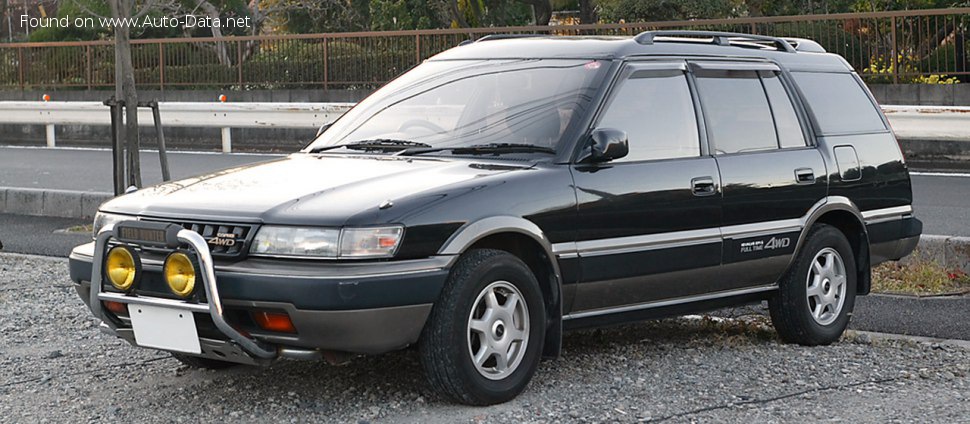
The Toyota Sprinter Carib 1.8 GDI 16V (125 Hp) represents a compelling blend of practicality, efficiency, and Toyota’s renowned reliability from the mid-1990s through the early 2000s. Primarily marketed in Japan and select Asian and Oceanian regions, this specific generation, produced from 1995 to 2002, carved a niche as a versatile and economical station wagon. Serving as a crucial component of Toyota’s extensive lineup, the Sprinter Carib was engineered to cater to families and individuals seeking a dependable vehicle capable of handling diverse daily demands, from urban commuting to weekend excursions. Its design ethos centered on maximizing interior space and utility within a compact footprint, a characteristic highly valued in its primary markets. While not officially offered in the United States, its mechanical underpinnings and design principles echo the global engineering standards that defined Toyota’s success during this period, offering a glimpse into the brand’s diverse product portfolio beyond North American shores.
The Evolution of the Toyota Sprinter Carib
The Sprinter Carib, often considered the wagon variant of the Sprinter sedan (which itself was closely related to the ubiquitous Corolla), was a testament to Toyota’s strategy of offering a wide array of body styles based on proven platforms. This particular generation, spanning nearly a decade, benefited from continuous refinements in engineering and feature sets. In its home market, the Sprinter Carib was celebrated for its robust build quality and low running costs, making it a popular choice for both private owners and fleet operators. Its market position was that of a practical, no-nonsense utility vehicle, striking a balance between passenger comfort and cargo capacity. Unlike the larger, more luxurious wagons or SUVs that began to dominate the American market, the Sprinter Carib remained true to its compact station wagon roots, offering sensible dimensions and efficient packaging that resonated with the needs of its target demographic.
The vehicle’s architecture, featuring an internal combustion engine driving the front wheels, was a common and efficient setup for compact cars of its era. This front-wheel-drive configuration contributed to better fuel economy, improved traction in adverse conditions, and a more spacious interior by eliminating the need for a bulky transmission tunnel in the rear. The consistent production run from 1995 to 2002 underscores its enduring appeal and the success of its design and engineering in meeting market demands. It showcased Toyota’s ability to create highly functional vehicles that, while perhaps not flashy, delivered exceptional long-term value and reliability, traits that have become synonymous with the brand globally.
Powertrain and Performance of the Toyota Sprinter Carib 1.8 GDI 16V (125 Hp)
At the heart of the Toyota Sprinter Carib 1.8 GDI 16V (125 Hp) was its advanced 1.8-liter gasoline direct injection engine. The “GDI” designation, standing for Gasoline Direct Injection, was a significant technological highlight for its time, promising improved fuel efficiency and power output compared to conventional multi-port injection systems. This naturally aspirated, four-cylinder inline engine delivered a respectable 125 horsepower at 6000 rpm, providing ample power for daily driving and highway cruising. The engine’s torque output stood at 161 Nm (equivalent to 118.75 lb.-ft.) peaking at 4200 rpm, ensuring responsive acceleration and sufficient pulling power for a fully loaded vehicle or light cargo. The power delivery was smooth and linear, characteristic of Toyota’s well-engineered powertrains, making for a comfortable and predictable driving experience.
Delving into the technical specifics, the engine featured a displacement of 1794 cubic centimeters (1.8 liters or 109.48 cubic inches), with a cylinder bore of 79 mm (3.11 inches) and a piston stroke of 91.5 mm (3.6 inches). This combination, along with a 10:1 compression ratio, optimized combustion efficiency and power generation. The engine utilized a Double Overhead Camshaft (DOHC) valvetrain with four valves per cylinder, a configuration known for enhancing volumetric efficiency and allowing for better breathing at higher engine speeds. The multi-port manifold injection system, despite the GDI designation, indicates a robust and proven fuel delivery method that contributed to the engine’s reliability and consistent performance over its production span. With a power per liter rating of 69.7 Hp/l, the engine demonstrated a good balance of output relative to its size.
The performance metrics of the Toyota Sprinter Carib 1.8 GDI 16V also reveal its practical orientation. With a kerb weight of 1090 kg (2403.04 lbs.), the vehicle achieved a weight-to-power ratio of 8.7 kg/Hp (or 114.7 Hp/tonne) and a weight-to-torque ratio of 6.8 kg/Nm (or 147.7 Nm/tonne). These figures underscore its design as an efficient, rather than overtly sporty, vehicle. The powertrain architecture involved the internal combustion engine driving the front wheels through a precise 5-speed manual transmission. This manual gearbox allowed drivers to fully exploit the engine’s power band, contributing to both spirited driving when desired and optimal fuel economy during relaxed cruising. The combination of a responsive engine and an engaging manual transmission provided a satisfying driving experience for those who appreciated direct mechanical control.
Design, Utility, and Features of the Toyota Sprinter Carib
The design of the Toyota Sprinter Carib was quintessentially late 20th-century Toyota: functional, understated, and built for purpose. Its station wagon body type, also known as an estate in some markets, was designed to maximize interior volume and versatility. With five doors and seating for five occupants, the Carib offered easy access and ample space for passengers and their belongings. The exterior dimensions—a length of 4360 mm (171.65 inches), a width of 1690 mm (66.54 inches), and a height of 1490 mm (58.66 inches)—positioned it firmly in the compact wagon segment. These dimensions, coupled with a wheelbase of 2465 mm (97.05 inches), ensured a manageable footprint for urban environments while still providing a stable and comfortable ride on longer journeys. The front track of 1460 mm (57.48 inches) and a rear track of 1440 mm (56.69 inches) contributed to its balanced handling characteristics.
Inside, the Sprinter Carib prioritized ergonomics and durability. While specific luxury features would vary by trim level, standard appointments for the era typically included comfortable cloth seating, a functional dashboard layout with clear instrumentation, and practical storage solutions. Given its market and era, features like air conditioning, power windows, and a basic audio system would have been common options or standard on higher trims, all designed to enhance the daily driving experience without unnecessary extravagance. The true highlight of the interior was its cargo capacity; the station wagon configuration allowed for a generous and flexible load space, easily expandable by folding down the rear seats. This made it an ideal vehicle for grocery runs, family trips, or transporting hobby equipment, embodying the essence of a multi-purpose family car.
From a safety and chassis perspective, the Sprinter Carib featured a robust unibody construction, typical of modern vehicles, designed to provide structural integrity. Braking duties were handled by ventilated discs at the front and solid discs at the rear, a competent setup for a vehicle of its weight and performance, ensuring reliable stopping power. The suspension system, while not explicitly detailed, would have been engineered for a comfortable ride and predictable handling, balancing compliance with stability. The vehicle rolled on 185/60 R14 tires mounted on 5.5J x 14 wheel rims, a common size for compact vehicles of the period, offering a good balance of grip, ride comfort, and affordability for tire replacement. The 50-liter (13.21 US gallons) fuel tank capacity, combined with the efficient 1.8-liter engine, provided a practical driving range, further cementing its reputation as an economical and user-friendly vehicle for its intended audience.
Technical Specifications: Toyota Sprinter Carib 1.8 GDI 16V (125 Hp)
| Brand | Toyota |
| Model | Sprinter |
| Generation | Sprinter Carib |
| Type (Engine) | 1.8 GDI 16V (125 Hp) |
| Start of production | 1995 year |
| End of production | 2002 year |
| Powertrain Architecture | Internal Combustion engine |
| Body type | Station wagon (estate) |
| Seats | 5 |
| Doors | 5 |
| Fuel Type | Petrol (Gasoline) |
| Weight-to-power ratio | 8.7 kg/Hp, 114.7 Hp/tonne |
| Weight-to-torque ratio | 6.8 kg/Nm, 147.7 Nm/tonne |
| Power | 125 Hp @ 6000 rpm. |
| Power per litre | 69.7 Hp/l |
| Torque | 161 Nm @ 4200 rpm. (118.75 lb.-ft. @ 4200 rpm.) |
| Engine layout | Front, Transverse |
| Engine displacement | 1794 cm3 (109.48 cu. in.) |
| Number of cylinders | 4 |
| Engine configuration | Inline |
| Cylinder Bore | 79 mm (3.11 in.) |
| Piston Stroke | 91.5 mm (3.6 in.) |
| Compression ratio | 10:1 |
| Number of valves per cylinder | 4 |
| Fuel injection system | Multi-port manifold injection |
| Engine aspiration | Naturally aspirated engine |
| Valvetrain | DOHC |
| Kerb Weight | 1090 kg (2403.04 lbs.) |
| Fuel tank capacity | 50 l (13.21 US gal) |
| Length | 4360 mm (171.65 in.) |
| Width | 1690 mm (66.54 in.) |
| Height | 1490 mm (58.66 in.) |
| Wheelbase | 2465 mm (97.05 in.) |
| Front track | 1460 mm (57.48 in.) |
| Rear (Back) track | 1440 mm (56.69 in.) |
| Drivetrain Architecture | The Internal combustion engine (ICE) drives the front wheels of the vehicle. |
| Drive wheel | Front wheel drive |
| Number of gears and type of gearbox | 5 gears, manual transmission |
| Front brakes | Ventilated discs |
| Rear brakes | Disc |
| Tires size | 185/60 R14 |
| Wheel rims size | 5.5J x 14 |