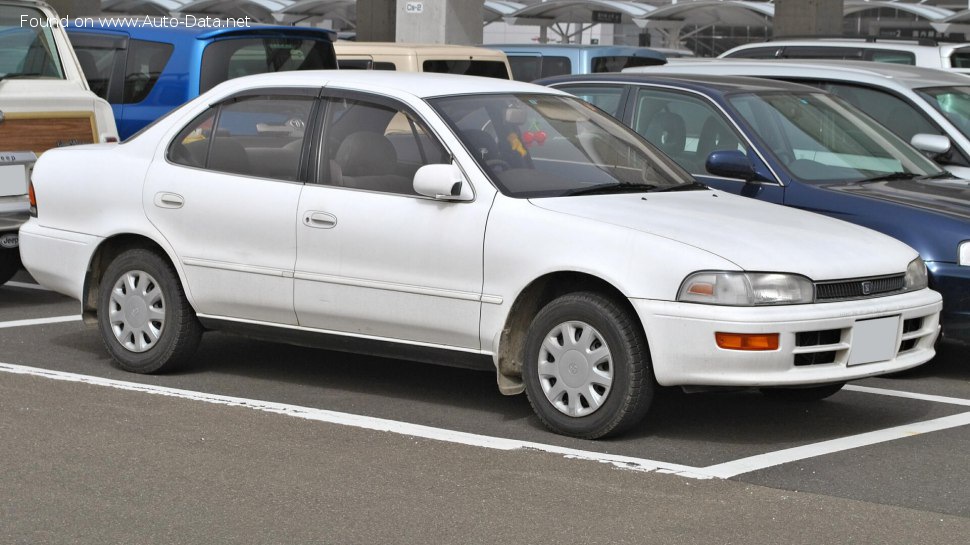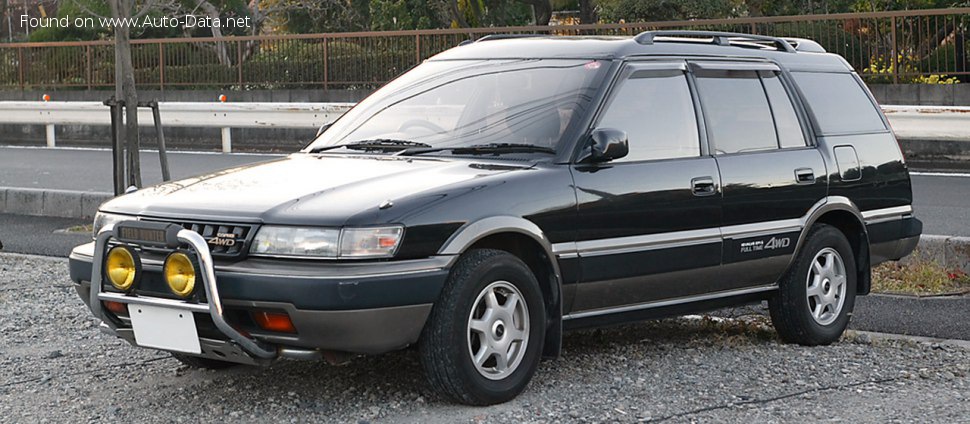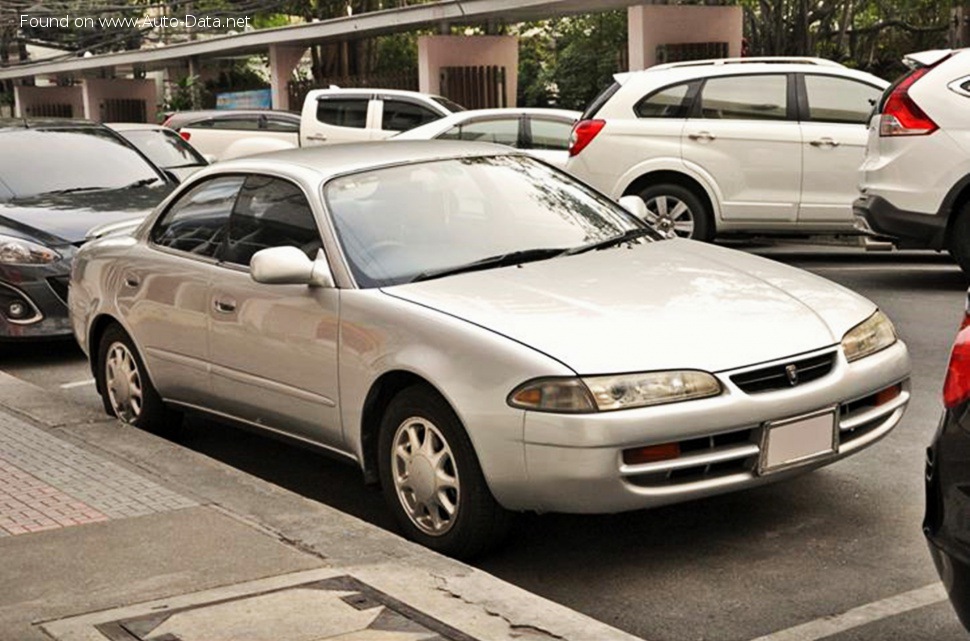
The Toyota Sprinter Marino 1.6i (115 Hp) Automatic represents a distinctive chapter in Toyota’s extensive history, specifically within the Japanese domestic market (JDM). Launched in 1992 and produced until 1997, the Sprinter Marino was a stylish variant of the popular Toyota Sprinter sedan, itself a twin to the Corolla. Positioned as a compact executive or sporty sedan, the Marino distinguished itself with a sleek, four-door pillarless hardtop design, a popular aesthetic trend in Japan during the late 1980s and early 1990s. This particular iteration, featuring a 1.6-liter engine paired with an automatic transmission, aimed to blend sporty aesthetics with everyday usability and Toyota’s renowned reliability, catering to a segment of buyers seeking a more upscale and visually appealing compact car than the standard Sprinter or Corolla.
The Toyota Sprinter Marino: A Nineties JDM Icon
The Toyota Sprinter Marino entered a vibrant and competitive Japanese automotive landscape in the early 1990s. During this era, Japanese manufacturers were pushing boundaries in design, technology, and market segmentation, often creating niche models tailored to specific consumer tastes. The Marino, alongside its twin, the Toyota Corolla Ceres, was a prime example of this trend. While sharing its platform and many mechanical components with the seventh-generation Corolla (E100 series), the Marino carved out its own identity through its unique body style. The pillarless hardtop design, a signature of the Marino, offered an open, airy cabin feel when all windows were lowered, mimicking the elegance of a coupe while retaining the practicality of four doors. This design choice was not merely cosmetic; it symbolized a period of automotive design that prioritized aesthetic fluidity and a sense of luxury, even in more compact vehicle classes. Its relatively low stance and wide track further contributed to its sporty appearance, setting it apart from its more utilitarian siblings. The Sprinter Marino was never officially sold in North America, making it a fascinating piece of JDM history for enthusiasts and collectors who appreciate its distinctive styling and engineering.
Engine and Performance
At the heart of the Toyota Sprinter Marino 1.6i (115 Hp) Automatic was a meticulously engineered 1.6-liter (1587 cm3 or 96.84 cu. in.) inline-four engine. This powerplant featured a Double Overhead Camshaft (DOHC) valvetrain with 4 valves per cylinder, a configuration that was becoming standard for performance-oriented and efficient engines of the era. With a compression ratio of 9.5:1 and a multi-port manifold injection system, the naturally aspirated engine delivered a respectable 115 horsepower at a relatively high 6600 rpm. This high-revving nature was characteristic of many Japanese engines from this period, designed to deliver power smoothly across the rev range. Torque output stood at 135 Nm (99.57 lb.-ft.) at 4800 rpm, providing adequate pulling power for city driving and highway cruising alike. The engine’s front, transverse layout, combined with a front-wheel-drive architecture, was a common and efficient setup for compact sedans, optimizing interior space and manufacturing costs. The power-to-liter ratio of 72.5 Hp/l was commendable for a naturally aspirated engine of its time, showcasing Toyota’s engineering prowess in extracting efficiency and performance from a modest displacement.
The transmission choice for this particular variant was a 4-speed automatic gearbox. While modern automatics offer more gears and advanced electronics, the 4-speed automatic of the early 1990s was a reliable and comfortable option, particularly suited for the urban driving conditions prevalent in Japan. It offered smooth shifts and ease of operation, aligning with the car’s appeal as a stylish yet practical daily driver. The vehicle’s kerb weight of 2270.76 lbs (1030 kg) contributed to a favorable weight-to-power ratio of 9 kg/Hp (111.7 Hp/tonne) and a weight-to-torque ratio of 7.6 kg/Nm (131.1 Nm/tonne). These figures suggest a car that, while not a dedicated sports machine, offered a lively and responsive driving experience for its class. The Sprinter Marino was designed to be an enjoyable car to drive, balancing its elegant aesthetics with competent mechanicals, providing a refined yet engaging ride for its target audience.
Design and Features
The design of the Toyota Sprinter Marino was its most striking feature. As a 4-door sedan with seating for five, it offered practical family transportation, but its distinct pillarless hardtop body type gave it an undeniable flair. This design eliminated the B-pillar between the front and rear doors, creating an uninterrupted window line when all side glass was lowered. The result was a sleek, almost coupe-like profile that exuded a sense of open-air freedom and sophistication, a stark contrast to the more conventional sedans of its era. Its dimensions – a length of 172.64 inches (4385 mm), a width of 66.73 inches (1695 mm), and a height of 51.77 inches (1315 mm) – contributed to its low-slung, sporty stance. The wheelbase of 97.05 inches (2465 mm) provided a stable ride and adequate interior space for a compact vehicle, while the front and rear track widths of 57.87 inches (1470 mm) and 57.48 inches (1460 mm), respectively, further enhanced its planted appearance.
In terms of other features, the Sprinter Marino was equipped with a braking system typical for its class and time. Ventilated discs at the front provided effective stopping power, crucial for maintaining control, while drum brakes at the rear were a cost-effective and reliable solution. The car rode on 13-inch wheels fitted with 175/70 R13 tires, a common tire size for compact cars of the early 90s, offering a balance of ride comfort, grip, and affordability. The fuel tank capacity of 13.21 US gallons (50 liters) provided a decent cruising range, making it suitable for both daily commutes and longer journeys. The minimum turning circle of 32.15 feet (9.8 meters) indicated good maneuverability, a desirable trait for navigating crowded urban environments. Overall, the Toyota Sprinter Marino combined a distinctive and elegant design with practical features and reliable mechanicals, making it a memorable and desirable compact sedan within the Japanese market during its production run.
Technical Specifications: Toyota Sprinter Marino 1.6i (115 Hp) Automatic
| Brand | Toyota |
| Model | Sprinter |
| Generation | Sprinter Marino |
| Type (Engine) | 1.6i (115 Hp) Automatic |
| Start of production | 1992 year |
| End of production | 1997 year |
| Powertrain Architecture | Internal Combustion engine |
| Body type | Sedan |
| Seats | 5 |
| Doors | 4 |
| Fuel Type | Petrol (Gasoline) |
| Weight-to-power ratio | 9 kg/Hp, 111.7 Hp/tonne |
| Weight-to-torque ratio | 7.6 kg/Nm, 131.1 Nm/tonne |
| Power | 115 Hp @ 6600 rpm. |
| Power per litre | 72.5 Hp/l |
| Torque | 135 Nm @ 4800 rpm. (99.57 lb.-ft.) |
| Engine layout | Front, Transverse |
| Engine displacement | 1587 cm3 (96.84 cu. in.) |
| Number of cylinders | 4 |
| Engine configuration | Inline |
| Cylinder Bore | 81 mm (3.19 in.) |
| Piston Stroke | 77 mm (3.03 in.) |
| Compression ratio | 9.5:1 |
| Number of valves per cylinder | 4 |
| Fuel injection system | Multi-port manifold injection |
| Engine aspiration | Naturally aspirated engine |
| Valvetrain | DOHC |
| Kerb Weight | 1030 kg (2270.76 lbs.) |
| Fuel tank capacity | 50 l (13.21 US gal | 11 UK gal) |
| Length | 4385 mm (172.64 in.) |
| Width | 1695 mm (66.73 in.) |
| Height | 1315 mm (51.77 in.) |
| Wheelbase | 2465 mm (97.05 in.) |
| Front track | 1470 mm (57.87 in.) |
| Rear (Back) track | 1460 mm (57.48 in.) |
| Minimum turning circle (turning diameter) | 9.8 m (32.15 ft.) |
| Drivetrain Architecture | The Internal combustion engine (ICE) drives the front wheels of the vehicle. |
| Drive wheel | Front wheel drive |
| Number of gears and type of gearbox | 4 gears, automatic transmission |
| Front brakes | Ventilated discs |
| Rear brakes | Drum |
| Tires size | 175/70 R13 |
| Wheel rims size | 13 |