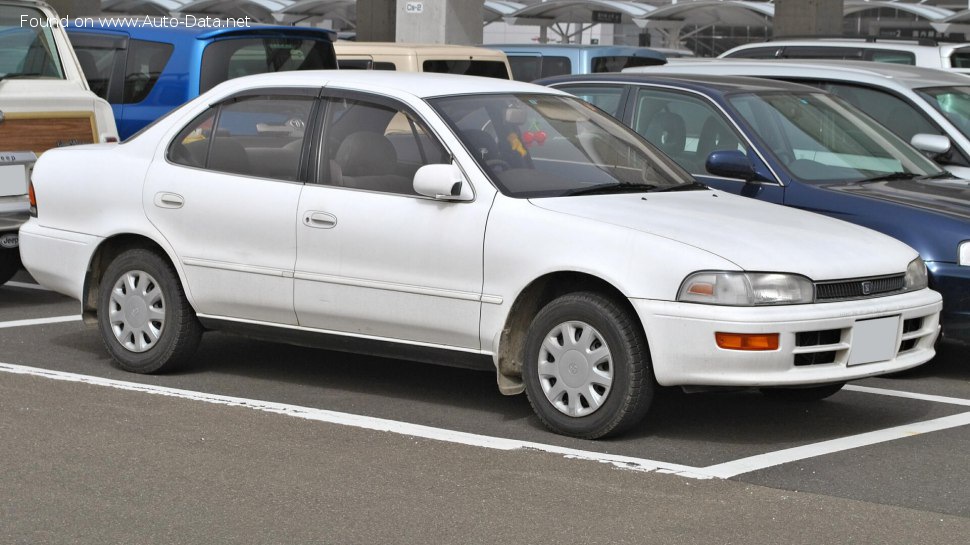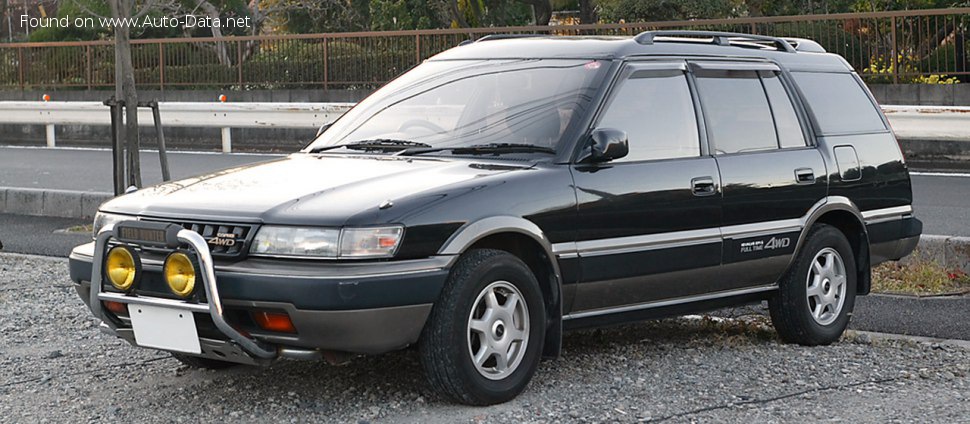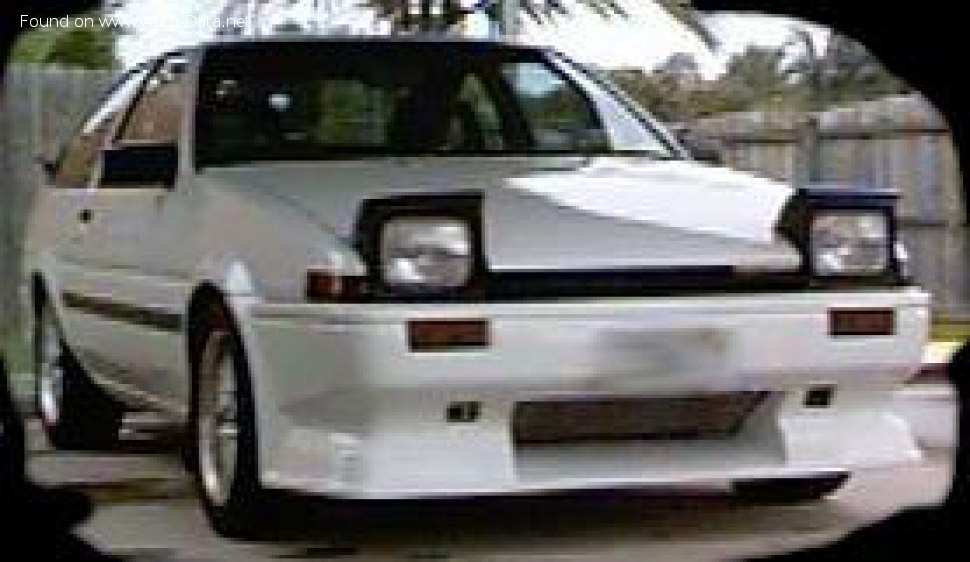
The Toyota Sprinter Trueno 1.5 (85 Hp) represents a fascinating, albeit less commonly celebrated, chapter in Toyota’s extensive history of compact and accessible personal vehicles. Produced between 1983 and 1987, this particular generation of the Sprinter Trueno, designated as a coupe, was primarily aimed at the Japanese domestic market (JDM). While the Sprinter Trueno nameplate is perhaps most famously associated with its rear-wheel-drive, performance-oriented siblings, this specific variant diverged significantly by adopting a front-wheel-drive (FWD) powertrain architecture. This design choice positioned the Toyota Sprinter Trueno 1.5 (85 Hp) as an economical and practical two-door coupe, offering a blend of Toyota’s renowned reliability and a stylish, compact form factor for its time. It served as a testament to Toyota’s strategy of offering diverse options under established nameplates, catering to a broader spectrum of consumer needs beyond pure performance. As a classic vehicle from the 1980s, its heritage lies in providing dependable, everyday transportation with a touch of sporty aesthetics, embodying the pragmatic yet innovative spirit of Japanese automotive engineering during that era.
The Toyota Sprinter Trueno 1.5 (85 Hp): A Niche Legacy
The 1980s were a period of rapid evolution for the automotive industry, particularly in Japan, where manufacturers like Toyota were perfecting the art of producing efficient, reliable, and increasingly stylish vehicles for a global audience. The Sprinter Trueno, while not officially sold in the United States, was a key player in Toyota’s domestic lineup, sharing its platform and many characteristics with the globally recognized Corolla. This generation, spanning from 1983 to 1987, saw Toyota experimenting with different configurations to meet varied consumer demands. The 1.5 (85 Hp) coupe variant, with its front-wheel-drive setup, stands out as a practical interpretation of the Trueno ethos, emphasizing fuel economy and ease of driving over the outright performance capabilities of its more powerful, rear-wheel-drive counterparts.
Its role in the Japanese market was significant, offering a stylish and affordable entry into the coupe segment for young drivers and small families. The Sprinter Trueno line, in general, symbolized a blend of everyday usability with a hint of sportiness, and this 1.5-liter model delivered on the former with commendable efficiency and a comfortable driving experience. The car’s robust construction and straightforward mechanicals ensured longevity, making it a common sight on Japanese roads for many years after its production ceased. Today, it represents a foundational piece in Toyota’s history, showcasing the company’s ability to produce a wide array of vehicles under a single, iconic nameplate.
Engine & Performance
At the heart of the Toyota Sprinter Trueno 1.5 (85 Hp) was the naturally aspirated 3A-U engine, a 1.5-liter (1452 cm3 or 88.61 cu. in.) internal combustion unit designed for reliability and economical operation. This powerplant delivered a respectable 85 horsepower at 5600 rpm, which for a vehicle weighing just 2017.23 lbs (915 kg), translated into a weight-to-power ratio of 10.8 kg/Hp (92.9 Hp/tonne). While not designed for blistering acceleration, this output was more than adequate for urban commuting and highway cruising, providing a responsive and predictable driving experience. The engine’s power per liter stood at 58.5 Hp/l, a solid figure for a naturally aspirated unit of its era, underscoring Toyota’s engineering prowess in extracting efficiency from smaller displacements.
Torque figures further illustrate the engine’s character: 118 Nm (87.03 lb.-ft.) delivered at a relatively low 3600 rpm. This emphasis on low-to-mid-range torque meant that the Sprinter Trueno felt lively in city traffic and required less frequent downshifting, contributing to a relaxed driving style. The weight-to-torque ratio of 7.8 kg/Nm (129 Nm/tonne) further highlights the engine’s ability to move the lightweight coupe with ease. Power was sent to the front wheels via a robust 5-speed manual transmission, a common and highly regarded setup for its direct engagement and driver control. This drivetrain architecture, with its front-wheel-drive configuration, distinguished this particular Sprinter Trueno variant within the broader lineage, prioritizing stability and fuel efficiency over the dynamic, oversteer-prone characteristics often associated with rear-wheel-drive sports coupes.
The choice of a naturally aspirated engine, rather than a turbocharged unit, reflected the vehicle’s design philosophy: uncomplicated mechanics for dependable performance and reduced maintenance costs. This approach aligned perfectly with the needs of the average consumer in the 1980s, seeking a car that was both enjoyable to drive and economical to own. The 50-liter (13.21 US gal) fuel tank capacity, combined with the efficient 1.5-liter engine, ensured a practical driving range, making the Sprinter Trueno a suitable companion for daily commutes and longer journeys alike.
Design & Features
The Toyota Sprinter Trueno 1.5 (85 Hp) presented itself as a classic 1980s Japanese coupe, characterized by its clean lines, relatively compact dimensions, and functional design. With a length of 165.55 inches (4205 mm), a width of 63.98 inches (1625 mm), and a height of 52.56 inches (1335 mm), it possessed an agile and proportionate stance. The 94.49-inch (2400 mm) wheelbase contributed to a stable ride and nimble handling, well-suited for both urban maneuvering and spirited driving on winding roads.
As a 2-door coupe, the Sprinter Trueno offered a sportier aesthetic compared to its sedan counterparts, appealing to buyers looking for a vehicle with more personality. Despite its coupe designation, it was designed with practicality in mind, offering seating for five occupants. While the rear seating might have been snug for adults on longer trips, it provided versatility for carrying passengers or extra luggage when needed. The interior design, typical of Toyota in the 1980s, would have focused on ergonomics, durable materials, and straightforward controls, prioritizing functionality and ease of use.
Safety features, by 1980s standards, would have included basic seatbelts and a sturdy unibody construction. Modern conveniences were still emerging, so features would have been relatively simple, likely including a basic radio, manual windows, and perhaps optional air conditioning. The car’s light curb weight of 2017.23 lbs (915 kg) was a key design element, contributing not only to its modest performance figures but also to its fuel efficiency and agile feel. The Sprinter Trueno’s design ethos was about delivering an honest, reliable, and appealing package that met the everyday needs of its target demographic, showcasing Toyota’s commitment to quality and value even in its more style-conscious offerings.
Technical Specifications
| Brand | Toyota |
| Model | Sprinter |
| Generation | Sprinter Trueno |
| Type (Engine) | 1.5 (85 Hp) |
| Start of production | 1983 year |
| End of production | 1987 year |
| Powertrain Architecture | Internal Combustion engine |
| Body type | Coupe |
| Seats | 5 |
| Doors | 2 |
| Fuel Type | Petrol (Gasoline) |
| Weight-to-power ratio | 10.8 kg/Hp, 92.9 Hp/tonne |
| Weight-to-torque ratio | 7.8 kg/Nm, 129 Nm/tonne |
| Power | 85 Hp @ 5600 rpm. |
| Power per litre | 58.5 Hp/l |
| Torque | 118 Nm @ 3600 rpm. (87.03 lb.-ft. @ 3600 rpm.) |
| Engine Model/Code | 3A-U |
| Engine displacement | 1452 cm3 (88.61 cu. in.) |
| Engine aspiration | Naturally aspirated engine |
| Kerb Weight | 915 kg (2017.23 lbs.) |
| Fuel tank capacity | 50 l (13.21 US gal | 11 UK gal) |
| Length | 4205 mm (165.55 in.) |
| Width | 1625 mm (63.98 in.) |
| Height | 1335 mm (52.56 in.) |
| Wheelbase | 2400 mm (94.49 in.) |
| Drivetrain Architecture | The Internal combustion engine (ICE) drives the front wheels of the vehicle. |
| Drive wheel | Front wheel drive |
| Number of gears and type of gearbox | 5 gears, manual transmission |