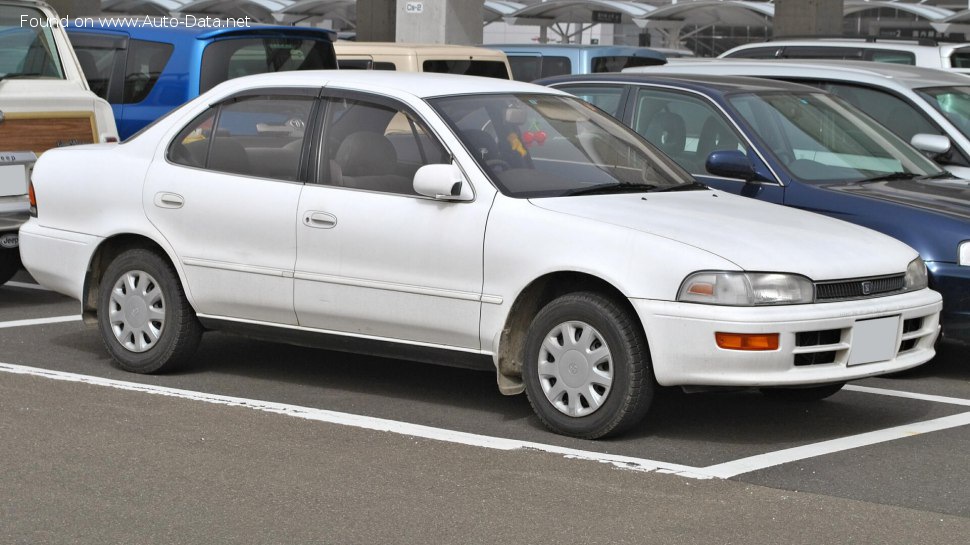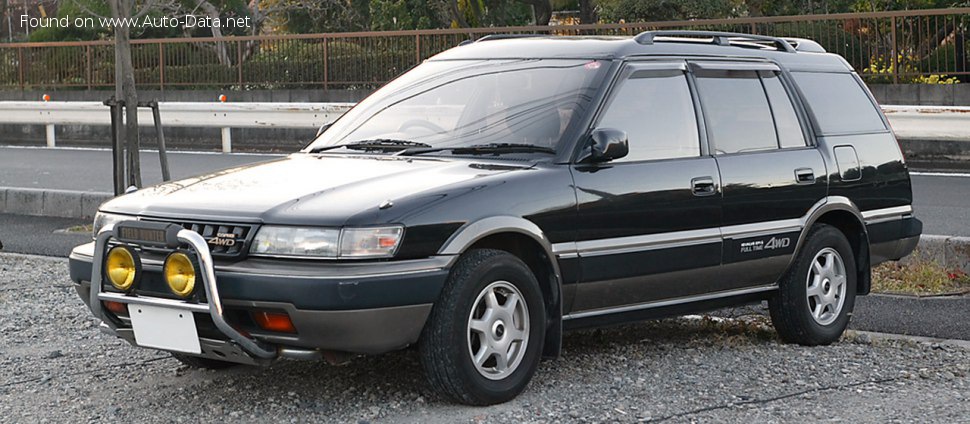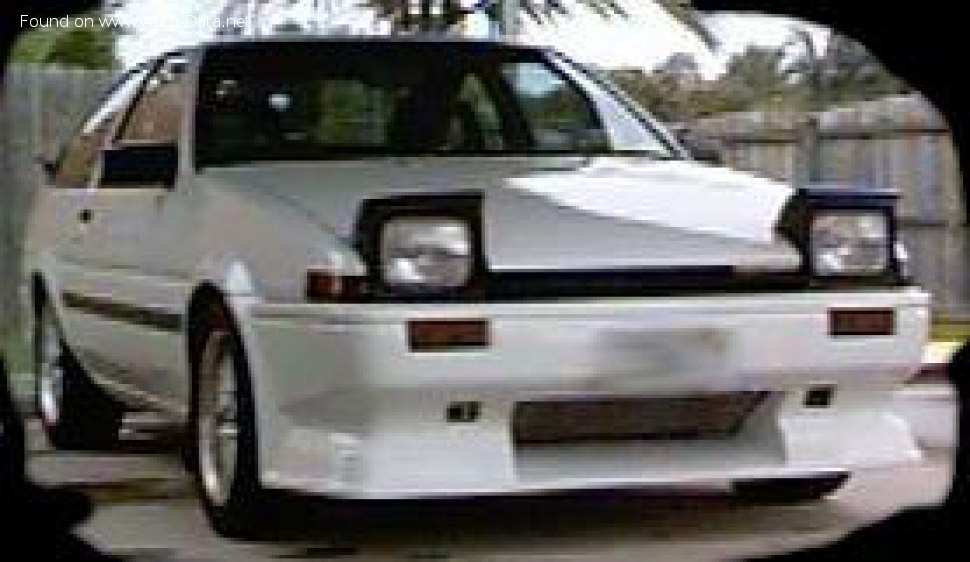
The Toyota Sprinter Trueno 1.5 i (105 Hp) represents a compelling chapter in Toyota’s history, specifically within the Japanese Domestic Market (JDM) during the early to mid-1990s. Produced from 1991 to 1995, this particular iteration of the Sprinter Trueno belonged to the sixth generation of the Sprinter lineup, often referred to by its chassis code, the AE101. While the Sprinter Trueno nameplate gained significant global recognition through its high-performance variants, particularly the AE86, the AE101 generation, including this 1.5 i model, continued to uphold a tradition of offering a blend of practical daily usability with a touch of sporty aesthetics. Positioned as a compact, two-door coupe, the Sprinter Trueno 1.5 i was designed to appeal to a broad segment of buyers seeking a reliable, efficient, and moderately engaging vehicle for urban commutes and occasional spirited drives within its primary market in Japan. Its architecture, derived from the highly successful Corolla platform, ensured robust engineering and widespread availability of parts, contributing to its enduring popularity and a solid reputation for dependability that Toyota is renowned for worldwide. This model, with its naturally aspirated 1.5-liter engine, offered an accessible entry point into the Sprinter Trueno lineage, providing a balance of performance and fuel economy that was highly valued in its era.
The Toyota Sprinter Trueno: Engineering and Market Context
The sixth-generation Toyota Sprinter Trueno, which encompasses the 1.5 i (105 Hp) model, emerged during a period of significant technological advancement in the automotive industry. Building upon the legacy of its predecessors, this generation adopted a more contemporary design and incorporated modern engineering principles while retaining the core values of the Sprinter Trueno. Unlike some of its more aggressively styled performance-oriented siblings, the 1.5 i variant focused on delivering a refined driving experience suitable for a wider audience. Its front-wheel-drive architecture marked a departure from the rear-wheel-drive layout of the iconic AE86, a change implemented across the Sprinter and Corolla lines to optimize interior space, improve fuel efficiency, and enhance manufacturing commonality. This strategic shift allowed Toyota to offer a diverse range of vehicles, from economical sedans to sporty coupes, all benefiting from a shared and proven platform. The Sprinter Trueno name, historically synonymous with lightweight agility and responsive handling, continued to evoke a sense of driving enjoyment, even in its more modest iterations like the 1.5 i, which served as a gateway for many enthusiasts into the world of Japanese performance vehicles.
Engine and Performance: A Balanced Proposition
At the heart of the Toyota Sprinter Trueno 1.5 i lies a meticulously engineered 1.5-liter (1497 cm³) inline-four engine, a testament to Toyota’s commitment to producing efficient and durable powertrains. This naturally aspirated unit, designated as a multi-port manifold injection system, delivers a respectable 105 horsepower at a peak of 6400 rpm, showcasing its ability to rev freely and provide a lively character. The engine’s design incorporates a Double Overhead Camshaft (DOHC) valvetrain with four valves per cylinder, a sophisticated setup for its time that optimized airflow and combustion efficiency. This not only contributed to the engine’s power output but also its smooth operation throughout the rev range. Torque figures stand at 127 Nm (93.67 lb-ft) at a relatively low 3200 rpm, providing ample low-end grunt for city driving and responsive acceleration from a standstill. The engine’s bore and stroke measurements of 74 mm (2.91 in.) and 87 mm (3.43 in.), respectively, indicate an oversquare design, typically favoring higher engine speeds and power output. With a compression ratio of 9.4:1, the engine was designed to run efficiently on standard gasoline, making it an economical choice for daily use. The powertrain architecture is characterized by an internal combustion engine driving the front wheels, a common and effective layout for compact cars of this era, offering predictable handling and excellent traction in various conditions. Weighing in at a kerb weight of 2270.76 lbs (1030 kg), the Sprinter Trueno 1.5 i boasts a weight-to-power ratio of 9.8 kg/Hp (101.9 Hp/tonne) and a weight-to-torque ratio of 8.1 kg/Nm (123.3 Nm/tonne), indicating a well-balanced power delivery for its class. This combination of a free-revving engine and lightweight chassis ensured that even this non-performance variant offered an engaging and enjoyable driving experience, perfectly suited for its intended market.
Design and Features: Sporty Aesthetics and Practicality
The Toyota Sprinter Trueno 1.5 i (105 Hp) adopted a sleek and aerodynamic coupe body style, characterized by its two doors and seating for five occupants. Its design language was distinctly of the early 1990s, featuring smooth lines, flush glass, and a relatively low stance that hinted at its sporty aspirations. The exterior dimensions—a length of 168.7 inches (4285 mm), a width of 66.73 inches (1695 mm), and a height of 51.38 inches (1305 mm)—contributed to its compact and agile appearance, making it well-suited for maneuvering through crowded urban environments typical of Japan. A wheelbase of 97.05 inches (2465 mm) provided a stable platform, while the front track of 57.87 inches (1470 mm) and rear track of 57.48 inches (1460 mm) ensured a confident road presence. Inside, despite its compact exterior, the 5-seat configuration offered a degree of practicality, allowing for comfortable transport of passengers, albeit with the typical compromises of a two-door coupe for rear-seat access. While the data does not detail specific interior features, one can infer from the era and market segment that the Sprinter Trueno 1.5 i likely offered a driver-focused cockpit with clear instrumentation, ergonomically placed controls, and durable materials. For safety and handling, the vehicle was equipped with ventilated disc brakes at the front, providing effective stopping power, complemented by drum brakes at the rear. This braking setup was standard for many compact cars of its time, offering a reliable and cost-effective solution. The suspension system, while not explicitly detailed, would have been tuned to provide a comfortable ride without sacrificing too much of the agile handling characteristic expected from a Sprinter Trueno. The 13.21 US gallons (50 liters) fuel tank capacity provided a reasonable cruising range, further enhancing its appeal as a practical daily driver.
Technical Specifications: Toyota Sprinter Trueno 1.5 i (105 Hp)
| Brand | Toyota |
| Model | Sprinter |
| Generation | Sprinter Trueno |
| Type (Engine) | 1.5 i (105 Hp) |
| Start of Production | 1991 year |
| End of Production | 1995 year |
| Powertrain Architecture | Internal Combustion engine |
| Body type | Coupe |
| Seats | 5 |
| Doors | 2 |
| Fuel Type | Petrol (Gasoline) |
| Weight-to-power ratio | 9.8 kg/Hp, 101.9 Hp/tonne |
| Weight-to-torque ratio | 8.1 kg/Nm, 123.3 Nm/tonne |
| Power | 105 Hp @ 6400 rpm. |
| Power per liter | 70.1 Hp/l |
| Torque | 127 Nm (93.67 lb.-ft.) @ 3200 rpm. |
| Engine layout | Front, Transverse |
| Engine displacement | 1497 cm³ (91.35 cu. in.) |
| Number of cylinders | 4 |
| Engine configuration | Inline |
| Cylinder Bore | 74 mm (2.91 in.) |
| Piston Stroke | 87 mm (3.43 in.) |
| Compression ratio | 9.4:1 |
| Number of valves per cylinder | 4 |
| Fuel injection system | Multi-port manifold injection |
| Engine aspiration | Naturally aspirated engine |
| Valvetrain | DOHC |
| Kerb Weight | 1030 kg (2270.76 lbs) |
| Fuel tank capacity | 50 l (13.21 US gal) |
| Length | 4285 mm (168.7 in.) |
| Width | 1695 mm (66.73 in.) |
| Height | 1305 mm (51.38 in.) |
| Wheelbase | 2465 mm (97.05 in.) |
| Front track | 1470 mm (57.87 in.) |
| Rear (Back) track | 1460 mm (57.48 in.) |
| Drivetrain Architecture | The Internal combustion engine (ICE) drives the front wheels of the vehicle. |
| Drive wheel | Front wheel drive |
| Front brakes | Ventilated discs |
| Rear brakes | Drum |