The Toyota Sprinter Trueno 1.5 i (94 Hp) represents a significant chapter in Toyota’s storied history of producing reliable and engaging compact cars. Originating from Japan, this particular model belongs to the fifth generation of the Sprinter Trueno, specifically the AE92 chassis, which was produced from 1987 to 1991. While not officially sold in the United States, the Sprinter Trueno, alongside its twin, the Toyota Corolla Levin, carved out a niche in its home market as a sporty and accessible coupe. This generation marked a pivotal shift for the Trueno line, moving from the rear-wheel-drive configuration of its iconic AE86 predecessor to a front-wheel-drive powertrain, a decision that reflected the evolving automotive landscape and Toyota’s strategy to optimize packaging, efficiency, and broader appeal in the late 1980s. The 1.5 i (94 Hp) variant was positioned as an economical yet spirited option within the lineup, offering a blend of daily usability with a touch of Toyota’s renowned engineering prowess.
The Evolution of the Toyota Sprinter Trueno
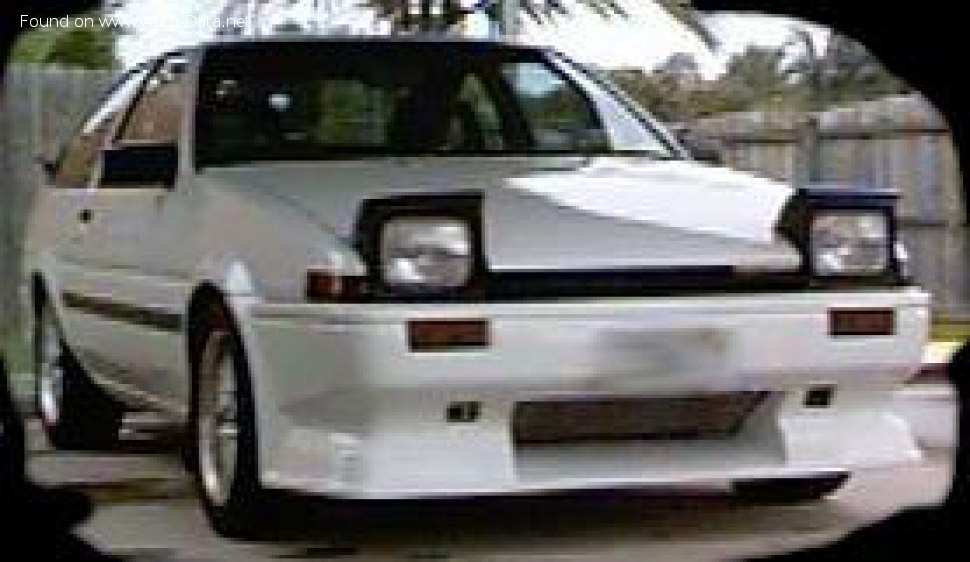
The Sprinter Trueno nameplate has a rich lineage, deeply intertwined with the Toyota Corolla family. While the AE86 generation gained legendary status for its lightweight, rear-wheel-drive dynamics, making it a favorite among enthusiasts and a cultural icon, the AE92 generation embarked on a new trajectory. This shift to front-wheel drive (FWD) for the Toyota Sprinter Trueno was a pragmatic move by Toyota, aligning the model with the majority of the Corolla range and enabling greater interior space, improved fuel economy, and more predictable handling characteristics, especially in adverse weather conditions. Despite the change in drivetrain, the AE92 Sprinter Trueno retained its coupe body style and distinct pop-up headlights, differentiating it visually from its Corolla Levin sibling which featured fixed headlights. It continued to target a youthful demographic seeking a stylish and reliable compact car with a sporty edge, embodying the spirit of affordable performance that Toyota had successfully cultivated.
Engine & Performance: A Balanced Proposition
At the heart of the Toyota Sprinter Trueno 1.5 i (94 Hp) lies a meticulously engineered 1.5-liter inline four-cylinder engine, a testament to Toyota’s commitment to efficiency and smooth power delivery. This naturally aspirated gasoline engine, with a displacement of 1496 cm3 (91.29 cu. in.), was designed with a focus on reliability and everyday performance. It produced a respectable 94 horsepower at 5400 rpm, which, when combined with its relatively light kerb weight of 2204.62 lbs (1000 kg), resulted in a weight-to-power ratio of 10.6 kg/Hp, or 94 Hp per tonne. This figure suggests a nimble and responsive driving experience for a compact coupe of its era, particularly in urban environments and on winding roads.
Torque output for this 1.5-liter unit stood at 132 Nm (97.36 lb.-ft.) at 4400 rpm, providing ample pulling power across a usable rev range. The engine’s layout was front, transverse, a common configuration for FWD vehicles that optimizes space and weight distribution. A significant technical highlight was the engine’s DOHC (Double Overhead Camshaft) valvetrain with four valves per cylinder, a sophisticated setup for a compact engine in the late 1980s. This advanced valvetrain, coupled with a multi-port manifold fuel injection system, ensured precise fuel delivery and efficient combustion, contributing to both its power output and fuel economy. The compression ratio of 9.8:1 further optimized the combustion process.
The powertrain architecture of the Toyota Sprinter Trueno was explicitly front-wheel drive, with the internal combustion engine driving the front wheels. This choice provided a predictable and stable driving dynamic, appealing to a broad range of drivers. The engine’s power per liter was 62.8 Hp/l, a respectable figure for a naturally aspirated engine of that period, highlighting Toyota’s engineering efficiency. The bore and stroke measurements of 74 mm (2.91 in.) and 87 mm (3.43 in.) respectively, indicate an engine designed for a balance of torque and revvability, making it a versatile performer for daily driving and occasional spirited runs. The 50-liter (13.21 US gal) fuel tank capacity offered a decent cruising range, making the Sprinter Trueno a practical choice for longer journeys as well as city commutes.
Design & Features: Sporty Aesthetics and Practicality
The design of the Toyota Sprinter Trueno 1.5 i (94 Hp) was characteristic of late 1980s Japanese automotive styling, blending sharp lines with rounded edges to create an aerodynamic and contemporary aesthetic. As a two-door coupe, it exuded a sporty appeal, further enhanced by its distinctive pop-up headlights, a popular design cue of the era that contributed to a sleek front profile when retracted. The vehicle’s dimensions — 168.11 inches (4270 mm) in length, 65.75 inches (1670 mm) in width, and 51.18 inches (1300 mm) in height — made it a compact and agile car, perfectly suited for navigating congested urban environments while still offering a confident stance on the road.
Despite its coupe designation, the Sprinter Trueno offered seating for five occupants, making it a surprisingly practical choice for a small family or group of friends, though the rear seats would be more suited for children or short trips for adults. The wheelbase of 95.67 inches (2430 mm) contributed to both its stable ride and nimble handling. The front track measured 56.3 inches (1430 mm) and the rear track 55.51 inches (1410 mm), providing a solid foundation for its FWD dynamics. While specific interior features are not detailed in the provided data, a car of this segment and era from Toyota would typically include comfortable cloth seating, a functional dashboard layout with clear instrumentation, and standard amenities for the time, potentially including air conditioning, power windows, and a decent audio system as optional extras in its primary market.
The overall design philosophy prioritized a balance between aesthetics and functionality. The compact dimensions, combined with the efficient FWD powertrain, meant the Sprinter Trueno was not only stylish but also economical to run and easy to park. Its kerb weight of 2204.62 lbs underscored its lightweight construction, contributing to its responsive handling and modest performance figures. The Sprinter Trueno 1.5 i (94 Hp) was a well-rounded package, offering a youthful design, practical interior space for its class, and the inherent reliability and quality expected from a Toyota product.
Technical Specifications: Toyota Sprinter Trueno 1.5 i (94 Hp)
| Brand | Toyota |
| Model | Sprinter |
| Generation | Sprinter Trueno |
| Type (Engine) | 1.5 i (94 Hp) |
| Start of production | 1987 year |
| End of production | 1991 year |
| Powertrain Architecture | Internal Combustion engine |
| Body type | Coupe |
| Seats | 5 |
| Doors | 2 |
| Fuel Type | Petrol (Gasoline) |
| Weight-to-power ratio | 10.6 kg/Hp, 94 Hp/tonne |
| Weight-to-torque ratio | 7.6 kg/Nm, 132 Nm/tonne |
| Power | 94 Hp @ 5400 rpm. |
| Power per litre | 62.8 Hp/l |
| Torque | 132 Nm @ 4400 rpm. (97.36 lb.-ft. @ 4400 rpm.) |
| Engine layout | Front, Transverse |
| Engine displacement | 1496 cm3 (91.29 cu. in.) |
| Number of cylinders | 4 |
| Engine configuration | Inline |
| Cylinder Bore | 74 mm (2.91 in.) |
| Piston Stroke | 87 mm (3.43 in.) |
| Compression ratio | 9.8:1 |
| Number of valves per cylinder | 4 |
| Fuel injection system | Multi-port manifold injection |
| Engine aspiration | Naturally aspirated engine |
| Valvetrain | DOHC |
| Kerb Weight | 1000 kg (2204.62 lbs) |
| Fuel tank capacity | 50 l (13.21 US gal | 11 UK gal) |
| Length | 4270 mm (168.11 in.) |
| Width | 1670 mm (65.75 in.) |
| Height | 1300 mm (51.18 in.) |
| Wheelbase | 2430 mm (95.67 in.) |
| Front track | 1430 mm (56.3 in.) |
| Rear (Back) track | 1410 mm (55.51 in.) |
| Drivetrain Architecture | The Internal combustion engine (ICE) drives the front wheels of the vehicle. |
| Drive wheel | Front wheel drive |