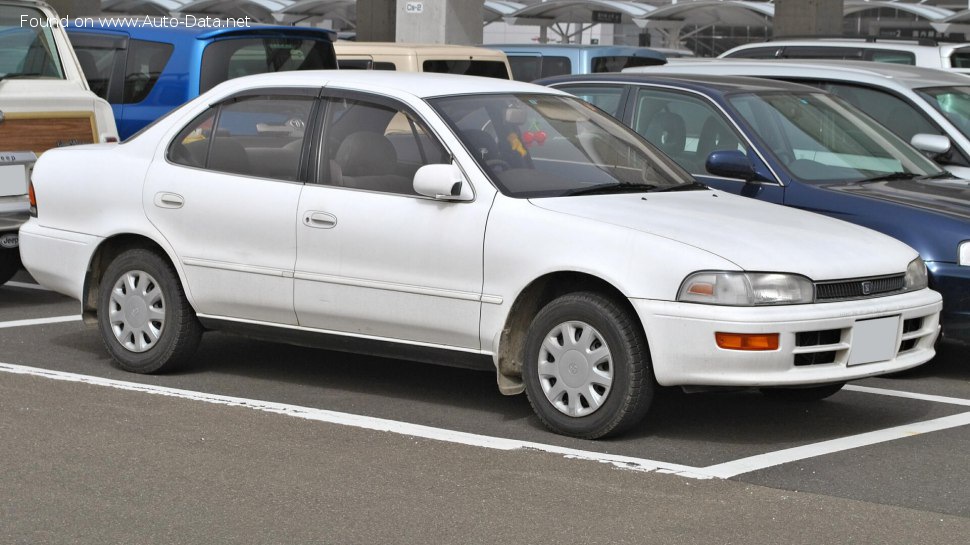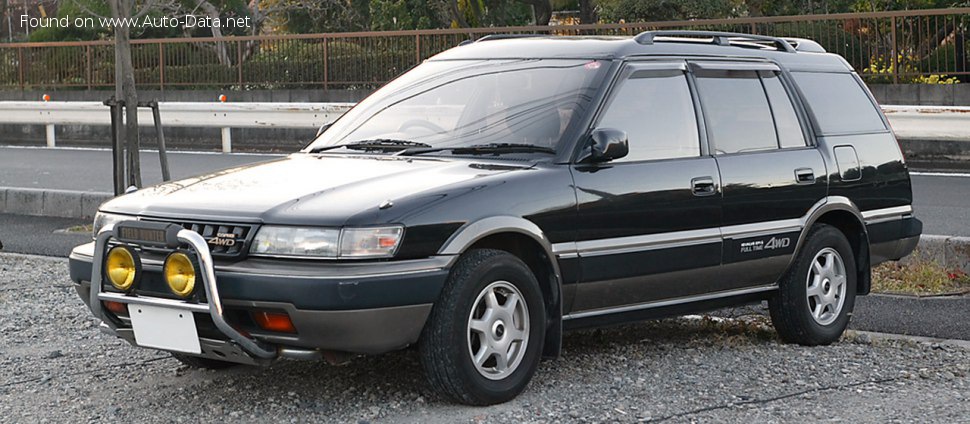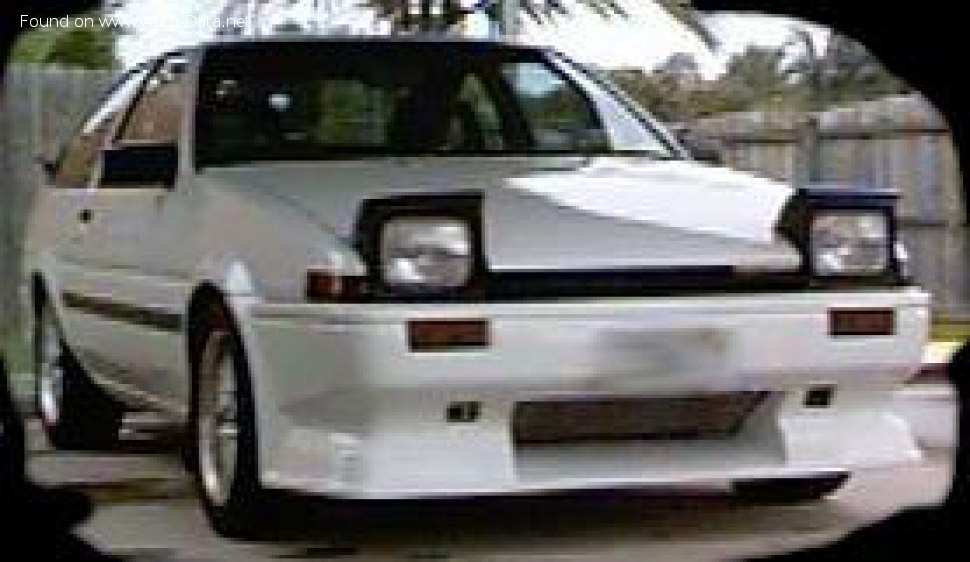
The Toyota Sprinter Trueno 1.6 (85 Hp) Automatic, produced between 1983 and 1987, represents a significant chapter in Toyota’s history, particularly within the Japanese domestic market (JDM). While the Sprinter Trueno name is famously associated with the rear-wheel-drive AE86 chassis, celebrated globally for its lightweight, nimble handling, and motorsport prowess, this particular variant, the 1.6 (85 Hp) Automatic, hails from a different lineage within the Sprinter family, specifically featuring a front-wheel-drive (FWD) architecture. This distinction is crucial for understanding its intended market segment and performance characteristics. Positioned as a stylish and practical compact coupe for the everyday Japanese consumer, it offered a blend of Toyota’s renowned reliability, fuel efficiency, and a comfortable automatic driving experience, rather than the raw, enthusiast-focused performance of its more iconic rear-wheel-drive sibling. Its role was to provide an accessible and appealing personal vehicle in a bustling urban and suburban landscape, capitalizing on the Sprinter’s reputation for dependability and value.
Engineering and Performance of the Toyota Sprinter Trueno
The heart of this particular Toyota Sprinter Trueno is its naturally aspirated 3A-U engine. With a displacement of 1452 cubic centimeters (approximately 1.5 liters or 88.61 cubic inches), this inline-four power plant was designed with an emphasis on smooth operation, fuel economy, and robust reliability, characteristics that were highly valued in the early to mid-1980s. It produced a modest 85 horsepower at 5600 revolutions per minute, yielding a power-per-liter figure of 58.5 horsepower per liter. While not a powerhouse, this output was entirely adequate for the vehicle’s intended purpose as a daily commuter and light cruiser.
Torque delivery was equally focused on practicality, with 118 Newton-meters (equivalent to 87.03 pound-feet) peaking at a relatively low 3600 rpm. This low-end torque characteristic meant that the engine provided accessible pulling power for city driving and merging, reducing the need for constant high-revving. The engine’s naturally aspirated design, devoid of turbocharging or supercharging, contributed to its mechanical simplicity and inherent reliability, reducing maintenance complexity and cost for owners. The powertrain architecture, as specified, explicitly drives the front wheels, marking a clear departure from the rear-wheel-drive configuration often associated with the ‘Trueno’ moniker in enthusiast circles.
Mated to this engine was a 4-speed automatic transmission. This choice of gearbox further underscored the vehicle’s design philosophy: ease of use and comfort. For the average driver navigating congested city streets or embarking on longer, relaxed journeys, an automatic transmission offered a significant advantage in convenience over a manual counterpart. While it might have sacrificed some degree of driver engagement or outright acceleration, it greatly enhanced the car’s appeal to a broader demographic seeking a hassle-free driving experience. The combination of the 3A-U engine and the automatic transmission resulted in a car that prioritized smooth, predictable performance and economical operation, aligning perfectly with the practical demands of its primary market.
In terms of its dynamic capabilities, the Sprinter Trueno 1.6 (85 Hp) Automatic posted a weight-to-power ratio of 10.8 kilograms per horsepower (or 92.9 horsepower per tonne), and a weight-to-torque ratio of 7.8 kilograms per Newton-meter (129 Newton-meters per tonne). With a curb weight of 915 kilograms (approximately 2017.23 pounds), the vehicle was relatively light, contributing positively to its agility and fuel efficiency. This lightweight construction, combined with the FWD layout, made it a manageable and predictable car to drive, well-suited to the varied driving conditions encountered in Japan.
Design and Features of the Toyota Sprinter Trueno
The Toyota Sprinter Trueno 1.6 (85 Hp) Automatic adopted a classic coupe body type, characterized by its sleek, two-door profile. This design choice imbued the car with a sportier and more youthful appeal compared to its sedan counterparts, making it attractive to younger buyers or those seeking a personal car with a touch of flair. Despite its coupe designation, it was designed to accommodate five occupants, offering a degree of practicality that belied its sporty exterior. The 2-door configuration, while perhaps less convenient for rear-seat access than a 4-door sedan, reinforced its identity as a personal compact vehicle.
Dimensionally, the Sprinter Trueno was compact, perfectly suiting the often-narrow streets and limited parking spaces prevalent in its primary market. It measured 4205 millimeters (165.55 inches) in length, 1625 millimeters (63.98 inches) in width, and stood 1335 millimeters (52.56 inches) tall. The wheelbase, at 2400 millimeters (94.49 inches), provided a stable platform for its size, contributing to a comfortable ride quality for its segment. These dimensions placed it firmly within the compact class, a highly competitive segment in Japan during the 1980s.
As a vehicle from the mid-1980s, the Sprinter Trueno’s features would have been typical for its class and era. While specific luxury amenities are not detailed in the technical specifications, one can infer a focus on essential comforts and functional design. Power steering would likely have been standard or optional, enhancing maneuverability. Interior appointments would have emphasized durability and straightforward ergonomics, with durable cloth upholstery and a logical dashboard layout. Safety features, by modern standards, would have been rudimentary, primarily consisting of seatbelts and a robust body structure. Anti-lock braking systems (ABS) and airbags were not common in this class of vehicle during the 1980s, reflecting the automotive safety standards of the time.
The design language of the Sprinter Trueno reflected the prevailing trends of the early 1980s, characterized by clean lines, a relatively boxy silhouette with subtle aerodynamic touches, and functional aesthetics. The compact dimensions and coupe styling offered a visually engaging package that was both practical for urban environments and appealing for personal use. The focus was on creating a reliable, efficient, and aesthetically pleasing vehicle that resonated with the daily needs and aspirations of its target demographic, rather than pushing boundaries in terms of high-performance or cutting-edge luxury.
The 50-liter (13.21 US gallons) fuel tank capacity provided a respectable cruising range, further cementing its role as a versatile daily driver capable of both urban commutes and longer road trips without frequent refueling stops. Overall, the Toyota Sprinter Trueno 1.6 (85 Hp) Automatic was a well-rounded offering that delivered on Toyota’s promise of quality, reliability, and sensible design, making it a popular choice in its home market throughout its production run.
Technical Specifications
| Brand | Toyota |
| Model | Sprinter |
| Generation | Sprinter Trueno |
| Type (Engine) | 1.6 (85 Hp) Automatic |
| Start of production | 1983 year |
| End of production | 1987 year |
| Powertrain Architecture | Internal Combustion engine |
| Body type | Coupe |
| Seats | 5 |
| Doors | 2 |
| Fuel Type | Petrol (Gasoline) |
| Weight-to-power ratio | 10.8 kg/Hp, 92.9 Hp/tonne |
| Weight-to-torque ratio | 7.8 kg/Nm, 129 Nm/tonne |
| Power | 85 Hp @ 5600 rpm. |
| Power per litre | 58.5 Hp/l |
| Torque | 118 Nm @ 3600 rpm (87.03 lb.-ft. @ 3600 rpm) |
| Engine Model/Code | 3A-U |
| Engine displacement | 1452 cm3 (1.5 Liters, 88.61 cu. in.) |
| Engine aspiration | Naturally aspirated engine |
| Kerb Weight | 915 kg (2017.23 lbs) |
| Fuel tank capacity | 50 l (13.21 US gal | 11 UK gal) |
| Length | 4205 mm (165.55 in.) |
| Width | 1625 mm (63.98 in.) |
| Height | 1335 mm (52.56 in.) |
| Wheelbase | 2400 mm (94.49 in.) |
| Drivetrain Architecture | The Internal combustion engine (ICE) drives the front wheels of the vehicle. |
| Drive wheel | Front wheel drive |
| Number of gears and type of gearbox | 4 gears, automatic transmission |