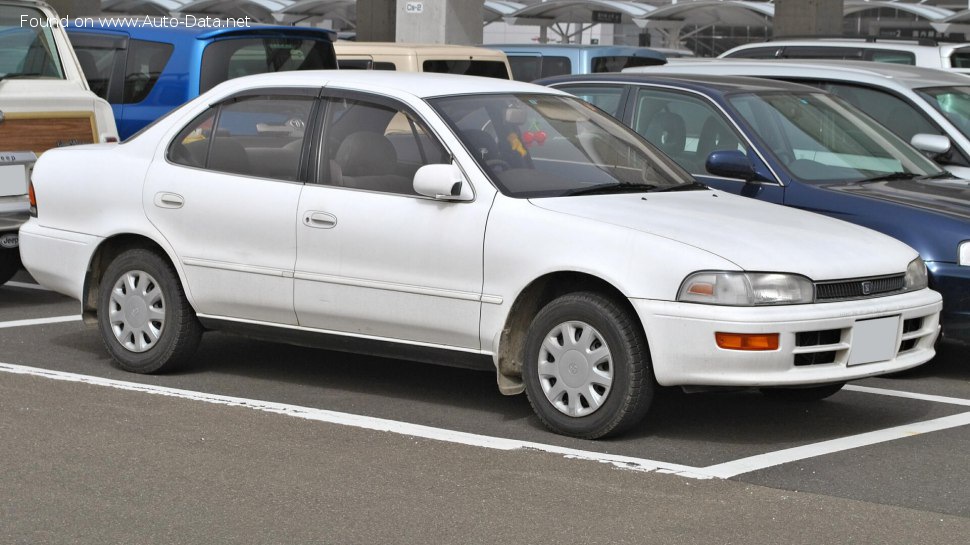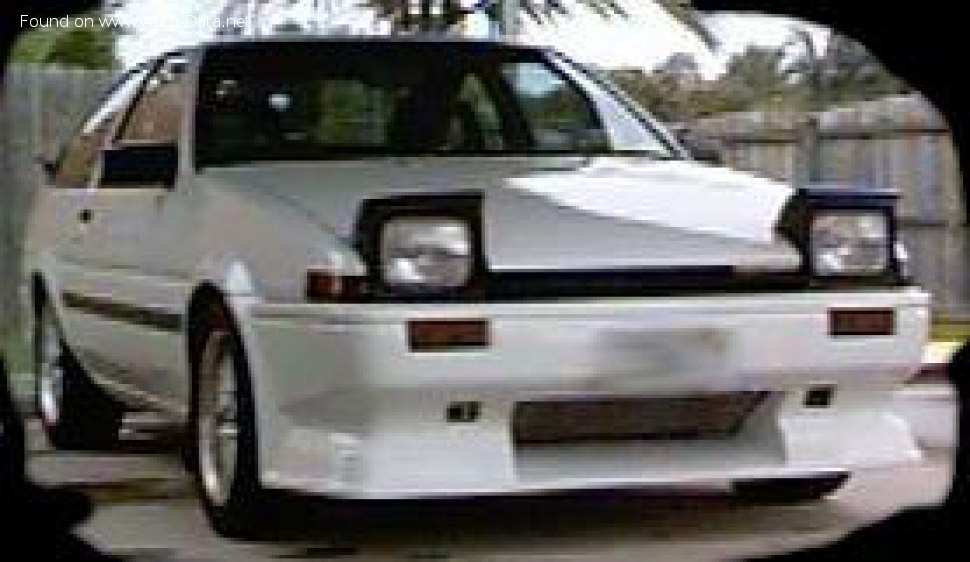
The Toyota Sprinter Trueno 1.6 i (115 Hp), produced from 1987 to 1991, represents a significant chapter in the history of compact, sporty coupes from Japan. While the Sprinter Trueno nameplate gained global recognition for its rear-wheel-drive AE86 predecessor, this particular generation, often referred to as the AE92 chassis, marked a pivotal shift for the model line to a front-wheel-drive (FWD) architecture. As a vehicle primarily intended for the Japanese domestic market (JDM), the Sprinter Trueno 1.6 i (115 Hp) embodied Toyota’s commitment to producing engaging, yet practical, vehicles during an era of significant technological advancement. This model was positioned as an accessible performance coupe, offering a compelling blend of spirited driving dynamics, renowned Toyota reliability, and a sleek, contemporary design that appealed to a younger demographic seeking an affordable and fun-to-drive car.
The Evolution of the Toyota Sprinter Trueno
The Sprinter Trueno lineage is steeped in performance heritage, and the 1987-1991 generation continued this tradition, albeit with a fundamental change in its drivetrain layout. Shifting from the revered rear-wheel-drive setup of the AE86 to a front-wheel-drive configuration in the AE92 was a pragmatic decision by Toyota, reflecting broader industry trends towards FWD for efficiency, packaging, and cost-effectiveness in compact cars. Despite this change, the Toyota Sprinter Trueno 1.6 i (115 Hp) retained a character that resonated with enthusiasts. It was part of Toyota’s broader strategy to offer a diverse range of vehicles that catered to various consumer needs, from economical daily drivers to more performance-oriented offerings. This generation of Sprinter Trueno was celebrated for its balanced chassis, responsive steering, and the energetic performance delivered by its high-revving, naturally aspirated engine, making it a popular choice in its home market.
Engine & Performance
At the heart of the Toyota Sprinter Trueno 1.6 i (115 Hp) was a meticulously engineered 1.6-liter inline-four engine, a powerplant that exemplified Toyota’s expertise in developing high-revving, efficient, and durable internal combustion engines. This unit featured a Double Overhead Camshaft (DOHC) valvetrain with four valves per cylinder, a sophisticated setup for its time that allowed for optimal airflow and combustion efficiency. With a naturally aspirated aspiration, the engine produced a respectable 115 horsepower at a peak of 6600 rpm, showcasing its high-strung, free-revving nature. Torque output stood at 135 Nm (99.57 lb.-ft.) at 4800 rpm, providing a broad powerband that was engaging to exploit through its manual transmission (though not specified, manual was common for such models). The engine’s layout was front-transverse, driving the front wheels, a configuration that optimized interior space and manufacturing efficiency.
The performance characteristics of the Sprinter Trueno 1.6 i were further enhanced by its relatively light curb weight of 2204.62 lbs (1000 kg). This resulted in a favorable weight-to-power ratio of 8.7 kg/Hp (115 Hp/tonne) and a weight-to-torque ratio of 7.4 kg/Nm (135 Nm/tonne), indicating a lively and agile driving experience. The multi-port manifold injection system ensured precise fuel delivery, contributing to both its performance and fuel efficiency. With a compression ratio of 9.5:1, the engine was designed for optimal energy extraction from gasoline fuel. The combination of a lightweight chassis, a responsive DOHC engine, and a well-sorted front-wheel-drive system made the Sprinter Trueno 1.6 i a joy to drive, particularly on winding roads where its nimble handling could be fully appreciated. It offered a compelling blend of everyday usability and genuine driving excitement, a hallmark of Toyota’s performance coupes of the era.
Design & Features
The Toyota Sprinter Trueno 1.6 i (115 Hp) adopted a sleek and aerodynamic coupe body style, characterized by its two doors and seating for five occupants. Its design language was distinctly late 1980s, featuring smooth lines, a relatively low stance, and a purposeful, sporty aesthetic that was popular during the period. The dimensions of the vehicle – 168.11 inches (4270 mm) in length, 65.75 inches (1670 mm) in width, and 51.18 inches (1300 mm) in height – contributed to its compact footprint, making it agile and easy to maneuver in urban environments while still offering a decent interior volume for its class. The wheelbase of 95.67 inches (2430 mm) provided a stable platform, and the front and rear track widths of 56.3 inches (1430 mm) and 55.51 inches (1410 mm) respectively, contributed to its balanced handling characteristics.
Inside, the Sprinter Trueno offered a driver-focused cockpit with controls logically arranged for ease of use. While specific luxury features are not detailed in the provided data, typical amenities for a Japanese coupe of this era would have included air conditioning, power windows, and a decent audio system, all aimed at enhancing occupant comfort and convenience. The five-seat configuration, while technically capable, meant the rear seats were more suitable for occasional use or smaller passengers, common for compact coupes. Safety features, by late 1980s standards, would have focused on passive restraints like seatbelts, and a robust body structure designed to absorb impact forces. The overall design ethos was one of understated sportiness, blending practicality with an engaging driving experience, making the Sprinter Trueno a compelling package for its target audience in the Japanese market.
Technical Specifications
| Brand | Toyota |
| Model | Sprinter |
| Generation | Sprinter Trueno |
| Type (Engine) | 1.6 i (115 Hp) |
| Start of production | 1987 year |
| End of production | 1991 year |
| Powertrain Architecture | Internal Combustion engine |
| Body type | Coupe |
| Seats | 5 |
| Doors | 2 |
| Fuel Type | Petrol (Gasoline) |
| Weight-to-power ratio | 8.7 kg/Hp, 115 Hp/tonne |
| Weight-to-torque ratio | 7.4 kg/Nm, 135 Nm/tonne |
| Power | 115 Hp @ 6600 rpm. |
| Power per litre | 72.5 Hp/l |
| Torque | 135 Nm @ 4800 rpm (99.57 lb.-ft. @ 4800 rpm) |
| Engine layout | Front, Transverse |
| Engine displacement | 1587 cm3 (96.84 cu. in.) |
| Number of cylinders | 4 |
| Engine configuration | Inline |
| Cylinder Bore | 81 mm (3.19 in.) |
| Piston Stroke | 77 mm (3.03 in.) |
| Compression ratio | 9.5:1 |
| Number of valves per cylinder | 4 |
| Fuel injection system | Multi-port manifold injection |
| Engine aspiration | Naturally aspirated engine |
| Valvetrain | DOHC |
| Kerb Weight | 1000 kg (2204.62 lbs.) |
| Fuel tank capacity | 50 l (13.21 US gal | 11 UK gal) |
| Length | 4270 mm (168.11 in.) |
| Width | 1670 mm (65.75 in.) |
| Height | 1300 mm (51.18 in.) |
| Wheelbase | 2430 mm (95.67 in.) |
| Front track | 1430 mm (56.3 in.) |
| Rear (Back) track | 1410 mm (55.51 in.) |
| Drivetrain Architecture | The Internal combustion engine (ICE) drives the front wheels of the vehicle. |
| Drive wheel | Front wheel drive |