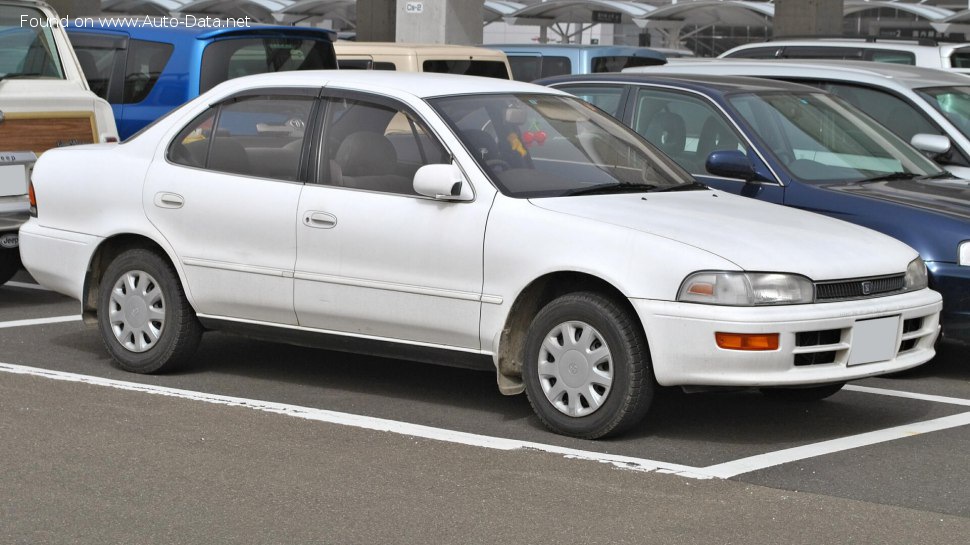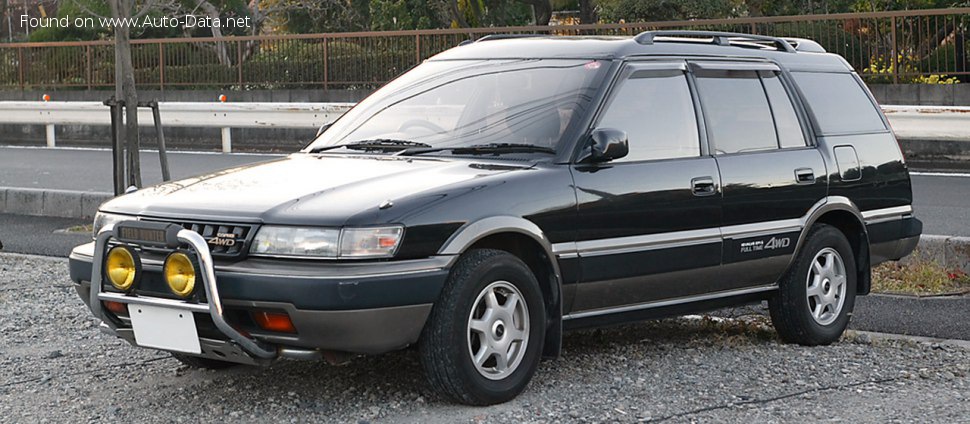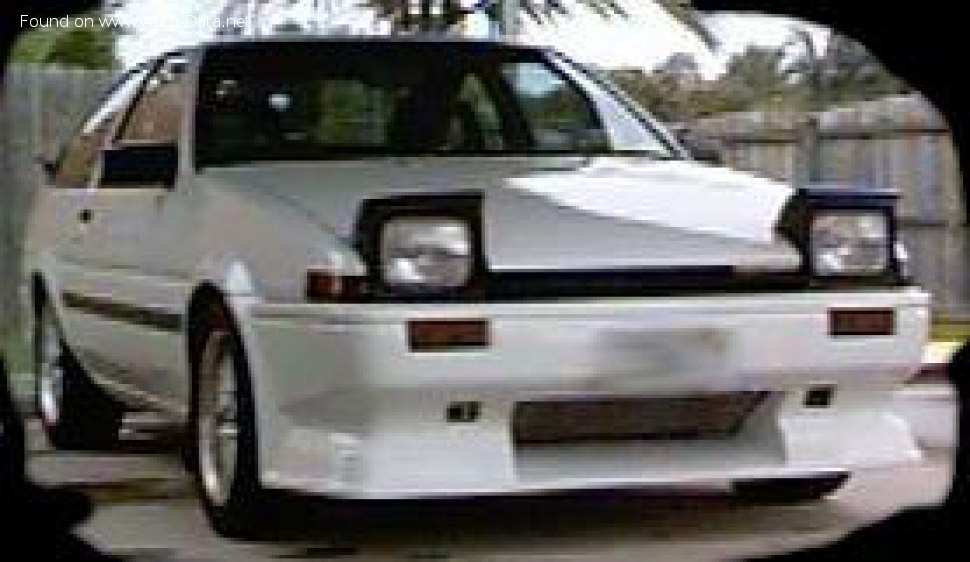
The Toyota Sprinter Trueno 1.6 i (115 Hp), produced from 1991 to 1995, represents a significant chapter in the storied history of Toyota’s compact performance coupes. Primarily a domestic market offering in Japan, the Sprinter Trueno shared its underpinnings with the Corolla, serving as its sportier, two-door counterpart. This particular generation, often associated with the AE101 chassis code, marked a pivotal shift for the Trueno lineage, transitioning from the rear-wheel-drive layout of its iconic AE86 predecessor to a front-wheel-drive architecture. Despite this departure, the 1.6 i (115 Hp) model retained a core appeal for enthusiasts, embodying Toyota’s commitment to engineering a lightweight, agile, and spirited compact car designed for an engaging driving experience. It carved out a niche in the early 1990s as a practical yet fun-to-drive coupe, appealing to younger buyers and those seeking a reliable daily driver with a hint of performance flair, all while maintaining the brand’s legendary reputation for durability and efficiency.
Engine and Performance of the Toyota Sprinter Trueno 1.6 i (115 Hp)
At the heart of the Toyota Sprinter Trueno 1.6 i (115 Hp) lies a meticulously engineered 1.6-liter (1587 cm³) inline four-cylinder engine, a testament to Toyota’s prowess in developing high-revving, efficient powerplants. This naturally aspirated unit, featuring a Double Overhead Camshaft (DOHC) valvetrain with four valves per cylinder, was designed to deliver a lively performance characteristic for its compact dimensions. With a bore of 3.19 inches (81 mm) and a piston stroke of 3.03 inches (77 mm), the engine’s slightly oversquare design contributed to its ability to rev freely, reaching its peak power output of 115 horsepower at a relatively high 6600 rpm. This power-per-liter figure of 72.5 HP/l was commendable for a non-turbocharged engine of its era, highlighting Toyota’s advanced engine tuning.
Torque delivery was equally well-managed, with 99.57 lb.-ft. (135 Nm) available at 4800 rpm. This mid-range torque, combined with the engine’s eager top-end power, provided a flexible and responsive driving experience, whether navigating city streets or enjoying spirited country road drives. Fueling was handled by a multi-port manifold injection system, ensuring precise fuel delivery and optimal combustion efficiency. The compression ratio of 9.5:1 was well-suited for regular gasoline, balancing performance with everyday usability.
The powertrain architecture placed the engine in a front, transverse layout, driving the front wheels. This front-wheel-drive (FWD) configuration, while a departure from the Trueno’s rear-wheel-drive heritage, offered benefits in terms of packaging efficiency, interior space, and manufacturing cost, aligning with the broader industry trend for compact cars. The vehicle’s kerb weight of 2270.76 lbs (1030 kg) resulted in a favorable weight-to-power ratio of 9 kg/Hp (approximately 19.8 lbs/Hp) and a weight-to-torque ratio of 7.6 kg/Nm (approximately 16.7 lbs/lb.-ft.). These figures underscore the Sprinter Trueno’s light and nimble character, allowing the 115 horsepower engine to provide more than adequate acceleration and a sense of agility that belied its modest power output on paper. The 13.21 US gallon (50-liter) fuel tank capacity, combined with the engine’s inherent efficiency, ensured a practical driving range for daily commuting and longer journeys alike.
Design and Features of the Toyota Sprinter Trueno
The Toyota Sprinter Trueno of the 1991-1995 generation presented a sleek and contemporary design that was characteristic of early 1990s Japanese automotive aesthetics. As a 2-door coupe, it offered a sportier profile compared to its sedan counterparts, featuring clean lines and a relatively low stance. The design prioritized aerodynamics and a youthful appeal, making it an attractive option for buyers seeking a blend of style and practicality. With an overall length of 168.7 inches (4285 mm), a width of 66.73 inches (1695 mm), and a height of 51.38 inches (1305 mm), the Trueno maintained compact dimensions, ideal for navigating crowded urban environments, particularly in its primary Japanese market.
The wheelbase, measuring 97.05 inches (2465 mm), contributed to the car’s stable yet agile handling characteristics. The front track of 57.87 inches (1470 mm) and a slightly narrower rear track of 57.48 inches (1460 mm) further enhanced its road-holding capabilities. Despite its coupe body style, the Sprinter Trueno was designed to accommodate five occupants, offering a surprisingly practical interior for a car of its class. While not explicitly detailed in the specifications, typical features for a Japanese compact coupe of this era would have included comfortable bucket seats for the front occupants, a well-arranged dashboard with clear instrumentation, and standard amenities such as air conditioning, power windows, and an audio system, all contributing to a comfortable and convenient driving environment.
In terms of safety and chassis dynamics, the Toyota Sprinter Trueno 1.6 i (115 Hp) was equipped with a robust setup for its time. The front wheels featured ventilated disc brakes, offering effective stopping power and heat dissipation, crucial for maintaining performance under demanding conditions. The rear wheels utilized drum brakes, a common and cost-effective solution for compact cars of this period, providing reliable braking assistance. The overall drivetrain architecture, with the internal combustion engine driving the front wheels, provided predictable handling characteristics and good traction in various conditions. The suspension system, though not detailed, would have been tuned to balance ride comfort with a degree of sporty firmness, consistent with the Trueno’s image as a driver-focused compact coupe. This combination of thoughtful design, practical features, and reliable mechanicals cemented the Sprinter Trueno’s reputation as a well-rounded and engaging vehicle.
Detailed Technical Specifications
| Brand | Toyota |
| Model | Sprinter |
| Generation | Sprinter Trueno |
| Type (Engine) | 1.6 i (115 Hp) |
| Start of production | 1991 year |
| End of production | 1995 year |
| Powertrain Architecture | Internal Combustion engine |
| Body type | Coupe |
| Seats | 5 |
| Doors | 2 |
| Fuel Type | Gasoline (Petrol) |
| Weight-to-power ratio | 9 kg/Hp, 111.7 Hp/tonne |
| Weight-to-torque ratio | 7.6 kg/Nm, 131.1 Nm/tonne |
| Power | 115 Hp @ 6600 rpm. |
| Power per liter | 72.5 Hp/l |
| Torque | 135 Nm @ 4800 rpm. (99.57 lb.-ft.) |
| Engine layout | Front, Transverse |
| Engine displacement | 1587 cm³ (1.6 liters, 96.84 cu. in.) |
| Number of cylinders | 4 |
| Engine configuration | Inline |
| Cylinder Bore | 81 mm (3.19 in.) |
| Piston Stroke | 77 mm (3.03 in.) |
| Compression ratio | 9.5:1 |
| Number of valves per cylinder | 4 |
| Fuel injection system | Multi-port manifold injection |
| Engine aspiration | Naturally aspirated engine |
| Valvetrain | DOHC |
| Kerb Weight | 1030 kg (2270.76 lbs.) |
| Fuel tank capacity | 50 l (13.21 US gal | 11 UK gal) |
| Length | 4285 mm (168.7 in.) |
| Width | 1695 mm (66.73 in.) |
| Height | 1305 mm (51.38 in.) |
| Wheelbase | 2465 mm (97.05 in.) |
| Front track | 1470 mm (57.87 in.) |
| Rear (Back) track | 1460 mm (57.48 in.) |
| Drivetrain Architecture | The Internal combustion engine (ICE) drives the front wheels of the vehicle. |
| Drive wheel | Front wheel drive |
| Front brakes | Ventilated discs |
| Rear brakes | Drum |