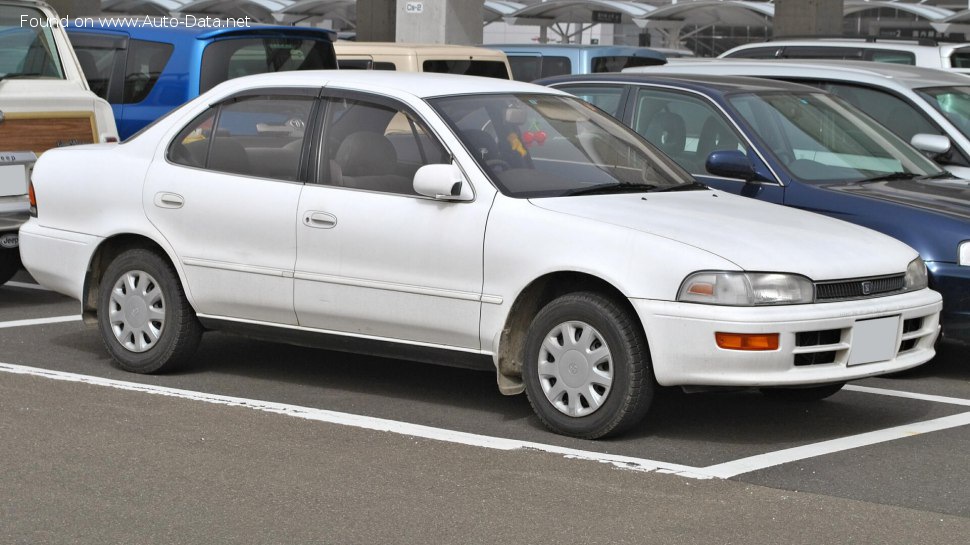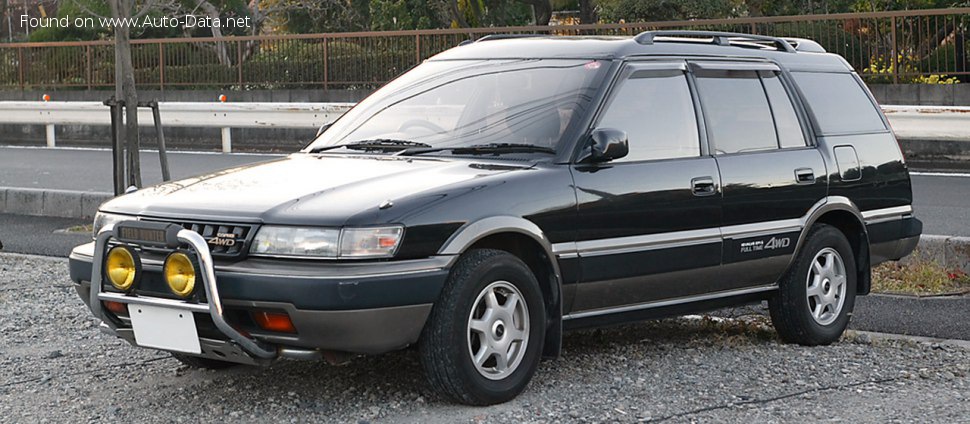
The Toyota Sprinter Trueno 1.6 i (115 Hp), produced from 1995 to 2002, represents a significant chapter in Toyota’s history of lightweight, front-wheel-drive coupes, primarily serving the Japanese Domestic Market (JDM). While never officially imported to the United States, this generation, often associated with the AE111 chassis code, built upon a storied legacy established by its predecessors, most notably the revered AE86. The Sprinter Trueno carved out its niche as an accessible, driver-focused compact coupe, appealing to enthusiasts seeking a balance of efficiency, reliability, and engaging dynamics. Its role in the JDM was that of a sporty, yet practical, personal car, embodying the spirit of affordable performance that characterized many Japanese vehicles of its era. This particular iteration, with its 1.6-liter engine, offered a compelling blend of spirited performance and everyday usability, cementing its status as a cult classic among aficionados who appreciate its mechanical integrity and nimble character.
Toyota Sprinter Trueno: A JDM Icon
The Toyota Sprinter Trueno holds a special place in automotive culture, particularly within the JDM enthusiast community. While its most famous iteration, the AE86, gained global recognition through motorsports and popular media, the subsequent generations, including the 1995-2002 model, continued to uphold the nameplate’s reputation for engaging driving dynamics in a compact package. This specific generation, the Sprinter Trueno 1.6 i (115 Hp), represented an evolution in design and engineering, moving to a front-wheel-drive (FWD) architecture, a departure from the rear-wheel-drive (RWD) layout of its legendary ancestor. Despite this fundamental change, Toyota maintained a focus on creating a car that was lightweight, well-balanced, and enjoyable to drive. Its compact dimensions and efficient powertrain made it an ideal choice for the dense urban environments and winding backroads of Japan, offering a blend of agility and fuel economy that resonated with its target demographic. The Trueno’s appeal extended beyond mere practicality; it offered a tangible connection to the driving experience, free from excessive electronic aids, relying instead on mechanical feel and driver input. Its enduring popularity as a used vehicle in Japan and among international importers speaks volumes about its inherent quality and the lasting appeal of its design and engineering.
Engine and Performance: The Heart of the Sprinter Trueno 1.6 i
At the core of the Toyota Sprinter Trueno 1.6 i (115 Hp) lies a highly regarded 1.6-liter naturally aspirated inline-four engine, renowned for its responsiveness and reliability. This powerplant, with an engine displacement of 1587 cm³ (96.84 cu. in.), was a testament to Toyota’s engineering prowess in producing efficient yet spirited small-displacement engines. Featuring a Double Overhead Camshaft (DOHC) valvetrain with four valves per cylinder, it was designed for optimal breathing and higher revving capabilities. The engine delivered a peak power output of 115 horsepower at a high 6600 rpm, indicative of its sporty character and willingness to rev. Torque was rated at 99.57 lb.-ft. (135 Nm) at 4800 rpm, providing a broad powerband that made the car feel lively in various driving conditions. The multi-port manifold injection system ensured precise fuel delivery, contributing to both performance and efficiency. With a compression ratio of 9.5:1 and an engine aspiration that was naturally aspirated, the engine offered linear power delivery, a characteristic often cherished by driving enthusiasts. The engine’s front, transverse layout, coupled with a front-wheel-drive architecture, optimized interior space and manufacturing efficiency while contributing to the vehicle’s nimble handling. The Sprinter Trueno’s curb weight of just 2270.76 lbs. (1030 kg) meant that its 115 Hp translated into an impressive weight-to-power ratio of 9 kg/Hp (111.7 Hp/tonne), allowing for brisk acceleration and agile maneuvering, making it a genuinely engaging car to drive within its segment.
Design and Features: Functionality Meets Form
The design of the Toyota Sprinter Trueno 1.6 i adopted a sleek, aerodynamic coupe body style, characterized by its clean lines and compact proportions. Measuring 169.29 inches (4300 mm) in length, 66.73 inches (1695 mm) in width, and 51.38 inches (1305 mm) in height, the car possessed an athletic stance without being overly aggressive. The 2-door configuration emphasized its sporty coupe intentions, while the ability to accommodate five occupants, though perhaps snugly in the rear, added a degree of practicality often sought in personal vehicles. The wheelbase of 97.05 inches (2465 mm) contributed to its stable ride and responsive handling. The front track of 57.87 inches (1470 mm) and rear track of 57.48 inches (1460 mm) further enhanced its road-holding capabilities. In terms of features, for a car of its era and market, the Sprinter Trueno focused on essential driving elements rather than luxury. Safety was addressed with ventilated disc brakes at the front, offering superior stopping power and fade resistance, complemented by reliable drum brakes at the rear. The fuel tank capacity of 13.21 US gallons (50 liters) provided a decent range, suitable for both daily commuting and longer spirited drives. The overall design ethos was one of understated sportiness, appealing to buyers who valued driving enjoyment and reliability over ostentatious styling. The Sprinter Trueno, in its 1.6 i form, perfectly encapsulated the Japanese philosophy of creating well-engineered, accessible sports coupes that delivered genuine driving pleasure.
Technical Specifications of the Toyota Sprinter Trueno 1.6 i (115 Hp)
| Brand | Toyota |
| Model | Sprinter |
| Generation | Sprinter Trueno |
| Type (Engine) | 1.6 i (115 Hp) |
| Start of production | 1995 year |
| End of production | 2002 year |
| Powertrain Architecture | Internal Combustion engine |
| Body type | Coupe |
| Seats | 5 |
| Doors | 2 |
| Fuel Type | Petrol (Gasoline) |
| Weight-to-power ratio | 9 kg/Hp, 111.7 Hp/tonne |
| Weight-to-torque ratio | 7.6 kg/Nm, 131.1 Nm/tonne |
| Power | 115 Hp @ 6600 rpm. |
| Power per liter | 72.5 Hp/l |
| Torque | 135 Nm @ 4800 rpm. (99.57 lb.-ft. @ 4800 rpm.) |
| Engine layout | Front, Transverse |
| Engine displacement | 1587 cm³ (96.84 cu. in.) |
| Number of cylinders | 4 |
| Engine configuration | Inline |
| Cylinder Bore | 81 mm (3.19 in.) |
| Piston Stroke | 77 mm (3.03 in.) |
| Compression ratio | 9.5:1 |
| Number of valves per cylinder | 4 |
| Fuel injection system | Multi-port manifold injection |
| Engine aspiration | Naturally aspirated engine |
| Valvetrain | DOHC |
| Kerb Weight | 1030 kg (2270.76 lbs.) |
| Fuel tank capacity | 50 l (13.21 US gal | 11 UK gal) |
| Length | 4300 mm (169.29 in.) |
| Width | 1695 mm (66.73 in.) |
| Height | 1305 mm (51.38 in.) |
| Wheelbase | 2465 mm (97.05 in.) |
| Front track | 1470 mm (57.87 in.) |
| Rear (Back) track | 1460 mm (57.48 in.) |
| Drivetrain Architecture | The Internal combustion engine (ICE) drives the front wheels of the vehicle. |
| Drive wheel | Front wheel drive |
| Front brakes | Ventilated discs |
| Rear brakes | Drum |