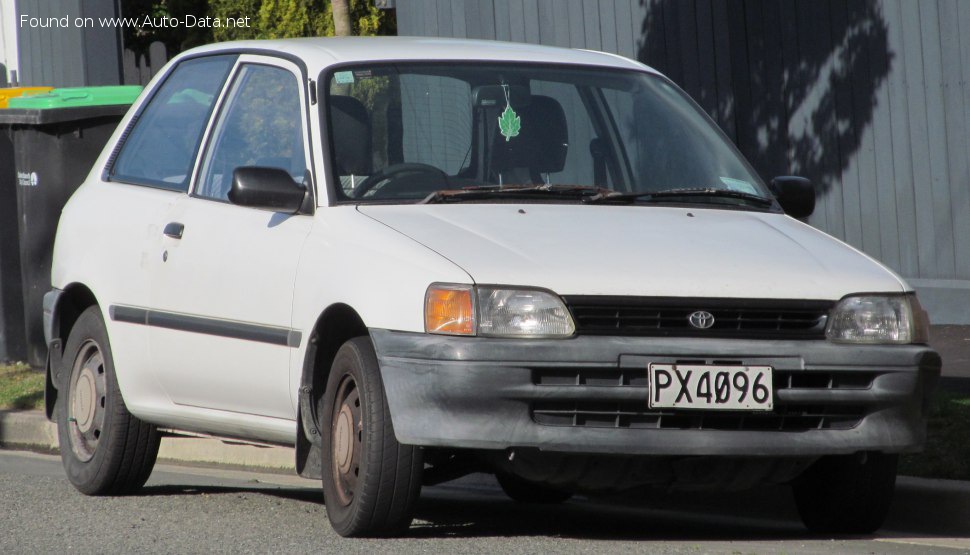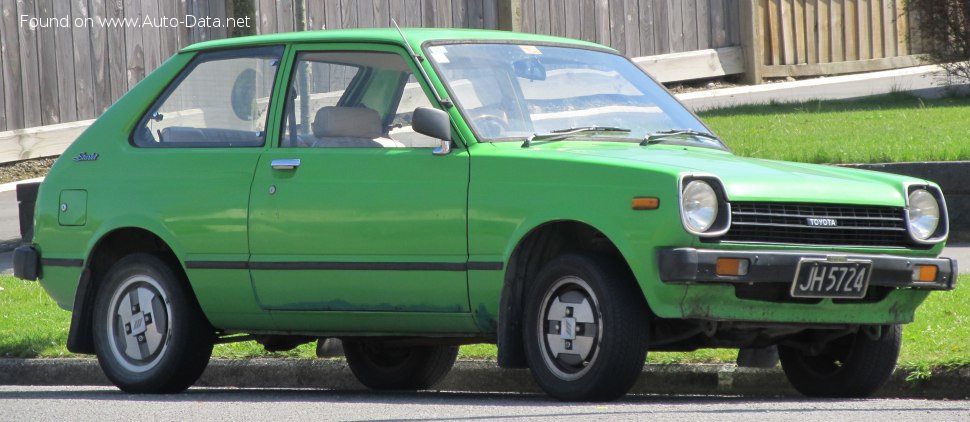
The Toyota Starlet II 1.0 (KP60), produced from 1978 to 1984, embodies an era when simplicity, reliability, and fuel efficiency were paramount for compact vehicles. While not officially sold in the United States, this second-generation Starlet gained considerable traction in its primary markets, particularly Japan and Europe, as a practical and economical small car. Positioned as a subcompact or supermini, the KP60 series succeeded the original Starlet (P40/P50) and further cemented Toyota’s reputation for building durable and accessible automobiles. The 1.0 (KP60) variant, with its modest 45 horsepower, served as an entry-level model, appealing to buyers seeking an affordable daily driver with low running costs and a no-nonsense approach to motoring. Its design and engineering reflected the prevailing trends of the late 1970s and early 1980s, emphasizing utility over luxury, and mechanical longevity over cutting-edge technology.
Engineering and Performance of the Toyota Starlet II 1.0 (KP60)
At the heart of the Toyota Starlet II 1.0 (KP60) was the robust and well-proven 2K engine, a naturally aspirated inline-four gasoline (petrol) unit. This powerplant, displacing 1.0 liters, delivered a modest but entirely adequate 45 horsepower. In an automotive landscape where fuel economy was becoming an increasing concern, particularly in the wake of energy crises, this engine’s design was optimized for efficiency and dependability. The engine configuration was a front, transverse layout, a common and space-efficient arrangement for front-wheel-drive (FWD) vehicles, though the KP60 series notably retained a rear-wheel-drive (RWD) architecture, a characteristic that endeared it to some driving enthusiasts for its balanced handling characteristics. Power was transmitted via a carburettor fuel injection system, a standard technology for the time, which provided reliable fuel delivery despite lacking the precision of later electronic fuel injection systems. Each of the four cylinders featured two valves, totaling eight valves for the engine, a straightforward design contributing to its ease of maintenance and long-term reliability. The naturally aspirated nature of the engine meant power delivery was linear and predictable, without the added complexity or cost of turbocharging. For its intended purpose, primarily urban commuting and light highway travel, the 45 horsepower engine provided sufficient propulsion, allowing the lightweight hatchback to navigate city streets with agility and achieve respectable fuel consumption figures for the era. The emphasis was not on outright speed, but on consistent, trouble-free operation, a hallmark of Toyota engineering that resonated strongly with consumers globally.
Design and Features of the Toyota Starlet II 1.0 (KP60)
The Toyota Starlet II 1.0 (KP60) was exclusively offered in a hatchback body type, a design choice that maximized interior versatility and cargo space within a compact footprint. Its styling was typical of Japanese compacts from the late 1970s and early 1980s: clean, functional, and unpretentious. The lines were sharp but understated, prioritizing practicality and aerodynamic efficiency over flamboyant aesthetics. The hatchback configuration provided easy access to the rear cargo area, making it a highly adaptable vehicle for small families or individuals needing space for groceries, luggage, or other everyday items. The interior design of the KP60 mirrored its exterior philosophy. It was a cabin built for purpose, featuring durable materials and a straightforward layout. Instrumentation was clear and concise, providing drivers with essential information without unnecessary frills. Controls for heating, ventilation, and the radio were intuitively placed and easy to operate. While modern creature comforts like power windows, central locking, or air conditioning were typically optional or unavailable on the base 1.0-liter model, the car offered a comfortable and functional environment for its class and price point. Safety features, by contemporary standards, were basic but adequate for the period, including standard seatbelts and a robust body structure designed to protect occupants in a collision. The car’s compact dimensions also made it incredibly maneuverable in congested urban environments and easy to park, attributes that were highly valued in its target markets. The enduring appeal of the KP60 series, including the 1.0 (45 Hp) variant, lies in its honest design, pragmatic features, and its ability to deliver reliable transportation day in and day out, embodying Toyota’s commitment to quality and value.
Technical Specifications
| Brand | Toyota |
| Model | Starlet |
| Generation | Starlet II |
| Type (Engine) | 1.0 (KP60) (45 Hp) |
| Start of production | 1978 year |
| End of production | 1984 year |
| Powertrain Architecture | Internal Combustion engine |
| Body type | Hatchback |
| Fuel Type | Petrol (Gasoline) |
| Power | 45 Hp |
| Engine layout | Front, Transverse |
| Engine Model/Code | 2K |
| Number of cylinders | 4 |
| Engine configuration | Inline |
| Number of valves per cylinder | 2 |
| Fuel injection system | Carburettor |
| Engine aspiration | Naturally aspirated engine |