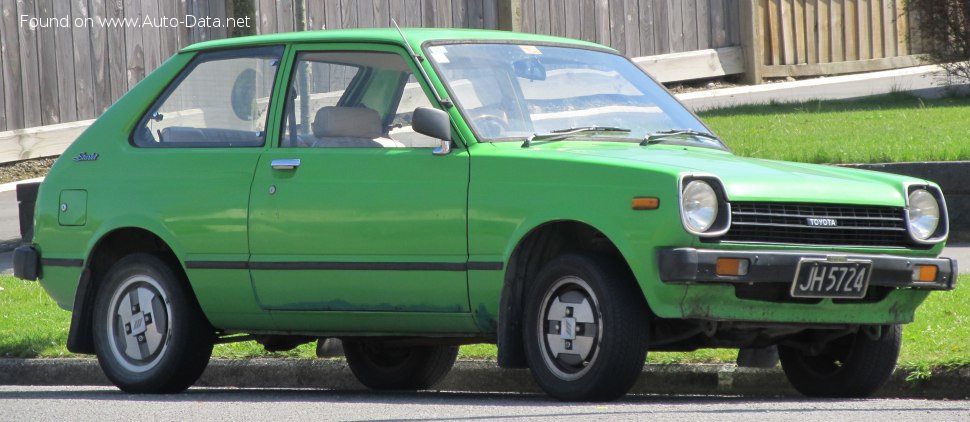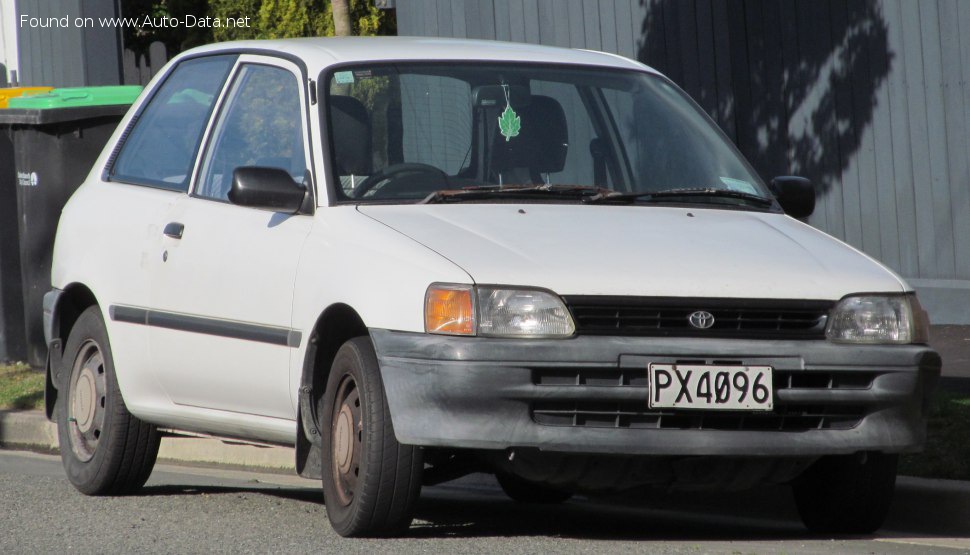
The Toyota Starlet IV 1.3i 12V Automatic, produced between 1989 and 1996, represents the fourth generation of Toyota’s long-running Starlet supermini. While not officially sold in the United States, the Starlet held a significant position in the Japanese and European markets as an affordable, reliable, and economical vehicle. This generation offered a blend of practicality, compact dimensions, and improved features compared to its predecessors, appealing to a broad range of buyers seeking a small, efficient hatchback.
Toyota Starlet IV: A Detailed Overview
The Starlet IV was designed to compete in the burgeoning supermini segment, offering a viable alternative to vehicles like the Ford Fiesta, Volkswagen Polo, and Nissan Micra. It was available in both 3-door and 5-door body styles, catering to different lifestyle needs. The 1.3i 12V variant, equipped with an automatic transmission, was a popular choice for drivers prioritizing ease of use and convenience. The Starlet IV aimed to provide a comfortable and practical driving experience, focusing on fuel efficiency and ease of maintenance.
Engine & Performance
The heart of the Starlet IV 1.3i 12V is a 1.3-liter (1296 cm3 or 79.09 cu. in.) inline four-cylinder gasoline engine. This naturally aspirated engine produces 82 horsepower (Hp) at 6000 rpm and 104 Nm (76.71 lb.-ft.) of torque at 5200 rpm. The engine utilizes a multi-port fuel injection system, contributing to improved fuel efficiency and smoother operation. Paired with a 3-speed automatic transmission, the Starlet achieves a 0 to 60 mph (0-98 km/h) time of approximately 9.8 seconds and a top speed of 105.63 mph (170 km/h). The power-to-weight ratio of 9.3 kg/Hp and torque-to-weight ratio of 7.4 kg/Nm contribute to a reasonably responsive driving experience for its class. Fuel economy figures are respectable for the era, with combined consumption averaging 7.1 l/100 km (33.1 US mpg or 39.8 UK mpg).
Design & Features
The Starlet IV features a typical hatchback body style, prioritizing space efficiency and practicality. The 3-door and 5-door configurations offered flexibility for passengers and cargo. The interior was designed with functionality in mind, offering seating for five occupants. While not luxurious, the cabin provided a comfortable and user-friendly environment. Key features included hydraulic power steering for ease of maneuverability, and an Anti-lock Braking System (ABS) which was becoming increasingly common during this period, enhancing safety. Trunk space ranged from 225 liters (7.95 cu. ft.) with the rear seats up to 490 liters (17.3 cu. ft.) with the seats folded down, providing ample room for everyday needs. The vehicle’s relatively light curb weight of 765 kg (1686.54 lbs) contributed to its nimble handling and fuel efficiency.
Technical Specifications
| General Information | |
| Brand | Toyota |
| Model | Starlet |
| Generation | Starlet IV |
| Type (Engine) | 1.3i 12V (82 Hp) Automatic |
| Start of production | 1989 |
| End of production | 1996 |
| Powertrain Architecture | Internal Combustion engine |
| Body type | Hatchback |
| Seats | 5 |
| Doors | 3/5 |
| Performance Specs | |
| Fuel consumption (urban) | 7.6 l/100 km (30.9 US mpg) |
| Fuel consumption (extra urban) | 5.3 l/100 km (44.4 US mpg) |
| Fuel consumption (combined) | 7.1 l/100 km (33.1 US mpg) |
| Fuel Type | Petrol (Gasoline) |
| Acceleration 0 – 100 km/h | 10.3 sec |
| Acceleration 0 – 62 mph | 10.3 sec |
| Acceleration 0 – 60 mph | 9.8 sec |
| Maximum speed | 170 km/h (105.63 mph) |
| Weight-to-power ratio | 9.3 kg/Hp |
| Weight-to-torque ratio | 7.4 kg/Nm |
| Engine Specs | |
| Power | 82 Hp @ 6000 rpm |
| Power per litre | 63.3 Hp/l |
| Torque | 104 Nm @ 5200 rpm (76.71 lb.-ft. @ 5200 rpm) |
| Engine layout | Front, Transverse |
| Engine displacement | 1296 cm3 (79.09 cu. in.) |
| Number of cylinders | 4 |
| Engine configuration | Inline |
| Cylinder Bore | 73 mm (2.87 in.) |
| Piston Stroke | 77.4 mm (3.05 in.) |
| Compression ratio | 9.5:1 |
| Number of valves per cylinder | 3 |
| Fuel injection system | Multi-port manifold injection |
| Engine aspiration | Naturally aspirated |
| Space, Volume and Weights | |
| Kerb Weight | 765 kg (1686.54 lbs.) |
| Max. weight | 1225 kg (2700.66 lbs.) |
| Max load | 460 kg (1014.13 lbs.) |
| Trunk (boot) space – minimum | 225 l (7.95 cu. ft.) |
| Trunk (boot) space – maximum | 490 l (17.3 cu. ft.) |
| Fuel tank capacity | 40 l (10.57 US gal | 8.8 UK gal) |
| Dimensions | |
| Length | 3720 mm (146.46 in.) |
| Width | 1600 mm (62.99 in.) |
| Height | 1380 mm (54.33 in.) |
| Wheelbase | 2300 mm (90.55 in.) |
| Front track | 1390 mm (54.72 in.) |
| Rear track | 1370 mm (53.94 in.) |
| Minimum turning circle | 9.8 m (32.15 ft.) |
| Drivetrain, Brakes & Suspension | |
| Drivetrain Architecture | Front wheel drive |
| Drive wheel | Front wheel drive |
| Number of gears | 3 |
| Gearbox type | Automatic transmission |
| Front suspension | Wishbone |
| Rear suspension | Coil spring |
| Front brakes | Disc |
| Rear brakes | Drum |
| Assisting systems | ABS (Anti-lock braking system) |
| Steering type | Steering rack and pinion |
| Power steering | Hydraulic |
| Tires size | 165/70 R13 |
| Wheel rims size | 13 |
The Toyota Starlet IV 1.3i 12V Automatic, while not a performance car, offered a compelling package of affordability, reliability, and practicality. Its compact size made it ideal for urban environments, while its fuel efficiency and ease of maintenance ensured low running costs. Although it wasn’t sold in the US market, it remains a fondly remembered vehicle for those who owned and drove it in Europe and Asia.