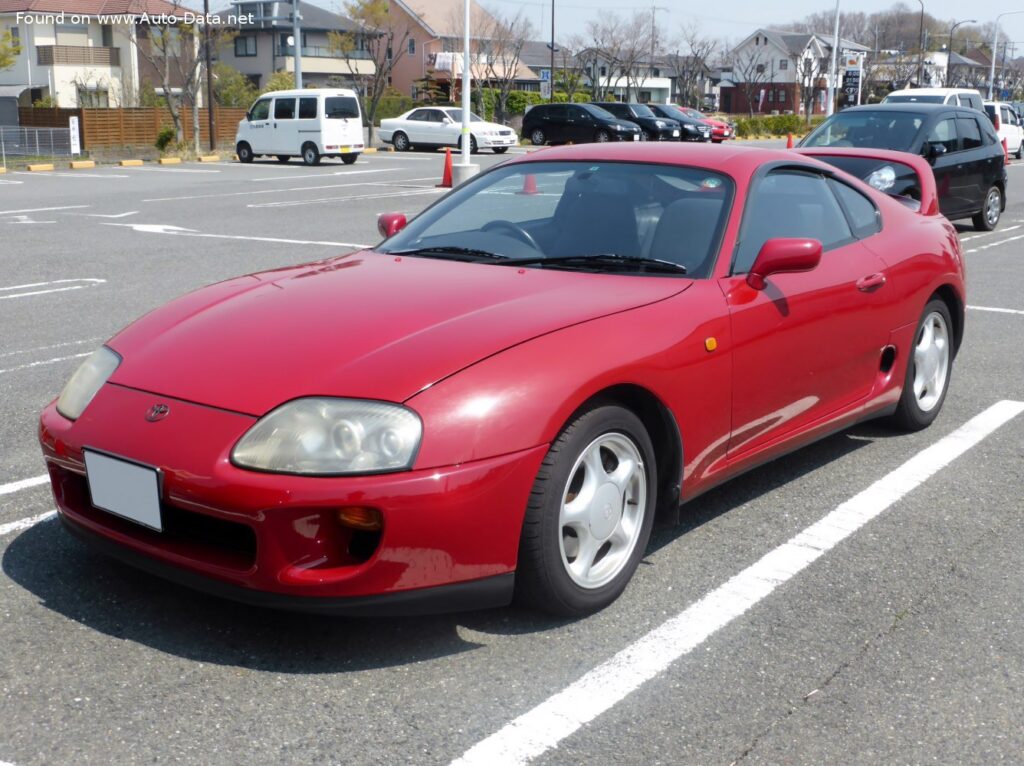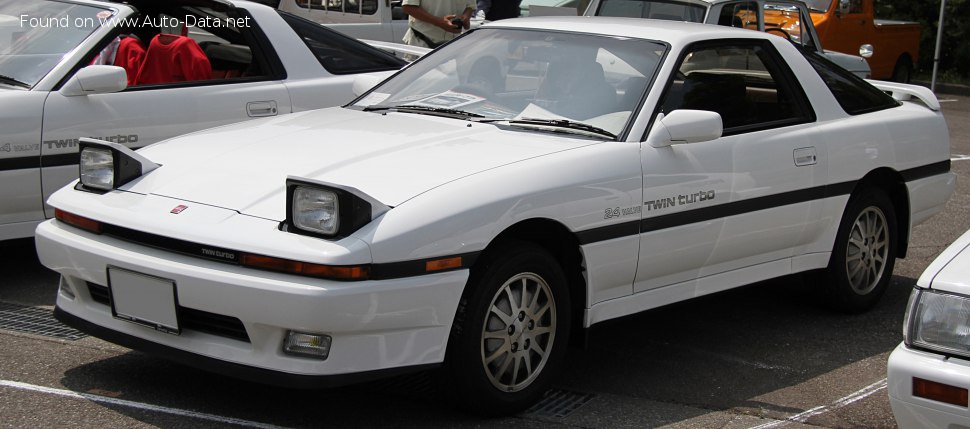
The Toyota Supra III (A70), produced between 1988 and 1989, represents a pivotal moment in the Supra lineage. This generation, while not initially as celebrated as its later iterations (particularly the A80), laid the groundwork for the Supra’s future as a performance-focused grand tourer. The A70 Supra was primarily aimed at the Japanese domestic market (JDM), offering a sophisticated blend of luxury and performance. While never officially a high-volume seller in the United States during its brief production run, it gained a following among enthusiasts who appreciated its robust engineering and tuning potential. The 3.0 Turbo variant, equipped with the 7M-GTE engine, was the flagship model, delivering a substantial 235 horsepower and establishing the Supra as a serious contender in the sports coupe segment.
Toyota Supra III (A70) 3.0 Turbo: A Detailed Overview
The A70 Supra marked a departure from the earlier, Celica-based Supras. Toyota intentionally distanced the Supra from its more mainstream sibling, giving it a more distinctive identity and a focus on grand touring capabilities. This involved a longer wheelbase, wider track, and more sophisticated suspension components. The 3.0 Turbo model, in particular, benefited from these enhancements, offering a refined driving experience coupled with impressive acceleration. The car’s design reflected the late 1980s aesthetic, characterized by sharp lines, pop-up headlights, and a generally sporty, yet elegant, appearance.
Engine & Performance
The heart of the Supra III 3.0 Turbo is the 7M-GTE 3.0-liter inline-six engine. This powerplant was a technological showcase for Toyota at the time, featuring multi-port fuel injection, a turbocharger, and an intercooler. The combination produced 235 horsepower at 5600 rpm and 344 Nm (253.72 lb.-ft.) of torque at 3200 rpm. This output provided brisk acceleration and a respectable top speed for the era. The engine’s longitudinal front-engine layout and rear-wheel-drive configuration contributed to balanced handling. The 4-speed automatic transmission, while not offering the driver engagement of a manual, provided smooth and relatively quick shifts. Power delivery was strong throughout the rev range, making the 3.0 Turbo a capable performer both on the street and the track. The engine’s 8:1 compression ratio was a compromise between performance and reliability, allowing it to handle the increased boost pressure from the turbocharger. The DOHC valvetrain further enhanced the engine’s breathing and overall efficiency.
Design & Features
The A70 Supra is a three-door coupe with seating for four passengers. Its body style is characterized by a sleek, aerodynamic profile. The pop-up headlights were a signature design element of the era, and the car’s overall shape conveyed a sense of speed and sophistication. Inside, the Supra offered a comfortable and well-appointed cabin, with supportive seats and a comprehensive array of features for the time. While not laden with the advanced technology found in modern vehicles, the A70 Supra included features such as power steering, ventilated disc brakes on all four wheels, and an Anti-lock Braking System (ABS) – a relatively advanced safety feature for the late 1980s. The interior design prioritized driver comfort and functionality, with logically placed controls and a clear instrument cluster. The car’s relatively long wheelbase contributed to a comfortable ride, even on less-than-perfect road surfaces. The focus was on providing a grand touring experience, blending performance with comfort and refinement.
Safety and Technological Innovations
For its time, the A70 Supra incorporated several notable safety features. The inclusion of ABS was a significant step forward in braking technology, helping to maintain steering control during emergency stops. Ventilated disc brakes on all four wheels provided ample stopping power. The car’s robust construction and well-engineered chassis contributed to its overall safety profile. While lacking the advanced driver-assistance systems found in modern vehicles, the A70 Supra represented a solid level of safety for the late 1980s. The hydraulic power steering provided precise and responsive handling, enhancing driver control. The double wishbone suspension system, both front and rear, contributed to a stable and comfortable ride, while also improving handling characteristics.
Technical Specifications
| General Information | |
| Brand | Toyota |
| Model | Supra |
| Generation | Supra III (A70) |
| Type | 3.0 Turbo (235 Hp) Automatic |
| Start of production | 1988 |
| End of production | 1989 |
| Powertrain Architecture | Internal Combustion engine |
| Body type | Coupe |
| Seats | 4 |
| Doors | 3 |
| Performance Specs | |
| Fuel Type | Petrol (Gasoline) |
| Power | 235 Hp @ 5600 rpm |
| Power per litre | 79.6 Hp/l |
| Torque | 344 Nm @ 3200 rpm / 253.72 lb.-ft. @ 3200 rpm |
| Engine Specs | |
| Engine layout | Front, Longitudinal |
| Engine Model/Code | 7M-GTE |
| Engine displacement | 2954 cm3 / 180.26 cu. in. |
| Number of cylinders | 6 |
| Engine configuration | Inline |
| Cylinder Bore | 83 mm / 3.27 in. |
| Piston Stroke | 91 mm / 3.58 in. |
| Compression ratio | 8:1 |
| Number of valves per cylinder | 4 |
| Fuel injection system | Multi-port manifold injection |
| Engine aspiration | Turbocharger, Intercooler |
| Valvetrain | DOHC |
| Engine oil capacity | 4.4 l / 4.65 US qt | 3.87 UK qt |
| Space, Volume and Weights | |
| Fuel tank capacity | 70 l / 18.49 US gal | 15.4 UK gal |
| Dimensions | |
| Length | 4620 mm / 181.89 in. |
| Width | 1745 mm / 68.7 in. |
| Height | 1310 mm / 51.57 in. |
| Wheelbase | 2595 mm / 102.17 in. |
| Drivetrain, Brakes and Suspension Specs | |
| Drivetrain Architecture | The Internal combustion engine (ICE) drives the rear wheels of the vehicle. |
| Drive wheel | Rear wheel drive |
| Number of gears and type of gearbox | 4 gears, automatic transmission |
| Front suspension | Double wishbone |
| Rear suspension | Double wishbone |
| Front brakes | Ventilated discs |
| Rear brakes | Ventilated discs |
| Assisting systems | ABS (Anti-lock braking system) |
| Steering type | Steering rack and pinion |
| Power steering | Hydraulic Steering |
The Toyota Supra III (A70) 3.0 Turbo, while a relatively short-lived model, remains a significant vehicle in the Supra’s history. It represented a step towards the more focused performance image that the Supra would later embrace, and its robust engineering and potent engine continue to appeal to enthusiasts today. Its legacy lies in its contribution to the evolution of a sports car icon.