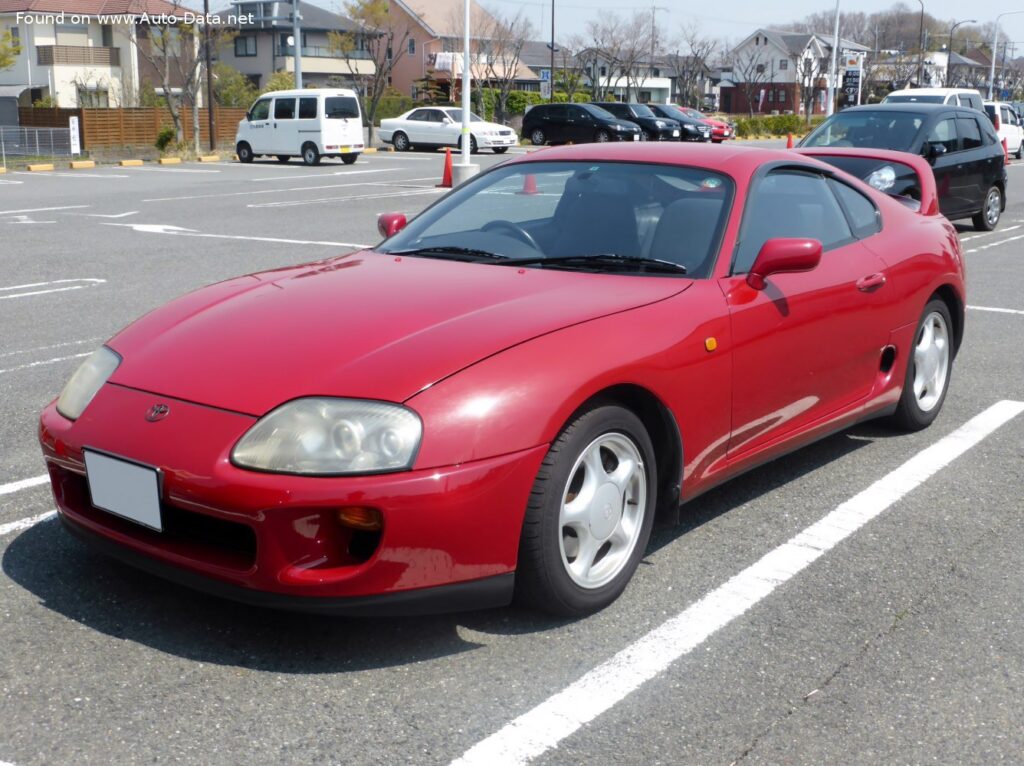
The Toyota Supra IV (A80), produced from 1993 to 2002, represents the fourth generation of Toyota’s iconic sports car. While never achieving the same sales volume in the United States as its American rivals like the Chevrolet Corvette or Porsche 911, the A80 Supra cultivated a devoted following, particularly for its tuning potential and robust engineering. This generation marked a significant departure from its predecessors, embracing a more modern design and sophisticated technology. The 3.0i 24V variant, equipped with a naturally aspirated inline-six engine and automatic transmission, offered a balance of performance and relative affordability within the Supra lineup. The A80 Supra is particularly remembered for its presence in popular culture, notably the Fast & Furious franchise, which further cemented its status as a modern automotive icon.
Toyota Supra IV (A80) 3.0i 24V: A Detailed Overview
The A80 Supra was conceived as a successor to the third-generation model (A70), aiming to elevate Toyota’s sports car offering to a new level of performance and refinement. Development began in the late 1980s, with a focus on creating a grand tourer capable of competing with established European sports cars. The result was a sleek, aerodynamic coupe that prioritized driver engagement and a balanced chassis. The 3.0i 24V model, powered by the 2JZ-GE engine, served as the entry point to the A80 range, offering a compelling alternative to more expensive turbocharged variants.
Engine & Performance
The heart of the Supra 3.0i 24V is the 2JZ-GE, a 3.0-liter (2997 cm3 or 182.89 cu. in.) inline-six engine. This naturally aspirated powerplant produces 224 horsepower at 6000 rpm and 284 Nm (209.47 lb.-ft.) of torque at 4800 rpm. The engine features a double overhead camshaft (DOHC) valvetrain with four valves per cylinder, and utilizes multi-port fuel injection for precise fuel delivery. The 2JZ-GE is renowned for its durability and responsiveness, making it a popular choice for modifications and performance upgrades. Power is delivered to the rear wheels via a four-speed automatic transmission. The Supra 3.0i 24V achieves a maximum speed of 241 km/h (149.75 mph). The weight-to-power ratio is 6.3 kg/Hp, and the weight-to-torque ratio is 5 kg/Nm. Fuel economy is rated at 18 l/100 km (13.1 US mpg) in urban conditions and 9 l/100 km (26.1 US mpg) on the open road.
Design & Features
The A80 Supra boasts a distinctive coupe body style with a long hood, short rear deck, and a low-slung profile. Its aerodynamic design, characterized by smooth curves and integrated spoilers, contributes to its high-speed stability. The vehicle accommodates four passengers, although the rear seats are relatively cramped. Key design features include pop-up headlights (a hallmark of the era), a prominent rear wing (depending on the trim level), and alloy wheels. The interior is driver-focused, with a well-appointed dashboard and comfortable seats. Safety features for the time included Anti-lock Braking System (ABS). The Supra’s suspension utilizes a wishbone configuration both front and rear, providing a comfortable ride and responsive handling. The steering system is a hydraulic power-assisted rack and pinion setup, offering precise control and feedback.
Technical Specifications
| Brand | Toyota |
| Model | Supra |
| Generation | Supra IV (A80) |
| Type | 3.0i 24V (224 Hp) Automatic |
| Start of production | 1993 |
| End of production | 2002 |
| Powertrain Architecture | Internal Combustion engine |
| Body type | Coupe |
| Seats | 4 |
| Doors | 3 |
| Fuel consumption (urban) | 18 l/100 km (13.1 US mpg) |
| Fuel consumption (extra urban) | 9 l/100 km (26.1 US mpg) |
| Fuel Type | Petrol (Gasoline) |
| Maximum speed | 241 km/h (149.75 mph) |
| Weight-to-power ratio | 6.3 kg/Hp |
| Weight-to-torque ratio | 5 kg/Nm |
| Power | 224 Hp @ 6000 rpm |
| Power per litre | 74.7 Hp/l |
| Torque | 284 Nm @ 4800 rpm (209.47 lb.-ft. @ 4800 rpm) |
| Engine layout | Front, Longitudinal |
| Engine Model/Code | 2JZ-GE |
| Engine displacement | 2997 cm3 (182.89 cu. in.) |
| Number of cylinders | 6 |
| Engine configuration | Inline |
| Cylinder Bore | 86 mm (3.39 in.) |
| Piston Stroke | 86 mm (3.39 in.) |
| Compression ratio | 10:1 |
| Number of valves per cylinder | 4 |
| Fuel injection system | Multi-port manifold injection |
| Engine aspiration | Naturally aspirated |
| Valvetrain | DOHC |
| Engine oil capacity | 5.2 l (5.49 US qt | 4.58 UK qt) |
| Coolant capacity | 8.3 l (8.77 US qt | 7.3 UK qt) |
| Kerb Weight | 1410 kg (3108.52 lbs.) |
| Trunk (boot) space (min) | 185 l (6.53 cu. ft.) |
| Trunk (boot) space (max) | 315 l (11.12 cu. ft.) |
| Fuel tank capacity | 70 l (18.49 US gal | 15.4 UK gal) |
| Length | 4520 mm (177.95 in.) |
| Width | 1810 mm (71.26 in.) |
| Height | 1275 mm (50.2 in.) |
| Wheelbase | 2550 mm (100.39 in.) |
| Front track | 1520 mm (59.84 in.) |
| Rear track | 1525 mm (60.04 in.) |
| Drivetrain | Rear wheel drive |
| Number of gears | 4 |
| Gearbox type | Automatic transmission |
| Front suspension | Wishbone |
| Rear suspension | Wishbone |
| Front brakes | Ventilated discs |
| Rear brakes | Ventilated discs |
| Assisting systems | ABS (Anti-lock braking system) |
| Steering type | Steering rack and pinion |
| Power steering | Hydraulic |
| Tires size | 225/50 ZR16; 245/45 ZR16 |
| Wheel rims size | 16 |
The Toyota Supra IV (A80) 3.0i 24V Automatic remains a highly sought-after sports car, appreciated for its blend of performance, reliability, and iconic styling. Its enduring popularity is a testament to Toyota’s engineering prowess and the A80 Supra’s lasting appeal to automotive enthusiasts.