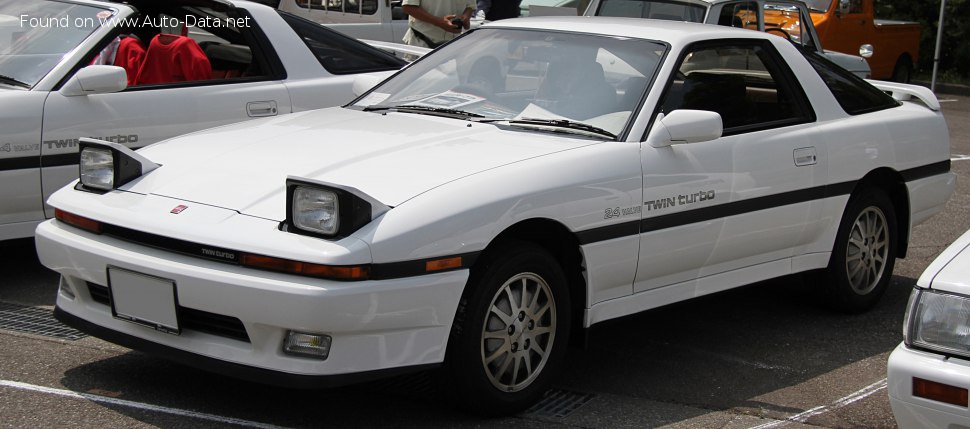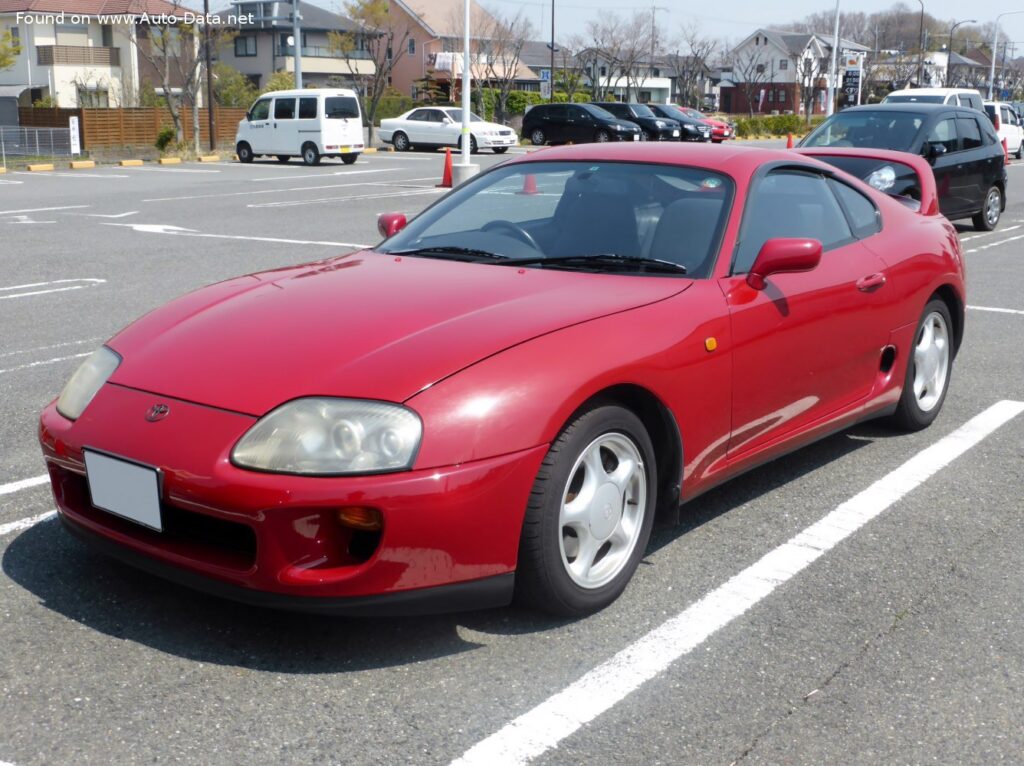
The Toyota Supra IV (A80), produced from 1993 to 2002, represents the fourth generation of Toyota’s iconic sports car. While never officially marketed with the same fervor as its Nissan Skyline GT-R rival in the United States initially, the A80 Supra quickly gained a cult following, particularly due to its robust engine, tuning potential, and appearance in popular culture. The Supra IV was primarily aimed at the Japanese domestic market (JDM) and Europe, offering a sophisticated grand tourer experience with a focus on performance and driver engagement. It stands as a landmark vehicle, bridging the gap between analog driving feel and emerging digital technologies.
Toyota Supra IV (A80): A Legacy of Performance
The A80 Supra was a significant departure from its predecessors, moving away from the more compact, inline-six powered cars of the past. Toyota invested heavily in development, aiming to create a world-class sports car capable of competing with the best Europe had to offer. The result was a longer, wider, and more powerful vehicle that prioritized stability and high-speed performance. The 3.0i 24V T-turbo variant, producing 330 horsepower, became the flagship model, renowned for its twin-turbocharged 2JZ-GTE engine.
Engine & Performance
At the heart of the Supra IV 3.0i 24V T-turbo lies the 2JZ-GTE 3.0-liter inline-six engine. This powerplant is celebrated for its over-engineering and ability to withstand significant power increases with relatively minor modifications. The engine features a sequential twin-turbocharger system with an intercooler, delivering a potent 330 horsepower at 5600 rpm and 440 Nm (324.53 lb.-ft.) of torque at 4800 rpm. This translates to a power-to-weight ratio of 4.8 kg/Hp and a torque-to-weight ratio of 3.6 kg/Nm. The engine’s robust construction, including a cast iron block and aluminum cylinder head with four valves per cylinder, contributed to its legendary durability.
Power is delivered to the rear wheels via a six-speed manual transmission, providing precise control and an engaging driving experience. The Supra IV 3.0i 24V T-turbo could accelerate from 0 to 100 km/h (0-62 mph) in 5.1 seconds, and 0 to 60 mph in a calculated 4.8 seconds. Its electronically limited top speed was 250 km/h (155.34 mph). Fuel consumption figures are 14.6 l/100 km (16.1 US mpg) in urban settings, 10.3 l/100 km (22.8 US mpg) on the extra-urban cycle, and 11.1 l/100 km (21.2 US mpg) combined.
Design & Features
The A80 Supra boasts a sleek, aerodynamic coupe body style with a long hood and a short rear deck. Its design incorporated elements of both Japanese and European styling cues, resulting in a visually striking and instantly recognizable silhouette. The car features a three-door configuration with seating for four passengers, although the rear seats are relatively cramped. The Supra IV prioritized driver-focused ergonomics, with a well-appointed interior featuring comfortable seats and a comprehensive instrument cluster.
Safety features for the era included an Anti-lock Braking System (ABS) and ventilated disc brakes on all four wheels. The suspension system utilizes a double wishbone configuration at both the front and rear, providing excellent handling and ride quality. The steering is rack and pinion with hydraulic power assistance. Standard tire sizes were 225/50 ZR16 and 245/50 ZR16, mounted on 8.0J x 16 and 9.5J x 16 alloy wheels, respectively. The trunk offers between 185 and 317 liters (6.53 to 11.19 cubic feet) of storage space, depending on the rear seat configuration.
Technical Specifications
| Brand | Toyota |
| Model | Supra |
| Generation | Supra IV (A80) |
| Type (Engine) | 3.0i 24V T-turbo (330 Hp) |
| Start of production | 1993 |
| End of production | 2002 |
| Powertrain Architecture | Internal Combustion engine |
| Body type | Coupe |
| Seats | 4 |
| Doors | 3 |
| Fuel consumption (urban) | 14.6 l/100 km (16.1 US mpg, 19.3 UK mpg) |
| Fuel consumption (extra urban) | 10.3 l/100 km (22.8 US mpg, 27.4 UK mpg) |
| Fuel consumption (combined) | 11.1 l/100 km (21.2 US mpg, 25.4 UK mpg) |
| Fuel Type | Petrol (Gasoline) |
| Acceleration 0 – 100 km/h | 5.1 sec |
| Acceleration 0 – 62 mph | 5.1 sec |
| Acceleration 0 – 60 mph | 4.8 sec |
| Maximum speed | 250 km/h (155.34 mph) |
| Weight-to-power ratio | 4.8 kg/Hp |
| Weight-to-torque ratio | 3.6 kg/Nm |
| Power | 330 Hp @ 5600 rpm |
| Power per litre | 110.1 Hp/l |
| Torque | 440 Nm @ 4800 rpm (324.53 lb.-ft. @ 4800 rpm) |
| Engine layout | Front, Longitudinal |
| Engine Model/Code | 2JZ-GTE |
| Engine displacement | 2997 cm3 (182.89 cu. in.) |
| Number of cylinders | 6 |
| Engine configuration | Inline |
| Cylinder Bore | 86 mm (3.39 in.) |
| Piston Stroke | 86 mm (3.39 in.) |
| Compression ratio | 8.5:1 |
| Number of valves per cylinder | 4 |
| Fuel injection system | Multi-port manifold injection |
| Engine aspiration | Twin-Turbo, Intercooler |
| Valvetrain | DOHC |
| Engine oil capacity | 5 l (5.28 US qt | 4.4 UK qt) |
| Coolant | 8.9 l (9.4 US qt | 7.83 UK qt) |
| Kerb Weight | 1570 kg (3461.26 lbs.) |
| Max. weight | 1790 kg (3946.27 lbs.) |
| Max load | 220 kg (485.02 lbs.) |
| Trunk (boot) space – minimum | 185 l (6.53 cu. ft.) |
| Trunk (boot) space – maximum | 317 l (11.19 cu. ft.) |
| Fuel tank capacity | 70 l (18.49 US gal | 15.4 UK gal) |
| Length | 4520 mm (177.95 in.) |
| Width | 1810 mm (71.26 in.) |
| Height | 1275 mm (50.2 in.) |
| Wheelbase | 2500 mm (98.43 in.) |
| Front track | 1520 mm (59.84 in.) |
| Rear (Back) track | 1525 mm (60.04 in.) |
| Drivetrain Architecture | Rear wheel drive |
| Number of gears and type of gearbox | 6 gears, manual transmission |
| Front suspension | Wishbone |
| Rear suspension | Wishbone |
| Front brakes | Ventilated discs |
| Rear brakes | Ventilated discs |
| Assisting systems | ABS (Anti-lock braking system) |
| Steering type | Steering rack and pinion |
| Power steering | Hydraulic Steering |
| Tires size | 225/50 ZR16; 245/50 ZR16 |
| Wheel rims size | 8.0J x 16; 9.5J x 16 |
The Toyota Supra IV (A80) remains a highly sought-after sports car, celebrated for its performance, tuning potential, and iconic status. Its influence can be seen in modern sports car design and its legacy continues to inspire enthusiasts worldwide.