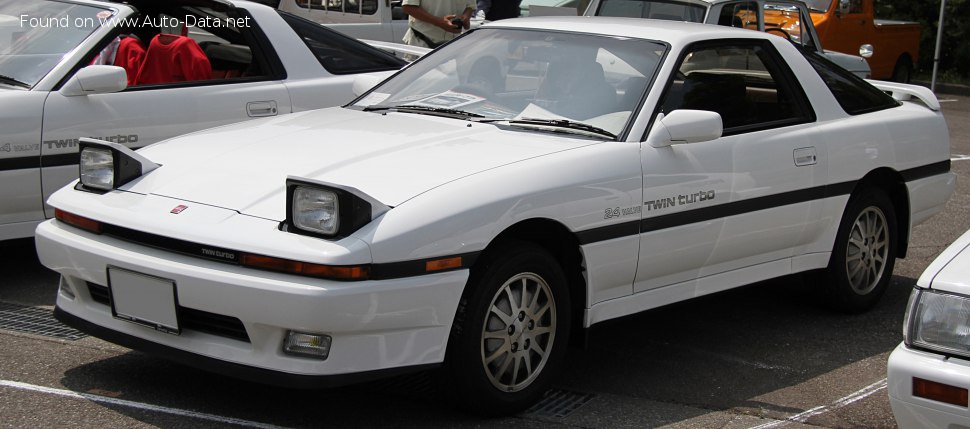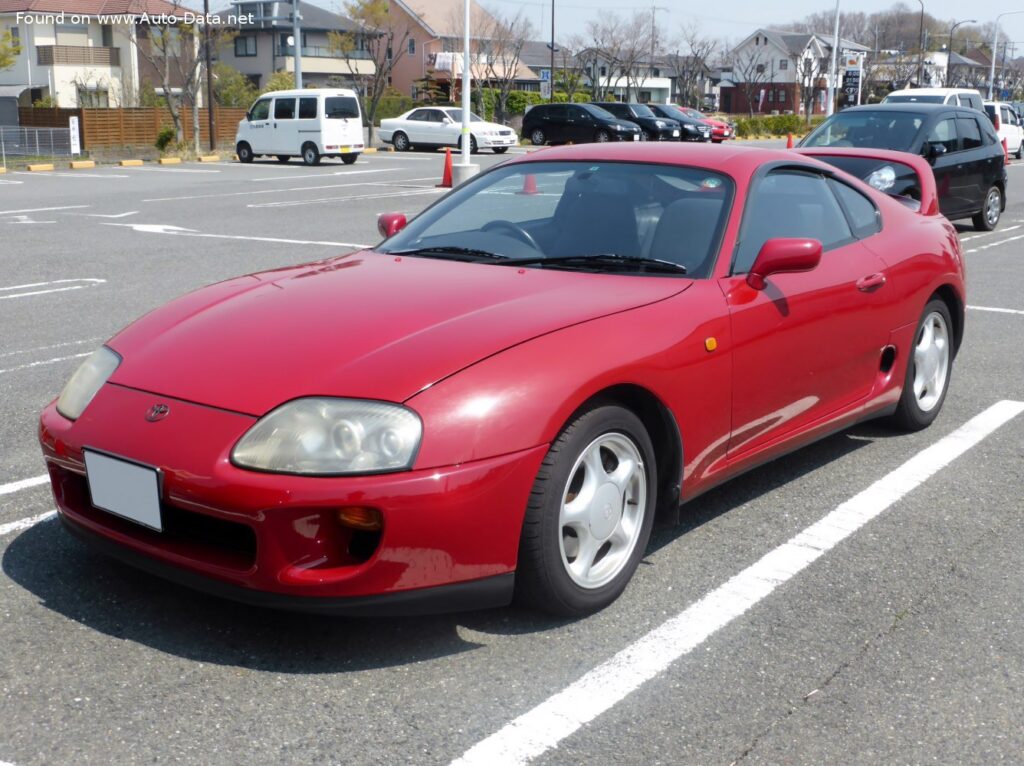
The Toyota Supra IV (A80), produced from 1993 to 2002, represents a high point in Japanese sports car engineering. This generation, often simply referred to as the A80 Supra, was a significant departure from its predecessors, embracing a more modern and sophisticated design. While never officially sold in large numbers in the United States during its entire production run, the Supra IV quickly gained a cult following, particularly due to its robust engine, tuning potential, and iconic status in popular culture. It competed with other grand tourers and sports coupes like the Porsche 911, Mazda RX-7, and Nissan 300ZX, offering a compelling blend of performance and reliability.
Toyota Supra IV (A80): A Legacy of Performance
The A80 Supra was the fourth generation of the Supra model, building upon a lineage that began in 1978. Toyota aimed to create a world-class sports car, and the A80 was designed with a focus on handling, power, and overall driving experience. The car’s development involved extensive testing and refinement, resulting in a vehicle that was both capable on the track and comfortable for everyday driving. The 3.0i 24V Turbo variant, producing 280 horsepower, was a flagship model, representing the pinnacle of the A80’s performance capabilities.
Engine & Performance
The heart of the Supra IV 3.0i 24V Turbo is the 2JZ-GTE 3.0-liter inline-six engine. This engine is renowned for its durability and ability to handle significant power upgrades. The 2JZ-GTE features a sequential twin-turbocharger system with an intercooler, delivering a substantial 280 horsepower at 5600 rpm and 432 Nm (318.63 lb.-ft.) of torque at 3600 rpm. This power is delivered to the rear wheels through a robust 6-speed manual transmission. The engine’s configuration, with its longitudinal front-engine layout, contributes to the car’s balanced handling characteristics. Acceleration from 0 to 100 km/h (0-62 mph) takes approximately 5.1 seconds, while 0-60 mph is achieved in a calculated 4.8 seconds. The Supra boasts a maximum speed of 256 km/h (159.07 mph). The engine’s power-to-weight ratio is an impressive 5.4 kg/Hp, and its torque-to-weight ratio is 3.5 kg/Nm.
Design & Features
The A80 Supra features a sleek, aerodynamic coupe body style with three doors and seating for four passengers. Its design was a significant departure from the boxier aesthetics of previous generations, adopting a more rounded and modern appearance. The car’s exterior is characterized by its distinctive headlights, integrated spoiler, and sculpted body lines. Inside, the Supra offered a driver-focused cockpit with comfortable seating and a well-appointed interior. Safety features, while not as advanced as modern vehicles, included ABS (Anti-lock Braking System). The Supra’s suspension utilizes a wishbone configuration for both the front and rear axles, providing a comfortable yet controlled ride. The car’s steering is rack and pinion with hydraulic power assistance, offering precise and responsive handling. Standard tire sizes were 225/50 ZR16 and 245/50 ZR16, mounted on 8.0J x 16 and 9.5J x 16 wheel rims, respectively.
Technical Specifications
| Brand | Toyota |
| Model | Supra |
| Generation | Supra IV (A80) |
| Type (Engine) | 3.0i 24V Turbo (280 Hp) |
| Start of production | 1993 |
| End of production | 2002 |
| Powertrain Architecture | Internal Combustion engine |
| Body type | Coupe |
| Seats | 4 |
| Doors | 3 |
| Fuel consumption (urban) | 13 l/100 km (18.1 US mpg, 21.7 UK mpg) |
| Fuel consumption (extra urban) | 9 l/100 km (26.1 US mpg, 31.4 UK mpg) |
| Fuel consumption (combined) | 11 l/100 km (21.4 US mpg, 25.7 UK mpg) |
| Fuel Type | Petrol (Gasoline) |
| Acceleration 0 – 100 km/h | 5.1 sec |
| Acceleration 0 – 62 mph | 5.1 sec |
| Acceleration 0 – 60 mph | 4.8 sec |
| Maximum speed | 256 km/h (159.07 mph) |
| Emission standard | Euro 5 |
| Weight-to-power ratio | 5.4 kg/Hp |
| Weight-to-torque ratio | 3.5 kg/Nm |
| Power | 280 Hp @ 5600 rpm |
| Torque | 432 Nm @ 3600 rpm (318.63 lb.-ft. @ 3600 rpm) |
| Engine layout | Front, Longitudinal |
| Engine Model/Code | 2JZ-GTE |
| Engine displacement | 2997 cm3 (182.89 cu. in.) |
| Number of cylinders | 6 |
| Engine configuration | Inline |
| Cylinder Bore | 86 mm (3.39 in.) |
| Piston Stroke | 86 mm (3.39 in.) |
| Compression ratio | 8.5:1 |
| Number of valves per cylinder | 4 |
| Fuel injection system | Multi-port manifold injection |
| Engine aspiration | Twin-Turbo, Intercooler |
| Valvetrain | DOHC |
| Engine oil capacity | 5 l (5.28 US qt | 4.4 UK qt) |
| Coolant capacity | 8.9 l (9.4 US qt | 7.83 UK qt) |
| Kerb Weight | 1510 kg (3328.98 lbs.) |
| Max. weight | 1730 kg (3814 lbs.) |
| Max load | 220 kg (485.02 lbs.) |
| Trunk (boot) space – minimum | 185 l (6.53 cu. ft.) |
| Trunk (boot) space – maximum | 315 l (11.12 cu. ft.) |
| Fuel tank capacity | 70 l (18.49 US gal | 15.4 UK gal) |
| Length | 4520 mm (177.95 in.) |
| Width | 1810 mm (71.26 in.) |
| Height | 1275 mm (50.2 in.) |
| Wheelbase | 2550 mm (100.39 in.) |
| Front track | 1520 mm (59.84 in.) |
| Rear (Back) track | 1525 mm (60.04 in.) |
| Drivetrain Architecture | Rear wheel drive |
| Number of gears and type of gearbox | 6 gears, manual transmission |
| Front suspension | Wishbone |
| Rear suspension | Wishbone |
| Front brakes | Ventilated discs |
| Rear brakes | Ventilated discs |
| Assisting systems | ABS (Anti-lock braking system) |
| Steering type | Steering rack and pinion |
| Power steering | Hydraulic Steering |
| Tires size | 225/50 ZR16; 245/50 ZR16 |
| Wheel rims size | 8.0J x 16; 9.5J x 16 |
The Toyota Supra IV (A80) 3.0i 24V Turbo remains a highly sought-after sports car, celebrated for its performance, reliability, and tuning potential. Its enduring popularity is a testament to Toyota’s engineering prowess and the A80’s status as a true icon of the Japanese automotive industry.