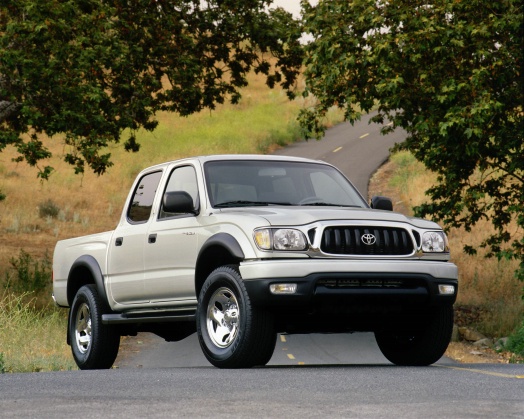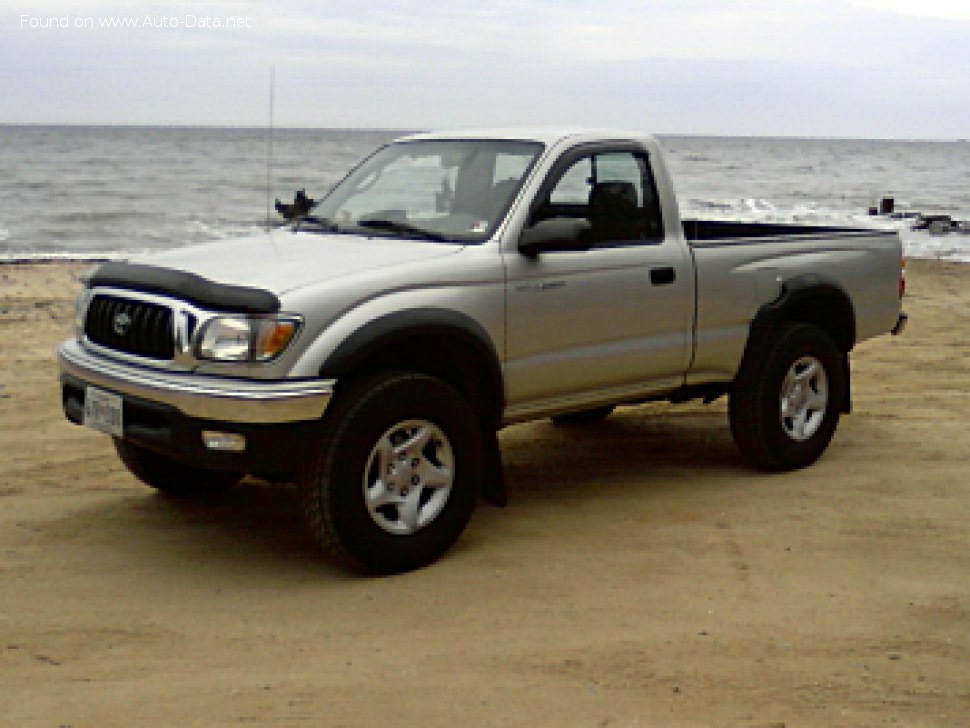
The Toyota Tacoma I Single Cab 2.4 (142 Hp) represents the initial offering of the Tacoma compact pickup truck, produced between 1995 and 2000. This generation marked Toyota’s entry into a more mainstream, mid-size truck segment, aiming to provide a versatile and reliable vehicle for both work and personal use. Replacing the aging Hilux in many markets, the Tacoma I Single Cab was specifically designed to appeal to North American buyers seeking a smaller, more maneuverable alternative to full-size pickups. It quickly gained a reputation for durability and off-road capability, establishing the Tacoma as a popular choice in its class.
Toyota Tacoma I Single Cab: A Foundation of Reliability
The Tacoma I Single Cab filled a crucial gap in Toyota’s North American lineup. Prior to its introduction, Toyota primarily offered the larger Tundra pickup. The Tacoma provided a more affordable and practical option for buyers who didn’t require the substantial size and capacity of the Tundra. The single-cab configuration focused on utility and affordability, making it a popular choice for fleet vehicles and individuals prioritizing functionality over passenger space. This first generation laid the groundwork for the Tacoma’s enduring success, establishing a reputation for quality and longevity that continues to this day.
Engine & Performance
Powering the Toyota Tacoma I Single Cab 2.4 was the 2RZ-FE 2.4-liter inline-four cylinder gasoline engine. This naturally aspirated engine produced 142 horsepower at 6000 rpm and 217 Nm (160.05 lb.-ft.) of torque at 4400 rpm. While not a powerhouse, the 2RZ-FE was known for its reliability and fuel efficiency. The engine featured a double overhead camshaft (DOHC) valvetrain and multi-port fuel injection, contributing to its smooth operation and reasonable performance. The engine’s longitudinal front-engine layout facilitated a rear-wheel-drive configuration, which was standard. A five-speed manual transmission was the sole gearbox option, providing drivers with direct control over the powertrain. The power-to-weight ratio, at 59.4 horsepower per liter, was adequate for the truck’s intended purpose, prioritizing durability and usability over outright speed.
Design & Features
The Toyota Tacoma I Single Cab was offered exclusively as a two-door pickup with seating for three passengers. Its body-on-frame construction provided a robust and durable platform, capable of handling demanding work and off-road conditions. The styling was functional and utilitarian, reflecting the truck’s intended purpose. The single-cab configuration featured a relatively short wheelbase of 2624 mm (103.31 in) and an overall length of 4585 mm (180.51 in), making it relatively easy to maneuver in urban environments.
Safety features for the time were relatively basic, consisting primarily of seatbelts and a reinforced cabin structure. However, the Tacoma’s solid construction and predictable handling contributed to its overall safety profile. Interior features were similarly straightforward, focusing on practicality and durability. The interior materials were chosen for their resistance to wear and tear, and the controls were logically laid out for ease of use. The Tacoma I Single Cab prioritized functionality and reliability over luxury or advanced features, appealing to buyers who valued a no-nonsense approach to truck ownership. The truck’s ride height, or ground clearance, was 215 mm (8.46 in), enhancing its off-road capability.
Technical Specifications
| Brand | Toyota |
| Model | Tacoma |
| Generation | Tacoma I Single Cab |
| Type (Engine) | 2.4 (142 Hp) |
| Start of production | 1995 |
| End of production | 2000 |
| Powertrain Architecture | Internal Combustion engine |
| Body type | Pick-up |
| Seats | 3 |
| Doors | 2 |
| Fuel Type | Petrol (Gasoline) |
| Power | 142 Hp @ 6000 rpm |
| Power per litre | 59.4 Hp/l |
| Torque | 217 Nm @ 4400 rpm / 160.05 lb.-ft. @ 4400 rpm |
| Engine layout | Front, Longitudinal |
| Engine Model/Code | 2RZ-FE |
| Engine displacement | 2392 cm3 / 145.97 cu. in. |
| Number of cylinders | 4 |
| Engine configuration | Inline |
| Number of valves per cylinder | 4 |
| Fuel injection system | Multi-port manifold injection |
| Engine aspiration | Naturally aspirated engine |
| Valvetrain | DOHC |
| Engine oil capacity | 5.5 l / 5.81 US qt | 4.84 UK qt |
| Coolant | 7.8 l / 8.24 US qt | 6.86 UK qt |
| Max. weight | 1928 kg / 4250.51 lbs |
| Fuel tank capacity | 57 l / 15.06 US gal | 12.54 UK gal |
| Length | 4585 mm / 180.51 in |
| Width | 1689 mm / 66.5 in |
| Height | 1549 mm / 60.98 in |
| Wheelbase | 2624 mm / 103.31 in |
| Front track | 1395 mm / 54.92 in |
| Rear (Back) track | 1414 mm / 55.67 in |
| Ride height (ground clearance) | 215 mm / 8.46 in |
| Drivetrain Architecture | Rear wheel drive. Internal Combustion engine (ICE) |
| Drive wheel | Rear wheel drive |
| Number of gears and type of gearbox | 5 gears, manual transmission |
| Front brakes | Ventilated discs |
| Rear brakes | Drum |
| Tires size | 205/75 R15; 235/55 R16 |
| Wheel rims size | 15; 16 |
The Toyota Tacoma I Single Cab 2.4 (142 Hp) established a strong foundation for the Tacoma’s future success. Its blend of reliability, affordability, and capability made it a popular choice among buyers seeking a versatile and durable compact pickup truck. While relatively basic by modern standards, the Tacoma I Single Cab represented a significant step forward for Toyota in the North American truck market, paving the way for the Tacoma’s continued dominance in the mid-size pickup segment.