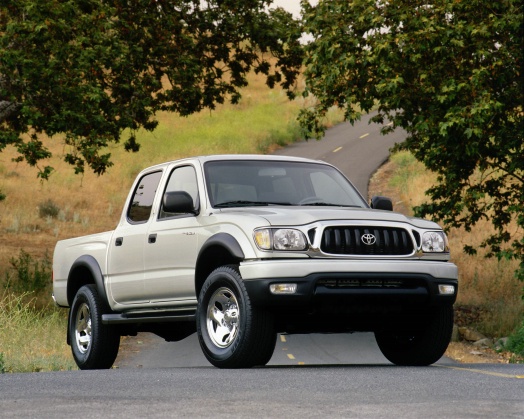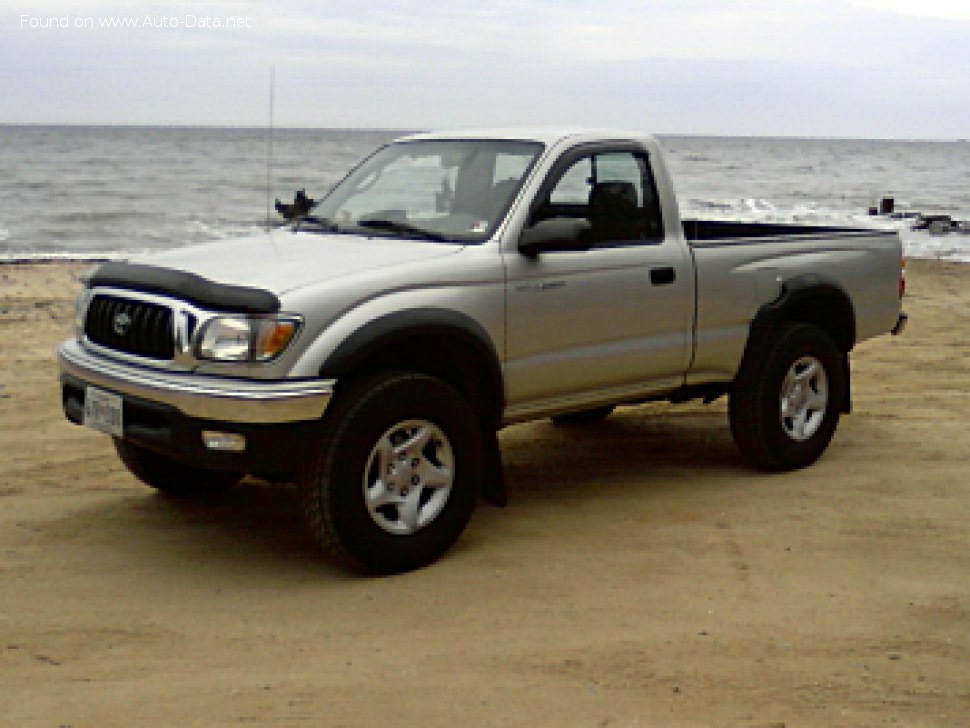
The Toyota Tacoma I Single Cab 2.7, produced between 1995 and 2000, represents the first generation of Toyota’s immensely popular compact pickup truck in the North American market. While Toyota had previously offered smaller trucks in the US, the Tacoma was specifically designed to appeal to buyers seeking a more modern, capable, and comfortable alternative to existing offerings. This initial iteration of the Tacoma established the foundation for the truck’s enduring success, becoming known for its reliability, durability, and off-road prowess. The 2.7-liter engine variant, discussed here, served as the base model, offering a balance of affordability and functionality for a wide range of buyers, from commuters to those needing a work truck.
Toyota Tacoma I Single Cab: A First Generation Overview
The Tacoma I Single Cab filled a crucial gap in the American pickup truck landscape during the mid-1990s. Prior to its introduction, the compact truck segment was largely dominated by domestic manufacturers. Toyota aimed to provide a vehicle that combined Japanese build quality and reliability with the ruggedness expected of an American pickup. The single-cab configuration, with seating for three, was geared towards practicality and utility, making it a popular choice for individuals and small businesses. The Tacoma’s design represented a departure from the boxy aesthetics of older trucks, adopting a more streamlined and contemporary appearance. It quickly gained a reputation for holding its value and providing years of dependable service.
Engine & Performance
The heart of the Tacoma I Single Cab 2.7 is a 2.7-liter (2694 cm3 or 164.4 cu. in.) inline four-cylinder engine, designated the 3RZ-FE. This naturally aspirated engine produces 150 horsepower at 4800 rpm and 240 Nm (177.01 lb.-ft.) of torque at 4000 rpm. While not a powerhouse, the 3RZ-FE is renowned for its longevity and relatively simple maintenance requirements. Power is delivered to all four wheels via a four-speed automatic transmission and a part-time four-wheel-drive system. The weight-to-power ratio of 9.7 kg/Hp (102.9 Hp/tonne) reflects the truck’s focus on durability rather than outright speed. Fuel economy figures are rated at 13 l/100 km (18.1 US mpg, 21.7 UK mpg, 7.7 km/l) in urban driving and 11.2 l/100 km (21 US mpg, 25.2 UK mpg, 8.9 km/l) on the highway. The engine utilizes a multi-port fuel injection system and a Double Overhead Camshaft (DOHC) valvetrain, contributing to its efficiency and smooth operation.
Design & Features
The Tacoma I Single Cab is a two-door pickup truck with a relatively compact footprint, measuring 4585 mm (180.51 in.) in length and 1689 mm (66.5 in.) in width. Its body-on-frame construction provides a robust platform for both on-road and off-road use. The single-cab configuration prioritizes cargo space, offering a practical bed for hauling materials. Interior features were relatively basic for the time, focusing on functionality rather than luxury. Standard equipment typically included a basic audio system, vinyl or cloth upholstery, and manual windows and locks. Safety features were limited by the standards of the 1990s, but generally included seatbelts and a basic braking system. The Tacoma’s design emphasized a utilitarian aesthetic, with a focus on durability and ease of maintenance. Ground clearance is a respectable 206 mm (8.11 in.), enhancing its off-road capability. The truck’s relatively light curb weight of 1458 kg (3214.34 lbs.) contributes to its maneuverability and fuel efficiency.
Technical Specifications
| Brand | Toyota |
| Model | Tacoma |
| Generation | Tacoma I Single Cab |
| Type (Engine) | 2.7 (150 Hp) 4WD Automatic |
| Start of production | 1995 |
| End of production | 2000 |
| Powertrain Architecture | Internal Combustion engine |
| Body type | Pick-up |
| Seats | 3 |
| Doors | 2 |
| Fuel consumption (urban) | 13 l/100 km (18.1 US mpg, 21.7 UK mpg) |
| Fuel consumption (extra urban) | 11.2 l/100 km (21 US mpg, 25.2 UK mpg) |
| Fuel Type | Petrol (Gasoline) |
| Weight-to-power ratio | 9.7 kg/Hp |
| Weight-to-torque ratio | 6.1 kg/Nm |
| Power | 150 Hp @ 4800 rpm |
| Torque | 240 Nm @ 4000 rpm (177.01 lb.-ft. @ 4000 rpm) |
| Engine layout | Front, Longitudinal |
| Engine Model/Code | 3RZ-FE |
| Engine displacement | 2694 cm3 (164.4 cu. in.) |
| Number of cylinders | 4 |
| Engine configuration | Inline |
| Cylinder Bore | 95 mm (3.74 in.) |
| Piston Stroke | 95 mm (3.74 in.) |
| Number of valves per cylinder | 4 |
| Fuel injection system | Multi-port manifold injection |
| Engine aspiration | Naturally aspirated |
| Valvetrain | DOHC |
| Engine oil capacity | 5.4 l (5.71 US qt | 4.75 UK qt) |
| Coolant capacity | 8.2 l (8.66 US qt | 7.21 UK qt) |
| Kerb Weight | 1458 kg (3214.34 lbs.) |
| Max. weight | 2268 kg (5000.08 lbs.) |
| Max load | 810 kg (1785.74 lbs.) |
| Fuel tank capacity | 57 l (15.06 US gal | 12.54 UK gal) |
| Length | 4585 mm (180.51 in.) |
| Width | 1689 mm (66.5 in.) |
| Height | 1549 mm (60.98 in.) |
| Wheelbase | 2624 mm (103.31 in.) |
| Front track | 1395 mm (54.92 in.) |
| Rear track | 1414 mm (55.67 in.) |
| Ride height (ground clearance) | 206 mm (8.11 in.) |
| Drive wheel | All wheel drive (4×4) |
| Number of gears | 4 |
| Gearbox type | Automatic transmission |
| Front brakes | Ventilated discs |
| Rear brakes | Drum |
| Tires size | 205/75 R15; 235/55 R16 |
| Wheel rims size | 15; 16 |
The Toyota Tacoma I Single Cab 2.7 4WD Automatic established a strong foundation for the Tacoma’s continued success. Its blend of reliability, durability, and affordability made it a popular choice for a wide range of buyers, and it remains a sought-after vehicle among enthusiasts and those seeking a dependable and long-lasting pickup truck.