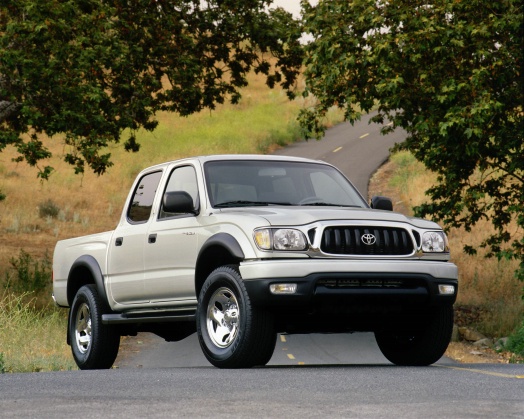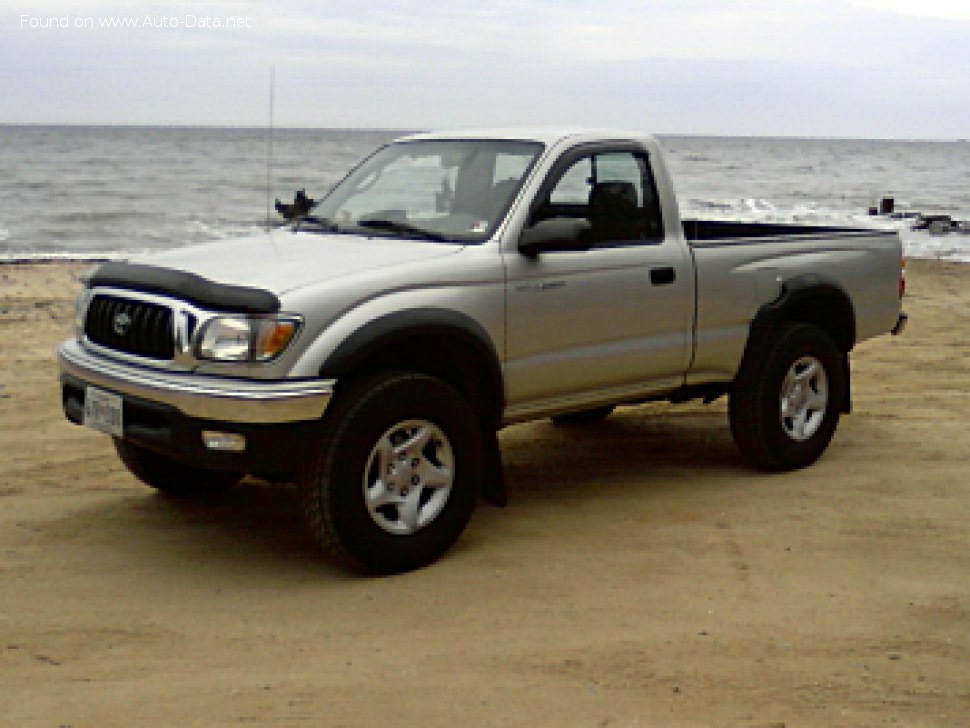
The Toyota Tacoma I Single Cab, produced from 1995 to 2000, represents the first generation of Toyota’s immensely popular compact pickup truck in North America. While Toyota had offered smaller trucks previously, the Tacoma was specifically designed to appeal to the growing North American market for versatile, reliable, and relatively affordable trucks. This generation Tacoma quickly gained a reputation for its durability and off-road capability, establishing a strong foothold for the model that continues to this day. The Single Cab configuration, with its two doors and seating for three, catered to buyers prioritizing utility and affordability over passenger space. The 3.4-liter V6 engine option, producing 190 horsepower, provided a significant performance upgrade over the base four-cylinder engine, making it a popular choice for those needing extra power for work or recreation.
Toyota Tacoma I Single Cab: A First Generation Icon
The Tacoma I Single Cab filled a crucial gap in the American pickup truck market during the mid-1990s. Smaller than full-size offerings from Ford, Chevrolet, and Dodge, it offered a more manageable size for urban environments and off-road trails. Compared to other compact pickups of the time, like the Ford Ranger and Chevrolet S-10, the Tacoma distinguished itself with a more refined interior, a stronger emphasis on build quality, and Toyota’s renowned reliability. The Single Cab configuration was particularly popular with tradesmen, ranchers, and outdoor enthusiasts who needed a rugged and dependable work vehicle. It served as a direct replacement for the Hilux in many markets, though the Tacoma was specifically tailored for North American preferences.
Engine & Performance
The heart of the Tacoma I Single Cab 3.4 V6 is the 5VZ-FE 3.4-liter V6 engine. This naturally aspirated engine delivers 190 horsepower at 4800 rpm and 298 Nm (219.79 lb.-ft.) of torque at 3600 rpm. The engine’s robust construction and relatively simple design contributed to its longevity and ease of maintenance. Power is delivered to the rear wheels via a five-speed manual transmission, providing drivers with direct control over gear selection. The longitudinal engine layout and rear-wheel-drive configuration were standard for this generation Tacoma. While not a performance-oriented truck, the 3.4 V6 provided ample power for everyday driving and hauling moderate loads. The power-to-weight ratio of 56.2 hp per liter was respectable for the era, offering a balance between efficiency and capability. The engine utilizes a multi-port fuel injection system and a double overhead camshaft (DOHC) valvetrain for optimized combustion and performance.
Design & Features
The Toyota Tacoma I Single Cab is a classic example of 1990s pickup truck design. Its body-on-frame construction provides a solid and durable platform. The Single Cab configuration features two doors and a small rear bench seat, prioritizing cargo space over passenger comfort. The exterior styling is functional and utilitarian, with a relatively simple and boxy shape. The truck’s ride height (ground clearance) of 215 mm (8.46 inches) provides good off-road capability. Interior features were basic but functional, focusing on durability and ease of use. Safety features were limited by the standards of the time, typically including seatbelts and a basic braking system. The Tacoma’s strength lay in its practicality and reliability, rather than luxurious amenities. Available tire sizes included 205/75 R15 and 235/55 R16, mounted on 15 or 16-inch wheel rims. The truck’s dimensions – 4585 mm (180.51 in) in length, 1689 mm (66.5 in) in width, and 1549 mm (60.98 in) in height – made it relatively easy to maneuver in both urban and rural environments.
Technical Specifications
| Brand | Toyota |
| Model | Tacoma |
| Generation | Tacoma I Single Cab |
| Type (Engine) | 3.4 V6 (190 Hp) |
| Start of production | 1995 |
| End of production | 2000 |
| Powertrain Architecture | Internal Combustion engine |
| Body type | Pick-up |
| Seats | 3 |
| Doors | 2 |
| Fuel Type | Petrol (Gasoline) |
| Power | 190 Hp @ 4800 rpm |
| Power per litre | 56.2 Hp/l |
| Torque | 298 Nm @ 3600 rpm / 219.79 lb.-ft. @ 3600 rpm |
| Engine layout | Front, Longitudinal |
| Engine Model/Code | 5VZ-FE |
| Engine displacement | 3378 cm3 / 206.14 cu. in. |
| Number of cylinders | 6 |
| Engine configuration | V-engine |
| Cylinder Bore | 93.4 mm / 3.68 in. |
| Piston Stroke | 82.04 mm / 3.23 in. |
| Compression ratio | 9.6:1 |
| Number of valves per cylinder | 4 |
| Fuel injection system | Multi-port manifold injection |
| Engine aspiration | Naturally aspirated engine |
| Valvetrain | DOHC |
| Engine oil capacity | 5.2 l / 5.49 US qt | 4.58 UK qt |
| Coolant | 9.5 l / 10.04 US qt | 8.36 UK qt |
| Max. weight | 1928 kg / 4250.51 lbs |
| Fuel tank capacity | 57 l / 15.06 US gal | 12.54 UK gal |
| Length | 4585 mm / 180.51 in |
| Width | 1689 mm / 66.5 in |
| Height | 1549 mm / 60.98 in |
| Wheelbase | 2624 mm / 103.31 in |
| Front track | 1395 mm / 54.92 in |
| Rear (Back) track | 1414 mm / 55.67 in |
| Ride height (ground clearance) | 215 mm / 8.46 in |
| Drivetrain Architecture | Rear wheel drive |
| Number of gears and type of gearbox | 5 gears, manual transmission |
| Front brakes | Ventilated discs |
| Rear brakes | Drum |
| Tires size | 205/75 R15; 235/55 R16 |
| Wheel rims size | 15; 16 |
The Toyota Tacoma I Single Cab 3.4 V6 remains a popular choice among truck enthusiasts and collectors. Its combination of reliability, durability, and off-road capability has cemented its place as a significant vehicle in the history of American pickup trucks. The first-generation Tacoma laid the foundation for the highly successful Tacoma models that followed, continuing Toyota’s legacy of building dependable and capable trucks.