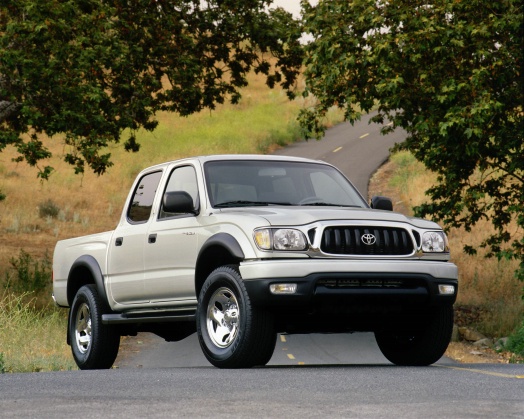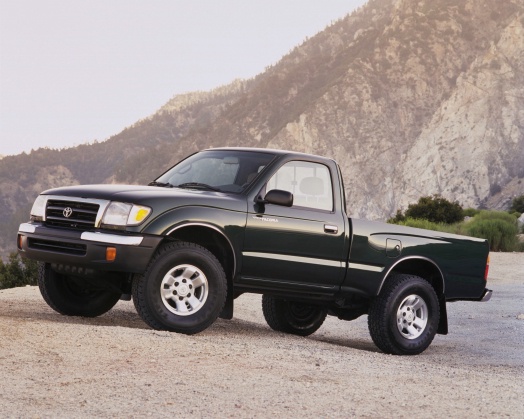
The Toyota Tacoma I Single Cab (facelift 2000) with the 3.4-liter V6 engine represents a significant iteration of Toyota’s popular compact pickup truck. Introduced as a mid-cycle refresh, this version of the first-generation Tacoma (1995-2004) aimed to refine the already successful formula, offering increased refinement and updated styling. While the Tacoma was not initially a major player in the full-size truck market dominated by American manufacturers, it quickly gained a reputation for reliability, durability, and off-road capability, carving out a niche for itself as a versatile and dependable work and recreational vehicle. This particular model, the Single Cab with the 3.4 V6, was geared towards buyers prioritizing functionality and affordability over passenger space.
Toyota Tacoma I Single Cab (facelift 2000): A Detailed Overview
The facelifted 2000 Tacoma Single Cab built upon the foundation laid by the original model, addressing some early criticisms and enhancing its appeal. The changes included revised front-end styling, interior refinements, and improvements to the available equipment. The Single Cab configuration, with its two doors and limited seating, catered to those needing a practical truck for work or outdoor adventures, where passenger capacity was less of a concern. The 3.4-liter V6 engine provided a substantial power upgrade over the base four-cylinder option, making it a popular choice for those who frequently towed or hauled heavy loads.
Engine & Performance
The heart of the 2000 Toyota Tacoma I Single Cab (facelift) is the 5VZ-FE 3.4-liter V6 engine. This naturally aspirated powerplant produces 190 horsepower at 4800 rpm and 298 Nm (219.79 lb.-ft.) of torque at 3600 rpm. The engine features a V-configuration with six cylinders, a displacement of 3378 cm3 (206.14 cu. in.), and a bore and stroke of 93.4 mm (3.68 in.) and 82.04 mm (3.23 in.) respectively. It utilizes a compression ratio of 9.6:1, multi-port fuel injection, and a Double Overhead Camshaft (DOHC) valvetrain with four valves per cylinder. This configuration delivers a good balance of power and reliability, making it well-suited for the demands of truck ownership. The engine is longitudinally mounted at the front of the vehicle. Power is delivered to the rear wheels through a robust 5-speed manual transmission. This drivetrain configuration provides a direct and engaging driving experience, while the manual gearbox allows for greater control, particularly in off-road situations.
Design & Features
The 2000 Toyota Tacoma I Single Cab is a traditional pick-up truck in terms of its body style. It features a two-door configuration with a separate cargo bed. The facelift brought subtle changes to the exterior, including a revised grille, headlights, and bumper. The interior, while functional, was relatively spartan, focusing on durability and ease of use. The Single Cab configuration offers seating for two occupants. Safety features for the time included ventilated disc brakes on the front and drum brakes on the rear. While lacking many of the advanced safety systems found in modern vehicles, the Tacoma was considered reasonably safe for its era. The truck’s relatively compact size and robust construction contributed to its off-road prowess. Ride height, or ground clearance, is a notable 215 mm (8.46 in.), aiding in navigating rough terrain. The Tacoma’s design prioritized practicality and durability, making it a popular choice for both work and recreational use.
Technical Specifications
| Brand | Toyota |
| Model | Tacoma |
| Generation | Tacoma I Single Cab (facelift 2000) |
| Type (Engine) | 3.4 V6 (190 Hp) |
| Start of production | 2000 |
| End of production | 2004 |
| Powertrain Architecture | Internal Combustion engine |
| Body type | Pick-up |
| Seats | 2 |
| Doors | 2 |
| Fuel Type | Petrol (Gasoline) |
| Power | 190 Hp @ 4800 rpm |
| Power per litre | 56.2 Hp/l |
| Torque | 298 Nm @ 3600 rpm / 219.79 lb.-ft. @ 3600 rpm |
| Engine layout | Front, Longitudinal |
| Engine Model/Code | 5VZ-FE |
| Engine displacement | 3378 cm3 / 206.14 cu. in. |
| Number of cylinders | 6 |
| Engine configuration | V-engine |
| Cylinder Bore | 93.4 mm / 3.68 in. |
| Piston Stroke | 82.04 mm / 3.23 in. |
| Compression ratio | 9.6:1 |
| Number of valves per cylinder | 4 |
| Fuel injection system | Multi-port manifold injection |
| Engine aspiration | Naturally aspirated engine |
| Valvetrain | DOHC |
| Max. weight | 1928 kg / 4250.51 lbs |
| Fuel tank capacity | 57 l / 15.06 US gal | 12.54 UK gal |
| Length | 4686 mm / 184.49 in. |
| Width | 1689 mm / 66.5 in. |
| Height | 1570 mm / 61.81 in. |
| Wheelbase | 2624 mm / 103.31 in. |
| Front track | 1395 mm / 54.92 in. |
| Rear (Back) track | 1415 mm / 55.71 in. |
| Ride height (ground clearance) | 215 mm / 8.46 in. |
| Drivetrain Architecture | The Internal combustion engine (ICE) drives the rear wheels of the vehicle. |
| Drive wheel | Rear wheel drive |
| Number of gears and type of gearbox | 5 gears, manual transmission |
| Front brakes | Ventilated discs |
| Rear brakes | Drum |
| Tires size | 205/75 R15; 235/55 R16 |
| Wheel rims size | 15; 16 |
The Toyota Tacoma I Single Cab (facelift 2000) 3.4 V6 remains a popular choice among truck enthusiasts and those seeking a reliable and capable work vehicle. Its blend of durability, off-road capability, and relatively simple mechanical design has ensured its longevity and continued appeal in the used vehicle market. While it may lack the sophistication of modern trucks, its reputation for dependability and its straightforward design make it a compelling option for those who value practicality and reliability above all else.