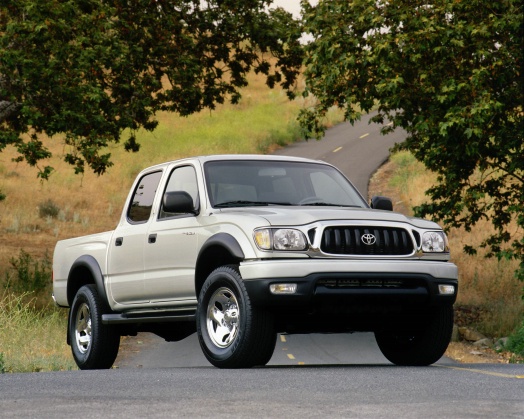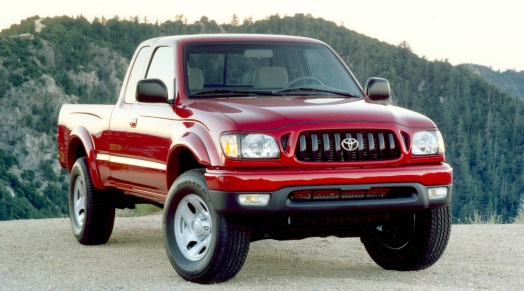
The Toyota Tacoma is a mid-size pickup truck manufactured by Toyota since 1995. The first generation, known internally as the XtraCab, was produced from 1995 through 2004, with a significant facelift introduced in 2000. This facelift brought updated styling, improved safety features, and refinements to the powertrain. The 2000 Toyota Tacoma XtraCab 2.7, equipped with a 2.7-liter inline-four engine and an automatic transmission, represented a popular choice for buyers seeking a compact and reliable truck for both work and personal use. It occupied a key position in the burgeoning US market for smaller, more fuel-efficient pickup trucks.
Toyota Tacoma I XtraCab (Facelift 2000) 2.7: An Overview
The Tacoma quickly gained a reputation for its durability and off-road capability, becoming a favorite among enthusiasts. The XtraCab configuration offered a small rear seat and extended cab, providing added versatility compared to the standard cab models. The 2000 facelift aimed to enhance the Tacoma’s appeal by addressing some earlier criticisms and bringing it more in line with contemporary design trends. While not a luxury vehicle, the Tacoma prioritized functionality, reliability, and a comfortable driving experience for its target demographic.
Engine & Performance
The 2000 Toyota Tacoma XtraCab 2.7 was powered by the 3RZ-FE 2.7-liter inline-four cylinder gasoline engine. This naturally aspirated engine produced 150 horsepower at 4800 rpm and 240 Newton-meters (177.01 lb.-ft.) of torque at 4000 rpm. While not exceptionally powerful, the engine provided adequate performance for everyday driving and light-duty hauling. The engine featured a double overhead camshaft (DOHC) valvetrain and multi-port fuel injection, contributing to its relatively smooth operation and reasonable fuel efficiency. The engine’s power-to-weight ratio was 9.9 kg/Hp, or 100.9 Hp/tonne, and the torque-to-weight ratio was 6.2 kg/Nm, or 161.4 Nm/tonne. Power delivery was linear, making it easy to control in various driving conditions. The engine was paired with a four-speed automatic transmission, providing convenient shifting and enhancing drivability. Fuel economy was rated at approximately 12.4 liters per 100 kilometers (19 US mpg) in urban driving and 11.2 liters per 100 kilometers (21 US mpg) in extra-urban driving.
Design & Features
The 2000 Toyota Tacoma XtraCab maintained the classic pickup truck silhouette, with a boxy cab and a separate bed. The facelift brought subtle changes to the front fascia, including a revised grille and headlights, giving the truck a more modern appearance. The XtraCab configuration featured a small rear seat, accessible via two doors, offering limited passenger space but adding a degree of practicality. The interior was functional and durable, with hard-wearing materials designed to withstand the rigors of daily use. Standard features included air conditioning, a basic audio system, and power steering. Safety features, while limited by the standards of the time, included front ventilated disc brakes and rear drum brakes. The Tacoma’s relatively high ground clearance (215 mm / 8.46 in) and robust suspension allowed for moderate off-road capability. The truck’s dimensions were 5138 mm (202.28 in) in length, 1689 mm (66.5 in) in width, and 1715 mm (67.52 in) in height, with a wheelbase of 3096 mm (121.89 in). The curb weight was 1487 kg (3278.27 lbs), and the maximum weight capacity was 2315 kg (5103.7 lbs), allowing for a maximum load of 828 kg (1825.43 lbs).
Technical Specifications
| Brand | Toyota |
| Model | Tacoma |
| Generation | Tacoma I XtraCab (facelift 2000) |
| Type (Engine) | 2.7 (150 Hp) Automatic |
| Start of production | 2000 |
| End of production | 2004 |
| Powertrain Architecture | Internal Combustion engine |
| Body type | Pick-up |
| Seats | 5 |
| Doors | 2 |
| Fuel consumption (urban) | 12.4 l/100 km (19 US mpg, 22.8 UK mpg) |
| Fuel consumption (extra urban) | 11.2 l/100 km (21 US mpg, 25.2 UK mpg) |
| Fuel Type | Petrol (Gasoline) |
| Weight-to-power ratio | 9.9 kg/Hp |
| Power | 150 Hp @ 4800 rpm |
| Torque | 240 Nm @ 4000 rpm (177.01 lb.-ft. @ 4000 rpm) |
| Engine layout | Front, Longitudinal |
| Engine Model/Code | 3RZ-FE |
| Engine displacement | 2694 cm3 (164.4 cu. in.) |
| Number of cylinders | 4 |
| Engine configuration | Inline |
| Number of valves per cylinder | 4 |
| Fuel injection system | Multi-port manifold injection |
| Engine aspiration | Naturally aspirated |
| Valvetrain | DOHC |
| Engine oil capacity | 5.4 l (5.71 US qt | 4.75 UK qt) |
| Coolant capacity | 8.2 l (8.66 US qt | 7.21 UK qt) |
| Kerb Weight | 1487 kg (3278.27 lbs.) |
| Max. weight | 2315 kg (5103.7 lbs.) |
| Max load | 828 kg (1825.43 lbs.) |
| Fuel tank capacity | 68 l (17.96 US gal | 14.96 UK gal) |
| Length | 5138 mm (202.28 in.) |
| Width | 1689 mm (66.5 in.) |
| Height | 1715 mm (67.52 in.) |
| Wheelbase | 3096 mm (121.89 in.) |
| Front track | 1461 mm (57.52 in.) |
| Rear track | 1455 mm (57.28 in.) |
| Ride height (ground clearance) | 215 mm (8.46 in.) |
| Drivetrain | Rear wheel drive |
| Number of gears | 4 |
| Gearbox type | Automatic transmission |
| Front brakes | Ventilated discs |
| Rear brakes | Drum |
| Tires size | 205/75 R15; 235/55 R16 |
| Wheel rims size | 15; 16 |
The 2000 Toyota Tacoma XtraCab 2.7 represented a solid and dependable choice in the mid-size pickup truck segment. Its combination of practicality, reliability, and moderate off-road capability ensured its continued popularity throughout its production run and established a strong foundation for subsequent Tacoma generations.