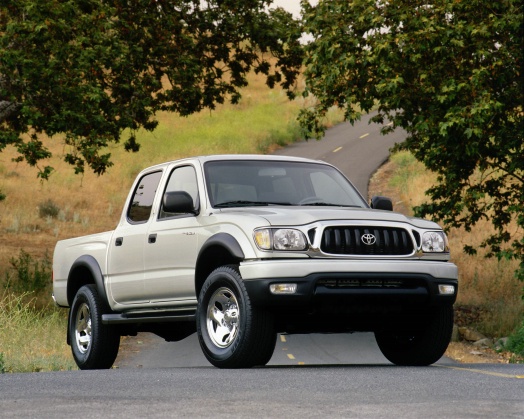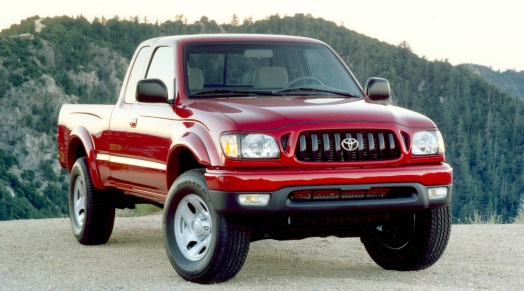
The Toyota Tacoma I xTracab (facelift 2000) 3.4 V6 represents a significant iteration in the Tacoma’s first generation, a compact pickup truck that quickly gained popularity in the North American market. Introduced initially in 1995, the Tacoma was designed to replace the aging Toyota Hilux in many regions, offering a blend of rugged capability, reliability, and a more modern driving experience. The 2000 facelift brought subtle but important refinements to the original design, enhancing both its aesthetics and functionality. This model, equipped with the 3.4-liter V6 engine and automatic transmission, became a staple for both personal use and light-duty commercial applications, known for its durability and strong resale value.
Toyota Tacoma I xTracab (2000): A Detailed Overview
The Tacoma I xTracab, particularly the 2000 facelift version, occupied a crucial niche in the American pickup truck landscape. While full-size trucks dominated the market, the Tacoma offered a more manageable size and improved fuel efficiency, appealing to buyers who didn’t require the sheer capacity of larger vehicles. The “xTracab” designation refers to the extended cab configuration, providing limited rear seating and additional storage space behind the front seats. This configuration broadened the Tacoma’s appeal, making it suitable for small families or those needing to occasionally transport passengers alongside cargo. The 2000 facelift included minor cosmetic updates, such as revised grille and headlight designs, and interior enhancements aimed at improving comfort and ergonomics.
Engine & Performance
At the heart of the 2000 Toyota Tacoma xTracab is the 5VZ-FE 3.4-liter V6 engine. This naturally aspirated powerplant produces 190 horsepower at 4800 rpm and 298 Nm (219.79 lb.-ft.) of torque at 3600 rpm. The engine’s longitudinal front-engine layout contributes to a balanced weight distribution, enhancing handling and stability. The 4-speed automatic transmission delivers smooth and reliable gear changes, making it well-suited for both on-road driving and moderate off-road conditions. While not a performance-oriented vehicle, the Tacoma’s V6 provides ample power for everyday tasks, including hauling and towing. The engine features a multi-port fuel injection system and a double overhead camshaft (DOHC) valvetrain, contributing to its efficiency and responsiveness. The power-to-weight ratio of 56.2 hp per liter demonstrates a reasonable balance between engine size and output.
Design & Features
The 2000 Toyota Tacoma xTracab maintains the classic pickup truck silhouette, characterized by a two-door body style and a separate cargo bed. The xTracab configuration adds a small rear door on each side, providing access to a limited rear seating area. The interior, while functional, prioritizes durability over luxury. Features typically included air conditioning, an AM/FM radio, and basic instrumentation. Safety features for the era were relatively modest, consisting primarily of seatbelts and a driver-side airbag. The Tacoma’s robust construction and high ground clearance (215 mm / 8.46 in) made it capable of handling rough terrain. The vehicle’s dimensions – a length of 5138 mm (202.28 in), a width of 1689 mm (66.5 in), and a height of 1715 mm (67.52 in) – positioned it squarely within the compact pickup truck segment. The rear-wheel-drive configuration was standard, providing a traditional pickup truck driving experience.
Technical Specifications
| Brand | Toyota |
| Model | Tacoma |
| Generation | Tacoma I xTracab (facelift 2000) |
| Type (Engine) | 3.4 V6 (190 Hp) Automatic |
| Start of production | 2000 |
| End of production | 2004 |
| Powertrain Architecture | Internal Combustion engine |
| Body type | Pick-up |
| Seats | 5 |
| Doors | 2 |
| Fuel Type | Petrol (Gasoline) |
| Power | 190 Hp @ 4800 rpm |
| Power per litre | 56.2 Hp/l |
| Torque | 298 Nm @ 3600 rpm / 219.79 lb.-ft. @ 3600 rpm |
| Engine layout | Front, Longitudinal |
| Engine Model/Code | 5VZ-FE |
| Engine displacement | 3378 cm3 / 206.14 cu. in. |
| Number of cylinders | 6 |
| Engine configuration | V-engine |
| Cylinder Bore | 93.4 mm / 3.68 in. |
| Piston Stroke | 82.04 mm / 3.23 in. |
| Compression ratio | 9.6:1 |
| Number of valves per cylinder | 4 |
| Fuel injection system | Multi-port manifold injection |
| Engine aspiration | Naturally aspirated engine |
| Valvetrain | DOHC |
| Max. weight | 1928 kg / 4250.51 lbs |
| Fuel tank capacity | 68 l / 17.96 US gal | 14.96 UK gal |
| Length | 5138 mm / 202.28 in |
| Width | 1689 mm / 66.5 in |
| Height | 1715 mm / 67.52 in |
| Wheelbase | 3096 mm / 121.89 in |
| Front track | 1461 mm / 57.52 in |
| Rear (Back) track | 1455 mm / 57.28 in |
| Ride height (ground clearance) | 215 mm / 8.46 in |
| Drivetrain Architecture | The Internal combustion engine (ICE) drives the rear wheels of the vehicle. |
| Drive wheel | Rear wheel drive |
| Number of gears and type of gearbox | 4 gears, automatic transmission |
| Front brakes | Ventilated discs |
| Rear brakes | Drum |
| Tires size | 205/75 R15; 235/55 R16 |
| Wheel rims size | 15; 16 |
The Toyota Tacoma I xTracab (2000) 3.4 V6 Automatic remains a popular choice among truck enthusiasts and those seeking a reliable and capable mid-size pickup. Its blend of practicality, durability, and relatively affordable maintenance costs have cemented its place as a classic in the American automotive landscape. The 2000 facelift further refined an already successful formula, ensuring the Tacoma continued to appeal to a wide range of buyers for years to come.