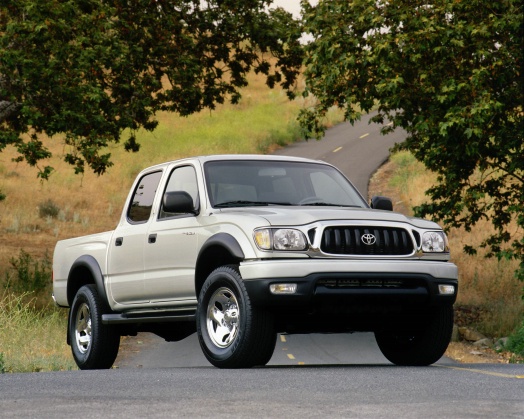
The Toyota Tacoma is a mid-size pickup truck manufactured by Toyota since 1995. The Tacoma has been a consistently popular choice in the North American market, known for its reliability, durability, and off-road capability. The third generation, introduced in 2016, received a significant facelift in 2020, updating its styling and technology. This article details the 2020-2023 Toyota Tacoma III Access Cab model equipped with the 2.7-liter four-cylinder engine, a configuration primarily aimed at buyers prioritizing affordability and fuel efficiency within the Tacoma lineup.
Toyota Tacoma III Access Cab (2020-2023)
The Tacoma III Access Cab, particularly the 2020 facelift, represents a refinement of a proven formula. While the more powerful V6 engine often grabs headlines, the 2.7-liter four-cylinder version holds a significant place in the Tacoma’s sales mix. It caters to customers who don’t require the ultimate in towing or acceleration, offering a more economical option for daily driving and light-duty tasks. The Access Cab configuration provides a smaller rear seat and bed compared to the Double Cab, making it suitable for individuals or small families who occasionally need extra passenger or cargo space. The facelift brought updated front-end styling, enhanced safety features, and improved infotainment options.
Engine & Performance
The 2020-2023 Toyota Tacoma Access Cab with the 2.7-liter engine is powered by the 2TR-FE inline four-cylinder gasoline engine. This naturally aspirated engine produces 159 horsepower at 5200 rpm and 244 Nm (179.97 lb.-ft.) of torque at 3800 rpm. The engine features a double overhead camshaft (DOHC) valvetrain with Variable Valve Timing-intelligent (VVT-i) technology, optimizing performance and efficiency. Power is delivered to the rear wheels via a six-speed electronically controlled automatic transmission with ECT-i (Electronic Controlled Transmission – intelligent) mode. This transmission adapts to driving conditions to provide smoother shifts and improved fuel economy. While not a performance-oriented powertrain, the 2.7-liter engine provides adequate power for everyday driving and light hauling. The weight-to-power ratio is 11.2 kg/Hp, and the weight-to-torque ratio is 7.3 kg/Nm. The engine’s displacement is 2694 cm3 (164.4 cu. in.), with a bore and stroke of 95 mm (3.74 in.).
Design & Features
The Tacoma Access Cab is a two-door pickup truck with seating for four passengers. The body-on-frame construction provides a robust and durable platform, contributing to the Tacoma’s reputation for longevity. The 2020 facelift brought a more aggressive front grille, redesigned headlights, and updated taillights. Inside, the cabin features a functional layout with durable materials. Standard features typically include air conditioning, power windows and locks, and a basic infotainment system. Higher trim levels offer upgrades such as a touchscreen display, smartphone integration (Apple CarPlay and Android Auto), and advanced driver-assistance systems. Safety features, enhanced with the 2020 update, include anti-lock brakes (ABS) and a suite of active safety technologies like lane departure alert and pre-collision system. The truck’s dimensions are 5392 mm (212.28 in.) in length, 1890 mm (74.41 in.) in width, and 1793 mm (70.59 in.) in height, with a wheelbase of 3236 mm (127.4 in.). Ground clearance is a substantial 239 mm (9.41 in.), enhancing its off-road capability. The drag coefficient is rated at 0.388.
Technical Specifications
| Brand | Toyota |
| Model | Tacoma |
| Generation | Tacoma III Access Cab (facelift 2020) |
| Type (Engine) | 2.7 4CYL (159 Hp) ECT-i |
| Start of production | 2020 |
| End of production | 2023 |
| Powertrain Architecture | Internal Combustion engine |
| Body type | Pick-up |
| Seats | 4 |
| Doors | 2 |
| Fuel consumption (urban) | 11.8 l/100 km (19.9 US mpg, 23.9 UK mpg) |
| Fuel consumption (extra urban) | 10.2 l/100 km (23.1 US mpg, 27.7 UK mpg) |
| Fuel consumption (combined) | 11.2 l/100 km (21 US mpg, 25.2 UK mpg) |
| Fuel Type | Petrol (Gasoline) |
| Emission standard | ULEV III |
| Weight-to-power ratio | 11.2 kg/Hp |
| Weight-to-torque ratio | 7.3 kg/Nm |
| Power | 159 Hp @ 5200 rpm |
| Torque | 244 Nm @ 3800 rpm (179.97 lb.-ft. @ 3800 rpm) |
| Engine layout | Front, Longitudinal |
| Engine Model/Code | 2TR-FE |
| Engine displacement | 2694 cm3 (164.4 cu. in.) |
| Number of cylinders | 4 |
| Engine configuration | Inline |
| Cylinder Bore | 95 mm (3.74 in.) |
| Piston Stroke | 95 mm (3.74 in.) |
| Compression ratio | 10.2:1 |
| Number of valves per cylinder | 4 |
| Fuel injection system | Multi-port manifold injection |
| Engine aspiration | Naturally aspirated engine |
| Valvetrain | DOHC, VVT-i |
| Engine oil capacity | 5.1 l (5.39 US qt | 4.49 UK qt) |
| Coolant capacity | 8.6 l (9.09 US qt | 7.57 UK qt) |
| Kerb Weight | 1776 kg (3915.41 lbs.) |
| Max. weight | 2540 kg (5599.74 lbs.) |
| Max load | 764 kg (1684.33 lbs.) |
| Fuel tank capacity | 80 l (21.13 US gal | 17.6 UK gal) |
| Permitted trailer load with brakes (12%) | 1588 kg (3500.94 lbs.) |
| Permitted towbar download | 159 kg (350.53 lbs.) |
| Length | 5392 mm (212.28 in.) |
| Width | 1890 mm (74.41 in.) |
| Height | 1793 mm (70.59 in.) |
| Wheelbase | 3236 mm (127.4 in.) |
| Front track | 1600 mm (62.99 in.) |
| Rear track | 1605 mm (63.19 in.) |
| Ride height (ground clearance) | 239 mm (9.41 in.) |
| Minimum turning circle | 12.4 m (40.68 ft.) |
| Approach angle | 29° |
| Departure angle | 23.5° |
| Ramp-over angle | 24° |
| Drivetrain | Rear wheel drive |
| Number of gears | 6 |
| Gearbox type | Automatic transmission ECT-i |
| Front suspension | Double wishbone, Transverse stabilizer |
| Rear suspension | Transverse stabilizer, Leaf spring |
| Front brakes | Ventilated discs, 273.05 mm |
| Rear brakes | Drum, 254 mm |
| Tires size | 245/75 R16 |
| Wheel rims size | 16 |
The 2020-2023 Toyota Tacoma Access Cab 2.7L remains a compelling option for buyers seeking a reliable, capable, and relatively affordable mid-size pickup truck. Its blend of practicality, durability, and Toyota’s renowned reputation for quality ensures its continued appeal in the competitive truck market.