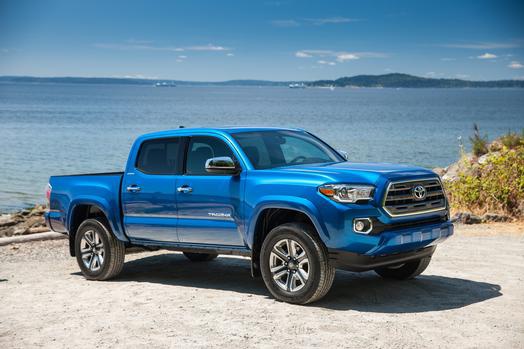
The Toyota Tacoma III Double Cab 2.7, produced from 2015 to 2020, represents the third generation of Toyota’s popular mid-size pickup truck. While the Tacoma has a dedicated and loyal following in the United States, it’s important to understand its position within Toyota’s global lineup. The Tacoma is primarily a North American market vehicle, designed specifically to cater to the preferences of truck buyers in the US and Canada. It doesn’t see widespread sales in other regions where Toyota offers different pickup truck models. The Double Cab configuration designates a four-door body style, offering increased passenger space compared to the standard Access Cab. This particular variant is equipped with a 2.7-liter inline-four engine paired with a six-speed automatic transmission, delivering a balance of affordability and capability.
Toyota Tacoma III Double Cab 2.7: An Overview
The Tacoma III generation marked a significant evolution for the model, building upon the reputation for reliability and off-road prowess established by its predecessors. The 2015-2020 model years saw refinements in interior comfort, technology, and safety features, while maintaining the core attributes that made the Tacoma a best-seller. The 2.7-liter engine option provided a more economical entry point into the Tacoma lineup, appealing to buyers who prioritized fuel efficiency and everyday usability over outright towing capacity or high-performance off-roading. This model competed with other mid-size trucks like the Nissan Frontier, Ford Ranger, and Chevrolet Colorado.
Engine & Performance
The heart of the Tacoma III Double Cab 2.7 is the 2TR-FE 2.7-liter inline-four cylinder gasoline engine. This naturally aspirated engine produces 159 horsepower at 5200 rpm and 245 Nm (180.7 lb.-ft.) of torque at 3800 rpm. The engine features a double overhead camshaft (DOHC) valvetrain with Variable Valve Timing-intelligent (VVT-i) technology, optimizing performance and fuel efficiency across a range of driving conditions. The 2TR-FE is known for its durability and relatively simple design, contributing to the Tacoma’s overall reputation for reliability. Power is delivered to the rear wheels via a six-speed automatic transmission. The weight-to-power ratio of 11.7 kg/Hp (85.6 Hp/tonne) indicates a moderate power output relative to the vehicle’s weight, prioritizing fuel economy and dependability over rapid acceleration. Fuel consumption is rated at 11.2 l/100 km combined (21 US mpg, 25.2 UK mpg, 8.9 km/l).
Design & Features
The Tacoma III Double Cab is a traditional body-on-frame pickup truck, offering robust construction and inherent off-road capability. The Double Cab configuration provides seating for five passengers and a more spacious rear seat compared to the Access Cab. The exterior design features a bold front grille, prominent headlights, and a muscular stance. The interior, while functional, prioritizes durability over luxury. Features included standard air conditioning, power windows and locks, and a basic audio system. Safety features for this generation included Anti-lock Braking System (ABS) as standard equipment. The Tacoma’s ride height (ground clearance) of 239 mm (9.41 in) contributes to its off-road ability, allowing it to navigate rough terrain with relative ease. The truck’s dimensions – a length of 5392 mm (212.28 in) and a width of 1890 mm (74.41 in) – position it squarely within the mid-size pickup truck segment.
Technical Specifications
| Brand | Toyota |
| Model | Tacoma |
| Generation | Tacoma III Double Cab |
| Type (Engine) | 2.7 (159 Hp) Automatic |
| Start of production | September, 2015 |
| End of production | 2020 |
| Powertrain Architecture | Internal Combustion engine |
| Body type | Pick-up |
| Seats | 5 |
| Doors | 4 |
| Fuel consumption (urban) | 12.4 l/100 km (19 US mpg, 22.8 UK mpg, 8.1 km/l) |
| Fuel consumption (extra urban) | 10.2 l/100 km (23.1 US mpg, 27.7 UK mpg, 9.8 km/l) |
| Fuel consumption (combined) | 11.2 l/100 km (21 US mpg, 25.2 UK mpg, 8.9 km/l) |
| Fuel Type | Petrol (Gasoline) |
| Weight-to-power ratio | 11.7 kg/Hp, 85.6 Hp/tonne |
| Weight-to-torque ratio | 7.6 kg/Nm, 131.9 Nm/tonne |
| Power | 159 Hp @ 5200 rpm |
| Power per litre | 59 Hp/l |
| Torque | 245 Nm @ 3800 rpm (180.7 lb.-ft. @ 3800 rpm) |
| Engine layout | Front, Longitudinal |
| Engine Model/Code | 2TR-FE |
| Engine displacement | 2694 cm3 (164.4 cu. in.) |
| Number of cylinders | 4 |
| Engine configuration | Inline |
| Cylinder Bore | 95 mm (3.74 in.) |
| Piston Stroke | 95 mm (3.74 in.) |
| Compression ratio | 10.2:1 |
| Number of valves per cylinder | 4 |
| Fuel injection system | Multi-port manifold injection |
| Engine aspiration | Naturally aspirated engine |
| Valvetrain | DOHC-VVT-i |
| Engine oil capacity | 5.9 l (6.23 US qt | 5.19 UK qt) |
| Coolant | 8.6 l (9.09 US qt | 7.57 UK qt) |
| Kerb Weight | 1857 kg (4093.98 lbs.) |
| Max. weight | 2540 kg (5599.74 lbs.) |
| Max load | 683 kg (1505.76 lbs.) |
| Fuel tank capacity | 79 l (20.87 US gal | 17.38 UK gal) |
| Length | 5392 mm (212.28 in.) |
| Width | 1890 mm (74.41 in.) |
| Height | 1793 mm (70.59 in.) |
| Wheelbase | 3236 mm (127.4 in.) |
| Front track | 1600 mm (62.99 in.) |
| Rear (Back) track | 1605 mm (63.19 in.) |
| Ride height (ground clearance) | 239 mm (9.41 in.) |
| Drivetrain Architecture | Rear wheel drive. Internal Combustion engine (ICE) |
| Drive wheel | Rear wheel drive |
| Number of gears and type of gearbox | 6 gears, automatic transmission |
| Front suspension | Independent, type McPherson with coil spring and anti-roll bar |
| Rear suspension | Independent coil spring |
| Front brakes | Ventilated discs |
| Rear brakes | Drum |
| Assisting systems | ABS (Anti-lock braking system) |
| Steering type | Steering rack and pinion |
| Tires size | 245/75 R16; 265/70 R16; 265/65 R17; 265/60 R18 |
| Wheel rims size | 16; 17; 18 |
The Toyota Tacoma III Double Cab 2.7 offered a compelling package for buyers seeking a reliable, capable, and relatively affordable mid-size pickup truck. Its focus on durability and practicality, combined with Toyota’s renowned reputation for quality, ensured its continued success in a competitive market segment.