The Toyota Tercel (AC52), produced between 1994 and 1999, represents the fourth generation of Toyota’s long-running subcompact car. Designed as an affordable and reliable mode of transportation, the AC52 Tercel primarily served as an entry-level vehicle, particularly popular with first-time car buyers and those seeking economical daily transport. While not widely celebrated for performance or luxury, the AC52 Tercel earned a reputation for dependability and fuel efficiency, characteristics that defined Toyota’s brand image during this period. The AC52 was sold in various global markets, though its presence in the United States was relatively modest compared to other Toyota offerings like the Corolla and Camry. This generation marked a refinement of the Tercel’s formula, offering improved styling and a slightly more spacious interior compared to its predecessors.
Toyota Tercel (AC52): A Detailed Overview
Origins and Market Positioning
The Toyota Tercel originated in 1978 as a direct response to the growing demand for fuel-efficient vehicles following the oil crises of the 1970s. Each successive generation aimed to improve upon the previous one in terms of comfort, features, and reliability. The AC52 Tercel, launched in 1994, continued this trend. In markets where it was sold – primarily Asia, Australia, and parts of Europe – the Tercel competed with other subcompacts like the Honda Civic, Nissan Sentra (known as the Sunny in some regions), and Ford Fiesta. In the US market, it occupied a similar niche, though it often played second fiddle to the more established Corolla. The AC52 Tercel was offered primarily as a four-door sedan, with a limited number of five-door liftback models available in certain markets. Its focus remained firmly on providing basic, no-frills transportation at an accessible price point.
Engine & Performance
The AC52 Tercel 1.3 i was powered by a 1.3-liter, naturally aspirated four-cylinder gasoline engine. This engine, designated as the 2E series, produced 86 horsepower. While not a powerhouse, the engine was designed for efficiency and durability rather than outright speed. Power was delivered to the front wheels via either a four-speed automatic transmission or a five-speed manual transmission. The manual transmission offered slightly better fuel economy and a more engaging driving experience, while the automatic provided convenience for urban commuting. Acceleration was modest, with a 0-60 mph time estimated to be around 12-14 seconds. The Tercel’s suspension – consisting of MacPherson struts in the front and a torsion beam axle in the rear – prioritized ride comfort over sporty handling. The steering was light and easy, making it well-suited for navigating city streets. Fuel economy was a key selling point, with the Tercel achieving around 30-35 miles per gallon in combined driving conditions, depending on the transmission and driving style. The engine’s simplicity and robust construction contributed to its long-term reliability, a hallmark of the Tercel.
Design & Features
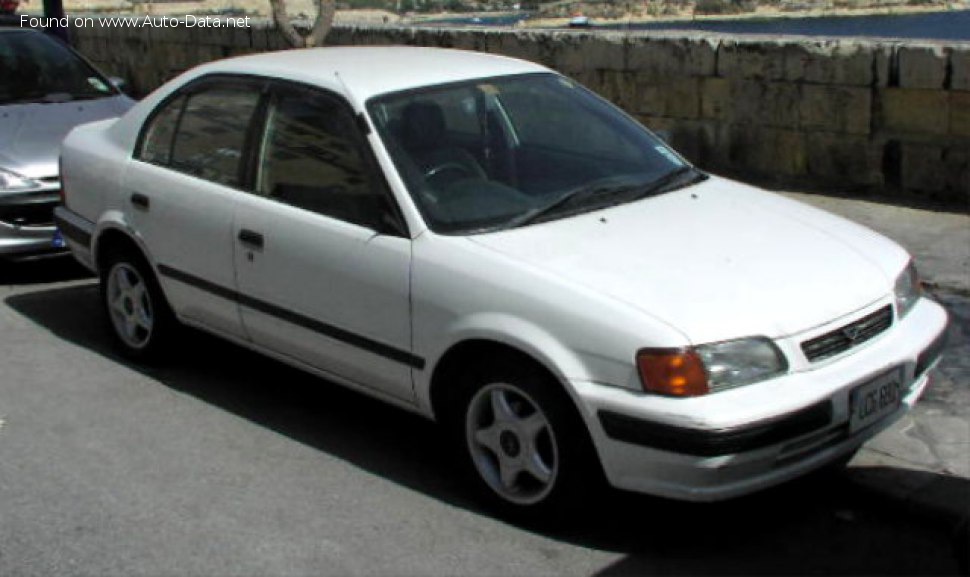
The AC52 Tercel featured a relatively conservative and functional design. The sedan body style was the most common, characterized by a boxy silhouette and a simple, uncluttered front fascia. Styling cues were typical of the mid-1990s, with rounded edges and a focus on practicality. Interior space was adequate for a subcompact car, offering comfortable seating for four adults. The dashboard layout was straightforward and easy to use, with clearly labeled controls. Standard features typically included power steering, a basic audio system, and cloth upholstery. Higher trim levels might have added features like air conditioning, power windows, and central locking. Safety features were relatively basic by modern standards, typically including seatbelts and a driver’s side airbag. Anti-lock brakes (ABS) were not standard equipment on most models. The Tercel’s interior was designed for durability and ease of maintenance, with hard-wearing materials and a simple design. The trunk offered a reasonable amount of cargo space for a subcompact sedan, sufficient for everyday needs. The overall design philosophy of the AC52 Tercel was one of understated practicality, prioritizing functionality and affordability over stylistic flair.
Technical Specifications
| Brand | Toyota |
| Model | Tercel |
| Generation | Tercel (AC52) |
| Type (Engine) | 1.3 i (86 Hp) |
| Start of production | 1994 |
| End of production | 1999 |
| Powertrain Architecture | Internal Combustion engine |
| Body type | Sedan |
| Fuel Type | Petrol (Gasoline) |
| Power | 86 Hp |
| Engine aspiration | Naturally aspirated engine |
| Engine Displacement | 1.3 Liters |
| Number of Cylinders | 4 |
| Transmission | 4-speed Automatic / 5-speed Manual |
| Drivetrain | Front-Wheel Drive |
The Toyota Tercel AC52, while not a groundbreaking vehicle, played an important role in providing affordable and reliable transportation to a wide range of customers. Its enduring reputation for dependability and fuel efficiency cemented its place as a practical choice in the subcompact car segment. Although largely superseded by newer models, the AC52 Tercel remains a testament to Toyota’s commitment to building durable and economical vehicles. Its simplicity and robust construction make it a relatively easy car to maintain, and many examples are still on the road today, a testament to its inherent reliability. The AC52 Tercel represents a specific era of automotive design – one where practicality and affordability were prioritized over luxury and performance – and it continues to be appreciated by those who value these qualities.