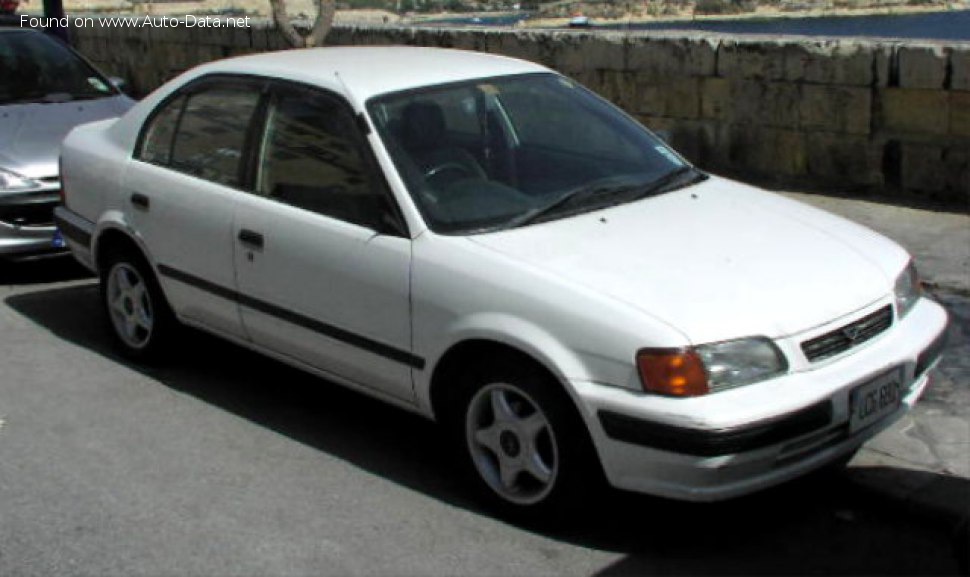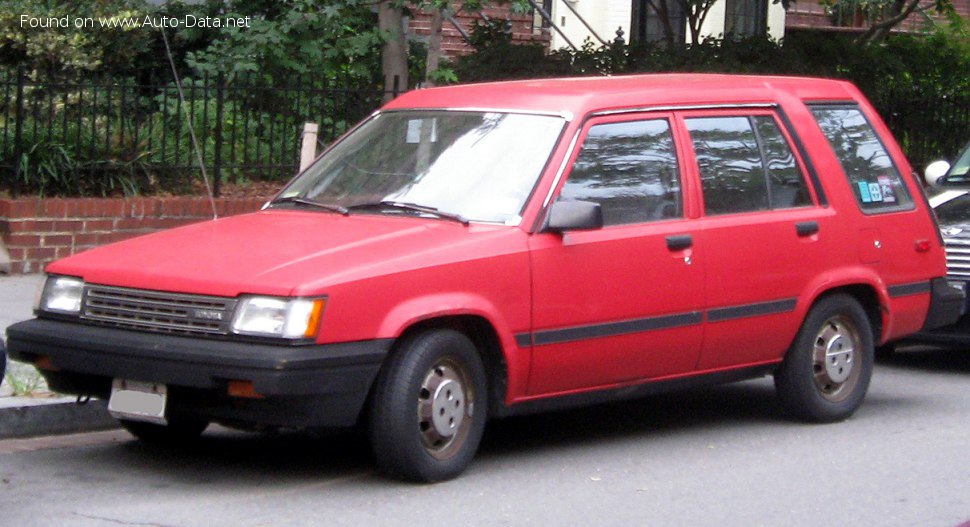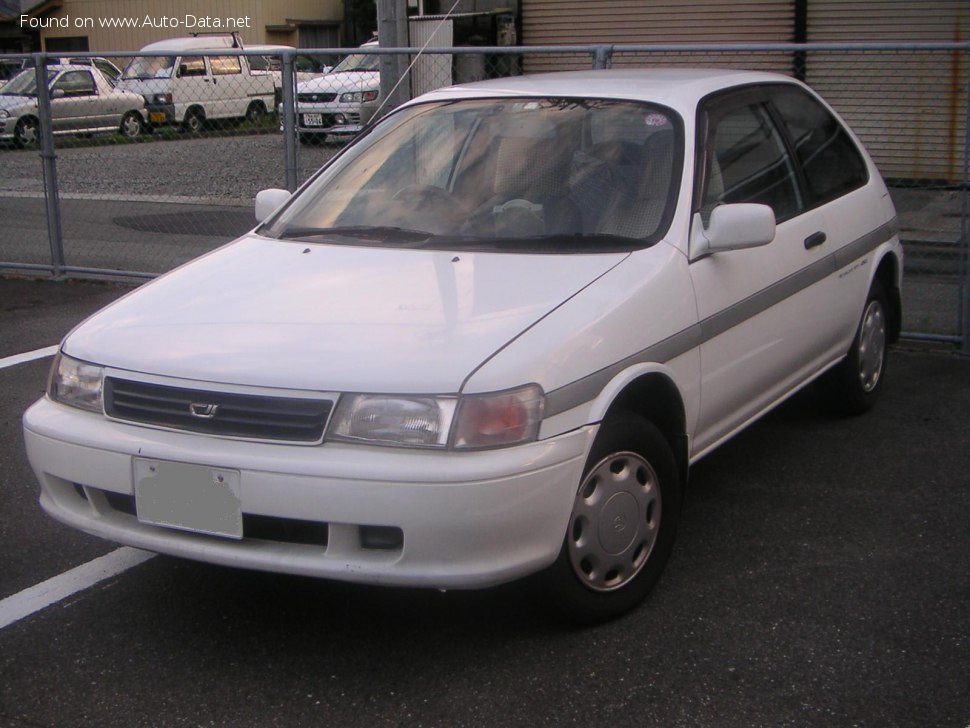
The Toyota Tercel EL41, produced between September 1990 and 1993, represented the third generation of Toyota’s subcompact car. Within this generation, the 1.3i 16V (97 hp) Automatic variant occupied the entry-level to mid-range position in the lineup, offering a balance of affordability, fuel efficiency, and ease of use. It was positioned below the more powerful (though not offered in the US market) 1.5L and 1.6L engine options, and served as an alternative to the five-speed manual transmission versions of the same 1.3L engine. The EL41 Tercel was built on the Toyota 1HX0 platform, also known as the A3 platform, which it shared with other small Toyota models of the era.
1.3i 16V Powertrain & Engine Architecture
The heart of the 1990-1993 Toyota Tercel 1.3i Automatic was the 1331 cc (81.22 cubic inches) inline-four cylinder engine. This engine, typically identified by engine code 2E, featured a 16-valve dual overhead camshaft (DOHC) valvetrain, a significant upgrade from earlier Tercel engines. The multi-port fuel injection system delivered fuel directly to each cylinder, optimizing combustion and contributing to improved fuel economy and emissions. The engine produced a maximum power output of 97 horsepower at 6400 rpm and 113 Nm (83.34 lb-ft) of torque at 5200 rpm. The compression ratio was set at 9.6:1. The engine was transversely mounted in the front of the vehicle.
The 1.3L engine was paired with a three-speed automatic transmission. This transmission was chosen to appeal to buyers prioritizing convenience over outright performance. While not known for its sporty characteristics, the three-speed automatic provided smooth and predictable shifts, making it well-suited for city driving. The automatic transmission was a common choice for North American buyers, who often preferred the ease of use over the manual transmission.
Engine Codes and Variations
While the 2E engine code is most commonly associated with this variant, slight variations existed depending on the specific market. These variations primarily concerned emissions control equipment and minor tuning adjustments. However, the core engine architecture and performance characteristics remained largely consistent.
Driving Characteristics
The Tercel 1.3i Automatic offered modest but adequate performance for its intended purpose. With 97 hp propelling a relatively lightweight vehicle (approximately 1808 lbs), acceleration was not brisk, but sufficient for everyday driving. The three-speed automatic transmission, while providing smooth shifts, did limit the engine’s ability to stay in its optimal power band. Compared to the five-speed manual version of the same engine, the automatic suffered a noticeable performance deficit, particularly during highway merging and overtaking maneuvers. The gear ratios were optimized for fuel economy rather than acceleration. First gear provided reasonable launch capability, while second and third gears were geared for cruising at highway speeds. The automatic transmission’s shift points were calibrated to prioritize fuel efficiency and smooth operation, resulting in a less engaging driving experience than the manual transmission.
Handling was predictable and safe, but not particularly sporty. The suspension was tuned for comfort, absorbing bumps and irregularities in the road surface effectively. However, this comfort came at the expense of body roll during cornering. Overall, the driving experience was geared towards practicality and ease of use, rather than performance and excitement.
Equipment & Trim Levels
The 1.3i 16V Automatic Tercel typically came with a fairly basic level of standard equipment. Interior upholstery was typically cloth, with a simple dashboard layout. Standard features generally included a basic AM/FM radio, manual windows and door locks, and a tilt steering wheel. Air conditioning was often an optional extra, as were power windows and upgraded audio systems. The interior plastics were durable but not luxurious, reflecting the car’s affordable price point.
Trim levels varied slightly depending on the market, but generally, the 1.3i Automatic represented the base or mid-range offering. Higher trim levels, if available, might have included features such as upgraded upholstery, alloy wheels, and a more comprehensive audio system. The focus remained on providing a functional and reliable vehicle at an accessible price.
Chassis & Braking
The Tercel EL41 featured a front-engine, front-wheel-drive layout. The front suspension utilized a wishbone configuration, while the rear suspension employed a coil spring setup. This suspension arrangement provided a comfortable ride and adequate handling for everyday driving. The curb weight of the vehicle was approximately 820 kg (1808 lbs), contributing to its relatively good fuel economy.
The braking system consisted of disc brakes on the front wheels and drum brakes on the rear wheels. Anti-lock braking system (ABS) was not standard equipment on all models, and its availability varied depending on the market and trim level. The steering system was a rack and pinion type, providing precise and responsive steering feel. The vehicle was equipped with 145/80 R13 tires mounted on 13-inch steel wheels.
Market Reception & Comparison
The 1990-1993 Toyota Tercel 1.3i Automatic was generally well-received by automotive critics as a practical and reliable subcompact car. It was praised for its fuel efficiency, affordability, and ease of use. However, it was also criticized for its lack of power and its somewhat basic interior. Compared to other subcompact cars of the era, such as the Honda Civic and Nissan Sentra, the Tercel offered a competitive combination of features and price. The automatic transmission, while convenient, was often seen as a compromise in terms of performance. Fuel economy was a strong point, achieving approximately 52.3 US mpg on combined cycles.
In terms of reliability, the Tercel 1.3i Automatic proved to be a very dependable vehicle. The 2E engine was known for its durability and longevity, and the automatic transmission, while not particularly sophisticated, was generally reliable. This reputation for reliability contributed to the Tercel’s strong resale value and its popularity among budget-conscious buyers.
Technical Specifications
| Brand | Toyota |
| Model | Tercel |
| Generation | Tercel (EL41) |
| Type (Engine) | 1.3i 16V (97 Hp) Automatic |
| Start of production | September, 1990 |
| End of production | 1993 |
| Powertrain Architecture | Internal Combustion engine |
| Body type | Hatchback |
| Seats | 5 |
| Doors | 3 |
| Fuel consumption (combined) | 4.5 l/100 km (52.3 US mpg, 62.8 UK mpg, 22.2 km/l) |
| Fuel Type | Petrol (Gasoline) |
| Weight-to-power ratio | 8.5 kg/Hp, 118.3 Hp/tonne |
| Weight-to-torque ratio | 7.3 kg/Nm, 137.8 Nm/tonne |
| Power | 97 Hp @ 6400 rpm |
| Power per litre | 72.9 Hp/l |
| Torque | 113 Nm @ 5200 rpm (83.34 lb.-ft. @ 5200 rpm) |
| Engine layout | Front, Transverse |
| Engine displacement | 1331 cm3 (81.22 cu. in.) |
| Number of cylinders | 4 |
| Engine configuration | Inline |
| Cylinder Bore | 74 mm (2.91 in.) |
| Piston Stroke | 77.4 mm (3.05 in.) |
| Compression ratio | 9.6:1 |
| Number of valves per cylinder | 4 |
| Fuel injection system | Multi-port manifold injection |
| Engine aspiration | Naturally aspirated engine |
| Valvetrain | DOHC |
| Kerb Weight | 820 kg (1807.79 lbs.) |
| Max. weight | 1095 kg (2414.06 lbs.) |
| Max load | 275 kg (606.27 lbs.) |
| Fuel tank capacity | 45 l (11.89 US gal | 9.9 UK gal) |
| Length | 3930 mm (154.72 in.) |
| Width | 1645 mm (64.76 in.) |
| Height | 1365 mm (53.74 in.) |
| Wheelbase | 2380 mm (93.7 in.) |
| Front track | 1400 mm (55.12 in.) |
| Rear track | 1430 mm (56.3 in.) |
| Minimum turning circle | 9 m (29.53 ft.) |
| Drivetrain Architecture | Front wheel drive. Internal Combustion engine. |
| Number of gears and type of gearbox | 3 gears, automatic transmission |
| Front suspension | Wishbone |
| Rear suspension | Coil spring |
| Front brakes | Disc |
| Rear brakes | Drum |
| Assisting systems | ABS (Anti-lock braking system) – optional |
| Steering type | Steering rack and pinion |
| Tires size | 145/80 R13 |
| Wheel rims size | 13 |
Legacy
The Toyota Tercel 1.3i Automatic, while not a particularly glamorous or high-performance vehicle, left a lasting legacy as a reliable and affordable means of transportation. The 2E engine proved to be exceptionally durable, and many examples of this powertrain are still on the road today, often with high mileage. In the used car market, these Tercels are often sought after by buyers looking for a simple, dependable, and fuel-efficient vehicle. While maintenance costs are generally low, age-related issues such as rust and wear on rubber components are common concerns. The automatic transmission, while generally reliable, may require servicing or rebuilding after many years of use. Overall, the Tercel 1.3i Automatic remains a testament to Toyota’s commitment to building durable and practical vehicles.