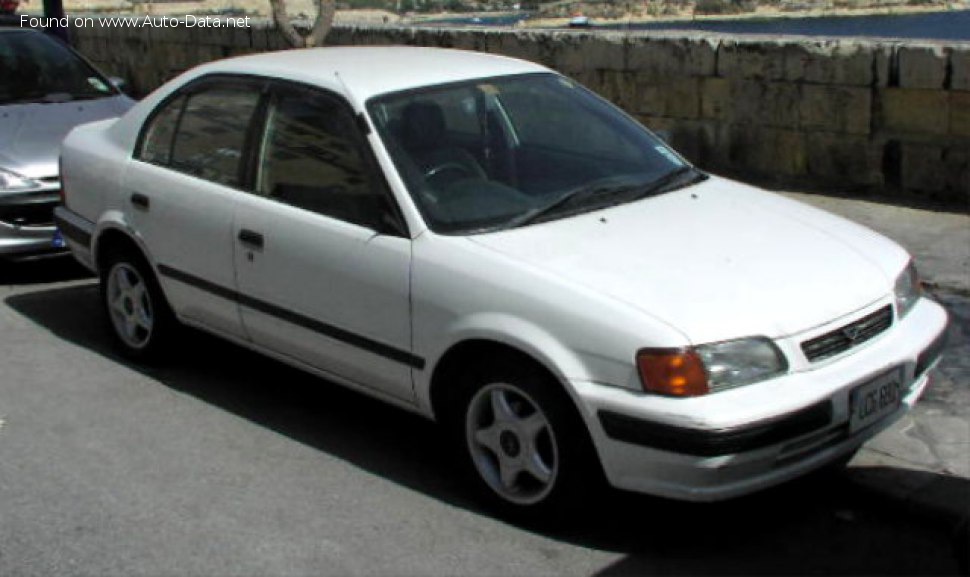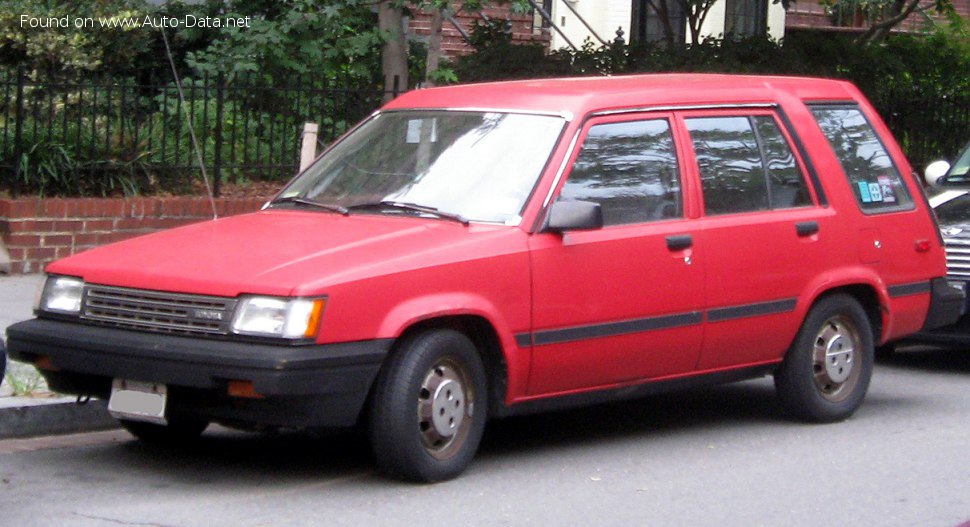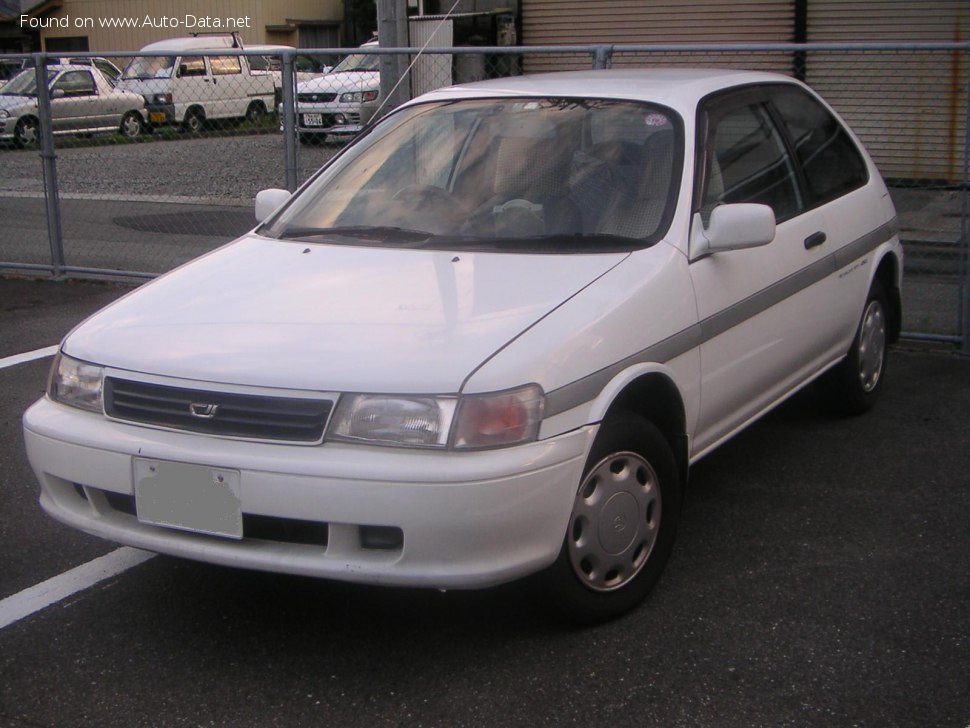
The Toyota Tercel EL41, produced between 1990 and 1993, represented the third generation of Toyota’s subcompact car. Within this generation, the 1.5i 16V VZ variant, equipped with a 115 horsepower engine and a four-speed automatic transmission, occupied a middle ground in the Tercel lineup. It offered a step up in performance and refinement compared to the base models, while remaining more affordable and fuel-efficient than potential upgrades that weren’t offered in the US market. This particular configuration was primarily aimed at buyers seeking a practical, reliable, and relatively comfortable daily driver, particularly those who preferred the convenience of an automatic transmission.
The 1.5i 16V VZ: Positioning and Overview
The EL41 Tercel was a significant redesign for the model, moving towards a more rounded and aerodynamic shape compared to its predecessor. The 1.5i 16V VZ trim was positioned as a well-rounded option, balancing performance, economy, and features. It wasn’t the base-level model, which typically featured a smaller engine and fewer amenities, but it also wasn’t the top-of-the-line trim, which might have included features like alloy wheels or upgraded interior appointments. The “VZ” designation signified the engine code and indicated a higher level of specification within the Tercel range. The EL41 Tercel was built on Toyota’s compact platform, designed for affordability and ease of maintenance.
Powertrain & Engine Architecture
At the heart of the 1.5i 16V VZ Tercel lies the 1.5-liter (1497 cc) inline four-cylinder engine, designated as the 5E-FE (often referred to as the VZ engine code). This engine featured a multi-port fuel injection system, providing precise fuel delivery for improved efficiency and performance. The engine’s 16-valve dual overhead camshaft (DOHC) valvetrain further enhanced its breathing capabilities, contributing to its respectable 115 horsepower output at 6600 rpm and 135 Nm (99.57 lb-ft) of torque at 3200 rpm. The compression ratio was set at 9.8:1. The engine was transversely mounted in the front of the vehicle, driving the front wheels.
Paired with this engine was a four-speed automatic transmission. This transmission, while not known for its sporty responsiveness, provided smooth and convenient gear changes, making it ideal for city driving and commuting. The automatic transmission’s gear ratios were optimized for fuel efficiency and everyday usability, rather than outright acceleration. The transmission was a conventional hydraulic automatic, lacking the electronic controls found in more modern units.
Driving Characteristics
The 1.5i 16V VZ Tercel with the automatic transmission offered a comfortable, if not particularly exhilarating, driving experience. Acceleration was adequate for merging onto highways and navigating city streets, but it wasn’t a particularly quick car. The automatic transmission, while convenient, did result in some power loss compared to the available five-speed manual transmission. The power delivery was relatively linear, with peak torque arriving at 3200 rpm. This meant that the engine felt reasonably responsive in everyday driving situations, but lacked the punch of higher-output engines. The weight-to-power ratio of 7.9 kg/hp meant that the car felt adequately powered for its size and intended purpose.
Compared to a manual transmission equipped Tercel, the automatic version felt slightly more sluggish, especially during quick acceleration maneuvers. However, the automatic transmission’s ease of use and convenience made it a popular choice for many buyers. The suspension, tuned for comfort, absorbed bumps and imperfections in the road reasonably well, providing a relatively smooth ride.
Equipment & Trim Levels
The 1.5i 16V VZ Tercel typically came standard with features such as air conditioning, a basic AM/FM radio, and cloth upholstery. Power steering was often included, enhancing maneuverability. The interior was functional and straightforward, prioritizing practicality over luxury. Optional extras could include upgraded sound systems, power windows, and central locking. The dashboard layout was simple and easy to use, with clearly labeled controls. The seats provided adequate support for both driver and passengers. The trim level generally featured a slightly more refined interior finish compared to the base models, with improved materials and detailing.
Chassis & Braking
The Tercel EL41 utilized a front-engine, front-wheel-drive layout. The front suspension consisted of wishbone suspension, providing a comfortable ride and predictable handling. The rear suspension employed a coil spring setup. The braking system featured disc brakes on the front wheels and drum brakes on the rear wheels. Anti-lock braking system (ABS) was available, enhancing safety by preventing wheel lockup during hard braking. The steering system was a rack and pinion type, offering precise and responsive steering feel. The tires were typically 175/65 R14, providing a good balance of grip and ride comfort. The curb weight of 910 kg (2006.21 lbs) contributed to the car’s relatively nimble handling.
Market Reception & Comparison
The 1.5i 16V VZ Tercel was generally well-received by automotive critics as a practical and reliable subcompact car. It was praised for its fuel efficiency, affordability, and ease of maintenance. However, some critics noted that its performance was somewhat lackluster, particularly with the automatic transmission. Compared to other subcompact cars of the era, such as the Honda Civic and Nissan Sentra, the Tercel offered a competitive combination of features and value. Its fuel economy of 5.4 l/100 km (43.6 US mpg) was particularly noteworthy, making it an attractive option for budget-conscious buyers. The automatic transmission version was often seen as a compromise between performance and convenience.
Technical Specifications
| Brand | Toyota |
| Model | Tercel |
| Generation | Tercel (EL41) |
| Type (Engine) | 1.5i 16V VZ (115 Hp) Automatic |
| Start of production | September, 1990 |
| End of production | 1993 |
| Powertrain Architecture | Internal Combustion engine |
| Body type | Hatchback |
| Seats | 5 |
| Doors | 3 |
| Fuel consumption (combined) | 5.4 l/100 km (43.6 US mpg, 52.3 UK mpg, 18.5 km/l) |
| Fuel Type | Petrol (Gasoline) |
| Weight-to-power ratio | 7.9 kg/Hp |
| Power | 115 Hp @ 6600 rpm |
| Torque | 135 Nm @ 3200 rpm (99.57 lb.-ft. @ 3200 rpm) |
| Engine layout | Front, Transverse |
| Engine displacement | 1497 cm3 (91.35 cu. in.) |
| Number of cylinders | 4 |
| Engine configuration | Inline |
| Cylinder Bore | 74 mm (2.91 in.) |
| Piston Stroke | 87 mm (3.43 in.) |
| Compression ratio | 9.8:1 |
| Number of valves per cylinder | 4 |
| Fuel injection system | Multi-port manifold injection |
| Engine aspiration | Naturally aspirated engine |
| Valvetrain | DOHC |
| Kerb Weight | 910 kg (2006.21 lbs.) |
| Max. weight | 1185 kg (2612.48 lbs.) |
| Max load | 275 kg (606.27 lbs.) |
| Fuel tank capacity | 45 l (11.89 US gal | 9.9 UK gal) |
| Length | 3930 mm (154.72 in.) |
| Width | 1645 mm (64.76 in.) |
| Height | 1365 mm (53.74 in.) |
| Wheelbase | 2380 mm (93.7 in.) |
| Front track | 1400 mm (55.12 in.) |
| Rear track | 1395 mm (54.92 in.) |
| Minimum turning circle | 9 m (29.53 ft.) |
| Drivetrain Architecture | Front wheel drive |
| Number of gears and type of gearbox | 4 gears, automatic transmission |
| Front suspension | Wishbone |
| Rear suspension | Coil spring |
| Front brakes | Disc |
| Rear brakes | Drum |
| Assisting systems | ABS (Anti-lock braking system) |
| Steering type | Steering rack and pinion |
| Tires size | 175/65 R14 |
| Wheel rims size | 14 |
Legacy
The 1.5i 16V VZ Tercel, while not a particularly collectible car today, enjoys a reputation for exceptional reliability and durability. The 5E-FE engine is known for its longevity, and the automatic transmission, while not the most sophisticated, is generally dependable. In the used car market, these Tercels are often sought after as affordable and practical transportation. Parts availability remains good, and maintenance costs are relatively low. While not a performance icon, the 1.5i 16V VZ Tercel represents a solid and dependable example of 1990s Japanese automotive engineering, offering a testament to Toyota’s commitment to building reliable and long-lasting vehicles.