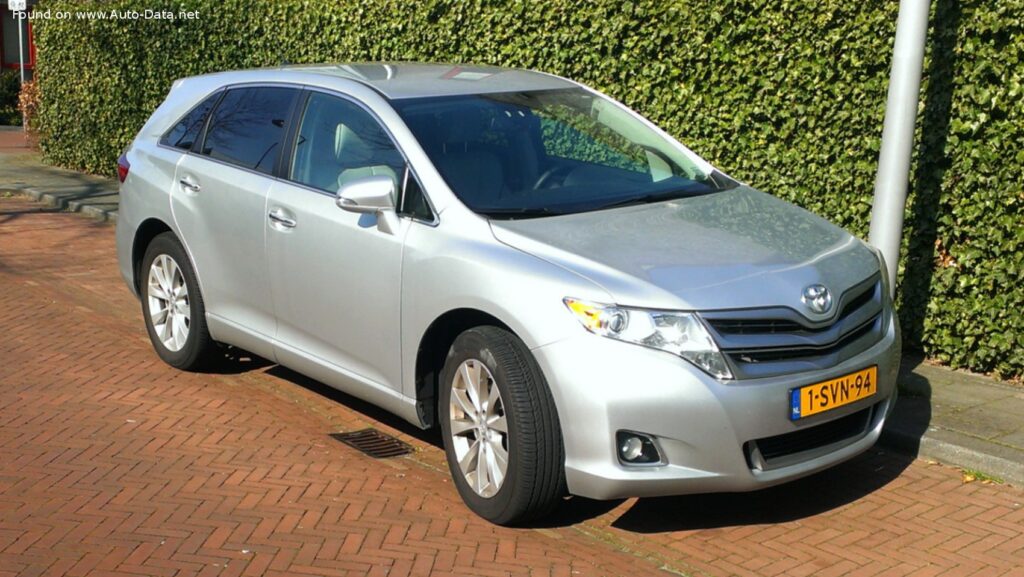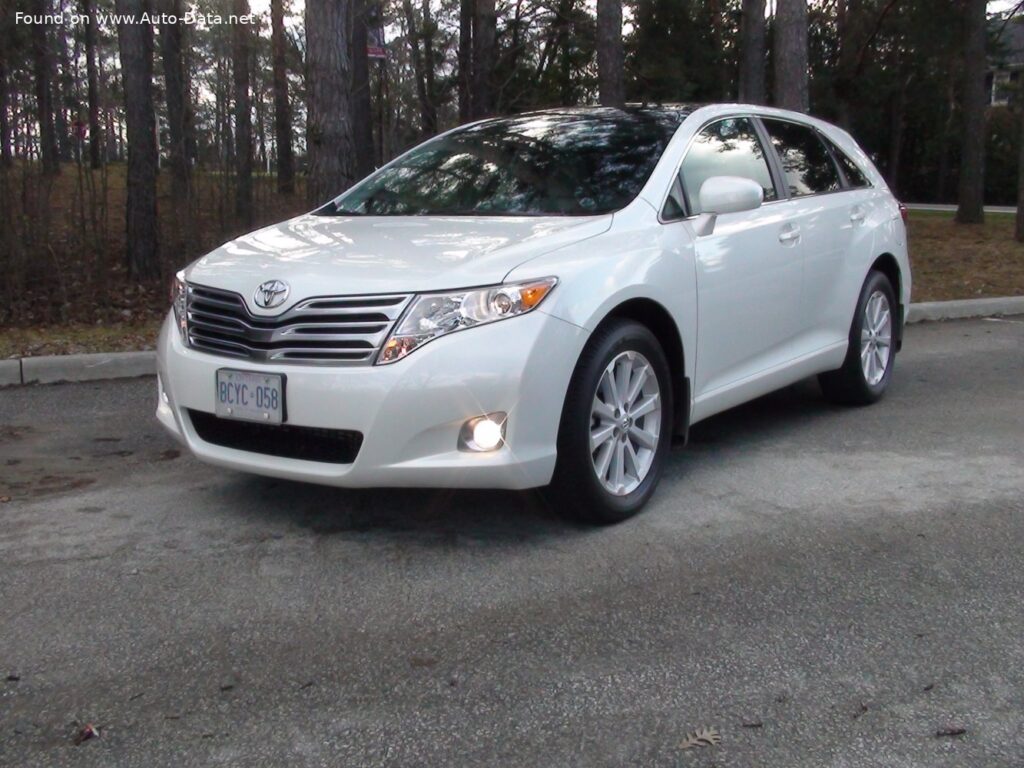
The Toyota Venza I (AV10) 2.7 (182 Hp) AWD represents a distinctive chapter in Toyota’s North American product strategy, launched in 2008 as a unique crossover utility vehicle (CUV) that blurred the lines between a traditional sedan, a station wagon, and a sport utility vehicle. Positioned in Toyota’s lineup to bridge the gap between the popular Camry sedan and the larger Highlander SUV, the first-generation Venza aimed to offer the car-like driving dynamics and fuel efficiency of a sedan with the elevated seating position, cargo versatility, and available all-wheel-drive capability of an SUV. Marketed primarily in North America, the Venza I (AV10) was conceived during a period when consumer preferences were rapidly shifting towards more versatile and family-friendly vehicles that eschewed the more rugged image of traditional SUVs. This particular variant, powered by a 2.7-liter inline-four engine delivering 182 horsepower and equipped with all-wheel drive, highlights a practical and efficient option within the Venza’s initial offerings, designed to appeal to a broad demographic seeking a blend of comfort, utility, and reliable performance.
Toyota Venza I (AV10): A Crossover Evolution
The first-generation Toyota Venza, internally designated AV10, was a groundbreaking model for the brand, embodying a forward-thinking approach to vehicle design and market segmentation. Introduced for the 2009 model year, its production commenced in 2008 and continued through 2012 for this specific powertrain variant. While technically classified as a station wagon or estate in some international contexts due to its elongated roofline and rear hatch, Toyota strategically marketed the Venza as a “Crossover Utility Vehicle” in the United States, emphasizing its blend of attributes rather than conforming to a strict category. Its design aimed to appeal to buyers who desired the spaciousness and practicality of an SUV without the associated bulk or higher center of gravity, and the comfortable ride quality of a sedan. The Venza’s five-door, five-seat configuration provided ample room for passengers and cargo, making it a versatile choice for families and individuals alike. The vehicle’s architecture was rooted in the highly successful Toyota Camry platform, ensuring a familiar and refined driving experience that prioritized comfort and quietness. This foundation allowed the Venza to deliver a more car-like feel compared to traditional SUVs, a key differentiator in its segment. Its styling, characterized by smooth lines and a somewhat aggressive stance, was a departure from Toyota’s more conservative designs of the era, signaling a modern and sophisticated aesthetic that resonated with contemporary tastes.
Powertrain and Performance Dynamics of the Toyota Venza I (AV10) 2.7 AWD
At the heart of this particular Toyota Venza I (AV10) variant is the robust 1AR-FE engine, a 2.7-liter (2694 cm3 or 164.4 cu. in.) inline-four gasoline unit. This naturally aspirated engine was engineered for a balance of power, fuel efficiency, and Toyota’s renowned reliability. It produces a respectable 182 horsepower at 4800 rpm, translating to a power output of 67.6 Hp per liter, which is quite efficient for its size and design. Torque output stands at 240 Nm, or 177.01 lb.-ft., delivered at a relatively accessible 4000 rpm. This torque curve ensures responsive acceleration in typical driving conditions, whether navigating city streets or cruising on the highway. The engine features a DOHC (Double Overhead Camshaft) valvetrain with four valves per cylinder, optimizing airflow for improved combustion efficiency and performance. Its multi-port manifold injection system ensures precise fuel delivery, contributing to smooth operation and consistent power delivery. The engine’s layout is front, longitudinal, a configuration that often contributes to better weight distribution and handling. With a compression ratio of 9.5:1, the engine is designed to run efficiently on regular unleaded gasoline, making it a cost-effective choice for daily use. The bore and stroke both measure 95 mm (3.74 in.), indicating a square engine design, which typically balances torque and horsepower characteristics effectively. The engine oil capacity is 4.4 liters (4.65 US qt), and the cooling system holds 7.1 liters (7.5 US qt) of coolant, ensuring optimal thermal management. Power is transmitted to all four wheels through an All-Wheel Drive (4×4) system, providing enhanced traction and stability in various driving conditions, including inclement weather or light off-road excursions. Uniquely for this model, the data specifies a 6-speed manual transmission, offering drivers a more engaging and direct connection to the vehicle’s power delivery, a distinctive feature in a market segment increasingly dominated by automatic transmissions. This combination of a capable engine, an intelligent AWD system, and a manual gearbox provides a driving experience that is both practical and surprisingly engaging for a crossover of its stature.
Design, Interior, and Features
The design of the Toyota Venza I (AV10) was a deliberate effort to create a vehicle that was both aesthetically pleasing and highly functional. Its body type, while classified as a station wagon, possessed a sleek and modern profile that avoided the boxiness often associated with traditional wagons or SUVs. With five doors and seating for five occupants, the Venza offered excellent accessibility and interior space. The vehicle’s dimensions were carefully considered to optimize both maneuverability and interior volume: a length of 4801 mm (189.02 in.), a width of 1905 mm (75 in.), and a height of 1610 mm (63.39 in.). These proportions, combined with a generous wheelbase of 2776 mm (109.29 in.), contributed to a stable ride and a spacious cabin. The front track measured 1631 mm (64.21 in.) and the rear track 1636 mm (64.41 in.), further enhancing stability and road presence. The Venza’s design emphasized practicality, with a focus on ease of entry and exit, a comfortable ride, and versatile cargo capacity. The rear hatch opened wide to reveal a substantial cargo area, making it ideal for hauling groceries, luggage, or sports equipment. The interior was designed with an emphasis on comfort and user-friendly ergonomics, featuring quality materials and intuitive controls that were typical of Toyota’s commitment to refinement. Depending on the trim level, features could include advanced infotainment systems for its time, climate control, and a range of power accessories. Safety was also a paramount concern, and the Venza came equipped with a comprehensive suite of passive and active safety features. These typically included multiple airbags, anti-lock brakes (ABS), electronic stability control (ESC), and traction control, all designed to protect occupants and assist the driver in maintaining control. The suspension system, featuring an independent McPherson type at the front and an independent coil spring setup at the rear, was tuned to provide a compliant and comfortable ride, effectively absorbing road imperfections while maintaining composure during cornering. This blend of thoughtful design, practical features, and a commitment to safety underscored the Venza’s appeal as a versatile and reliable family vehicle.
Technical Specifications of the Toyota Venza I (AV10) 2.7 AWD
| Brand | Toyota |
| Model | Venza |
| Generation | Venza I (AV10) |
| Type (Engine) | 2.7 (182 Hp) AWD |
| Start of production | 2008 year |
| End of production | 2012 year |
| Powertrain Architecture | Internal Combustion engine |
| Body type | Station wagon (estate) |
| Seats | 5 |
| Doors | 5 |
| Fuel Type | Petrol (Gasoline) |
| Power | 182 Hp @ 4800 rpm. |
| Power per liter | 67.6 Hp/l |
| Torque | 240 Nm @ 4000 rpm. (177.01 lb.-ft. @ 4000 rpm.) |
| Engine layout | Front, Longitudinal |
| Engine Model/Code | 1AR-FE |
| Engine displacement | 2694 cm3 (164.4 cu. in.) |
| Number of cylinders | 4 |
| Engine configuration | Inline |
| Cylinder Bore | 95 mm (3.74 in.) |
| Piston Stroke | 95 mm (3.74 in.) |
| Compression ratio | 9.5:1 |
| Number of valves per cylinder | 4 |
| Fuel injection system | Multi-port manifold injection |
| Engine aspiration | Naturally aspirated engine |
| Valvetrain | DOHC |
| Engine oil capacity | 4.4 l (4.65 US qt) |
| Coolant | 7.1 l (7.5 US qt) |
| Fuel tank capacity | 67 l (17.7 US gal) |
| Length | 4801 mm (189.02 in.) |
| Width | 1905 mm (75 in.) |
| Height | 1610 mm (63.39 in.) |
| Wheelbase | 2776 mm (109.29 in.) |
| Front track | 1631 mm (64.21 in.) |
| Rear (Back) track | 1636 mm (64.41 in.) |
| Drive wheel | All wheel drive (4×4) |
| Number of gears and type of gearbox | 6 gears, manual transmission |
| Front suspension | Independent type McPherson |
| Rear suspension | Independent coil spring |