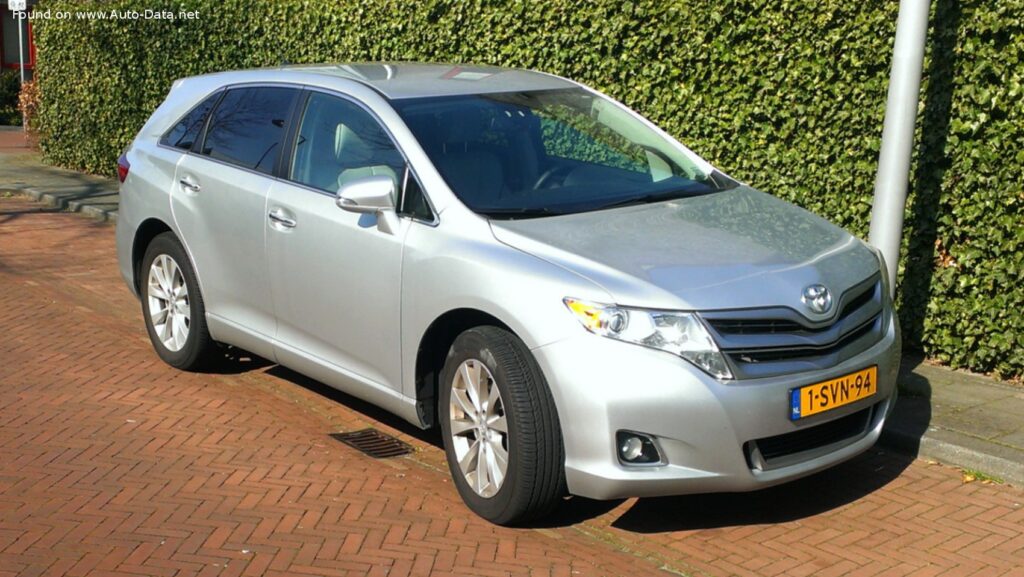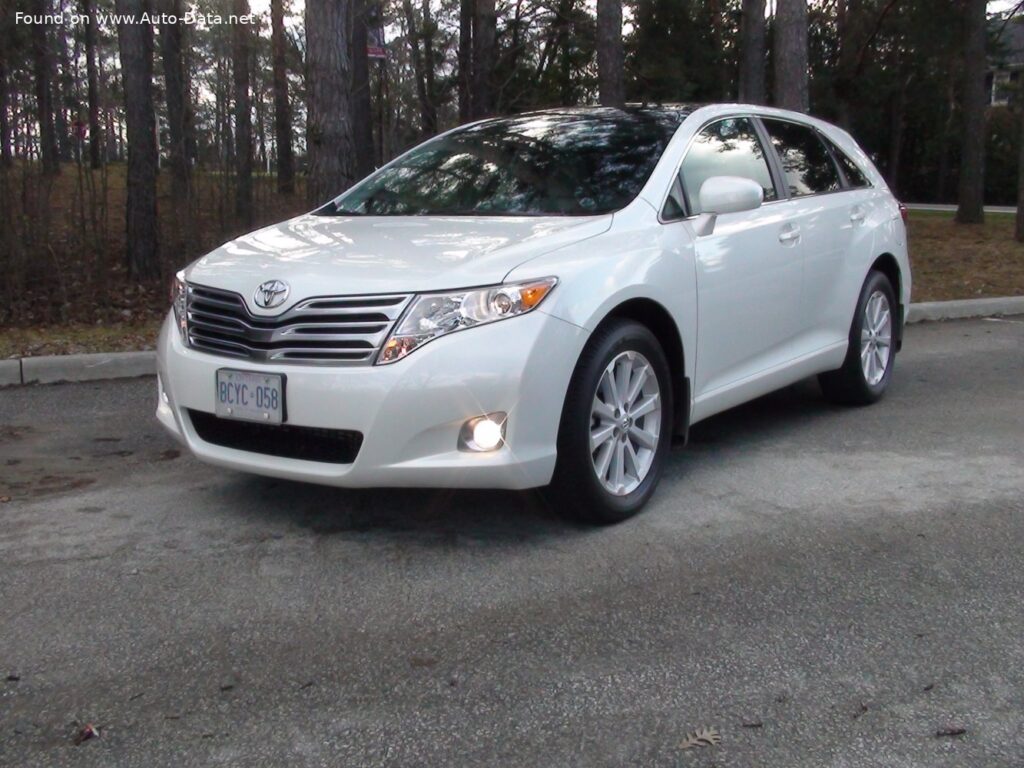
The Toyota Venza I (AV10) 3.5 (268 Hp) represents a distinctive chapter in Toyota’s North American product strategy, launched in 2008 and produced through 2012. Positioned to bridge the gap between a traditional sedan and a conventional sport utility vehicle (SUV), the first-generation Toyota Venza I (AV10) aimed to offer the best attributes of both segments: the comfortable ride and refined driving dynamics of a car, combined with the elevated seating position, spacious interior, and versatile cargo capacity typically associated with an SUV or a station wagon. While technically categorized as a station wagon (estate) by some, its market perception and marketing in the United States firmly placed it within the burgeoning crossover SUV segment, appealing to consumers seeking practicality without the perceived bulk or fuel consumption of larger SUVs. This particular variant, powered by the robust 3.5-liter V6 engine, was the performance flagship of the Venza lineup, offering a compelling blend of power, smoothness, and Toyota’s renowned reliability.
Engine and Performance: The Heart of the Toyota Venza I (AV10)
At the core of the Toyota Venza I (AV10) 3.5 (268 Hp) lies the venerable 2GR-FE engine, a 3.5-liter naturally aspirated V6 power plant that has earned a reputation for its smooth operation, strong performance, and exceptional durability across numerous Toyota and Lexus models. This engine, featuring a V-engine configuration with six cylinders and four valves per cylinder, is equipped with a Double Overhead Camshaft (DOHC) valvetrain, ensuring optimal airflow and combustion efficiency. The multi-port manifold injection system precisely delivers fuel, contributing to the engine’s responsive power delivery and relatively clean emissions for its era.
The 2GR-FE in the Venza I (AV10) generates a robust 268 horsepower, providing ample motivation for the vehicle. This power output translates to a healthy 77.5 horsepower per liter, indicative of its efficient design. Torque is equally impressive, peaking at 246.35 lb.-ft. at 4700 rpm. This strong torque figure ensures confident acceleration from a standstill and robust passing power on the highway, making the Venza 3.5 a capable performer in various driving conditions. The engine’s front, transverse layout optimizes packaging efficiency, contributing to the Venza’s spacious interior and balanced weight distribution.
Despite its substantial power, the Venza 3.5 maintains a respectable weight-to-power ratio of 6.8 kg/Hp (146 Hp/tonne) and a weight-to-torque ratio of 5.5 kg/Nm (182 Nm/tonne). These figures highlight the engine’s ability to move the Venza’s 4045.48-pound (1835 kg) curb weight with authority. This particular variant is specified with a 6-speed manual transmission, a rather unique offering for a vehicle of this type in the US market, where most Venzas were equipped with automatic transmissions. This choice of gearbox would provide a more engaging driving experience for enthusiasts, allowing for precise control over the engine’s power band. The drivetrain architecture is front-wheel drive, with the internal combustion engine directly driving the front wheels, a common configuration for efficiency and packaging in this segment.
Engine maintenance is facilitated by a 6.1-liter (6.45 US qt) engine oil capacity, and the cooling system holds 10.3 liters (10.88 US qt) of coolant, ensuring optimal operating temperatures even under demanding conditions. The overall powertrain was engineered for longevity and ease of service, aligning with Toyota’s reputation for reliability, making the Venza I (AV10) a practical and dependable choice for its target demographic.
Design and Features: The Crossover Appeal of the Toyota Venza I (AV10)
The design of the Toyota Venza I (AV10) was a deliberate departure from traditional SUV aesthetics, aiming for a sleeker, more car-like profile while retaining SUV-esque utility. Although technically classified as a station wagon (estate), its elevated stance and proportions led to its market positioning as a crossover. With five doors and seating for five occupants, the Venza emphasized passenger comfort and cargo versatility. Its exterior dimensions – a length of 189.02 inches (4801 mm), a width of 75 inches (1905 mm), and a height of 63.39 inches (1610 mm) – created a substantial road presence without feeling overly cumbersome. The 89.61-inch (2276 mm) wheelbase contributed to a stable ride and a surprisingly roomy cabin for its class.
The Venza’s design language aimed for a sophisticated yet practical appeal. Its smooth lines, prominent grille, and distinctive headlights gave it a modern and upscale look that stood out from more rugged SUVs and more conservative sedans. The interior was designed with an emphasis on comfort, ergonomics, and functionality. High-quality materials, intuitive controls, and ample storage solutions were hallmarks of the Venza’s cabin. The raised seating position offered excellent outward visibility, a key advantage for many crossover buyers, while the lower step-in height compared to traditional SUVs made entry and exit easier for all passengers.
Practicality was a cornerstone of the Venza’s appeal. The rear seats could fold flat, significantly expanding the cargo area to accommodate larger items, making it suitable for families, adventurers, or those needing flexible hauling capabilities. The fuel tank capacity of 17.7 US gallons (67 liters) provided a commendable cruising range, reducing the frequency of fuel stops on long journeys. The suspension system, featuring an independent McPherson type at the front and an independent coil spring setup at the rear, was tuned to deliver a comfortable and composed ride, absorbing road imperfections with ease while maintaining stable handling characteristics. This sophisticated suspension design, combined with its car-like unibody construction, was instrumental in delivering the Venza’s refined driving experience, differentiating it from truck-based SUVs of the era. Safety features, standard for Toyota at the time, would have included multiple airbags, anti-lock brakes, and electronic stability control, underscoring its family-friendly design philosophy.
Technical Specifications
| Brand | Toyota |
| Model | Venza |
| Generation | Venza I (AV10) |
| Type (Engine) | 3.5 (268 Hp) |
| Start of production | 2008 year |
| End of production | 2012 year |
| Powertrain Architecture | Internal Combustion engine |
| Body type | Station wagon (estate) |
| Seats | 5 |
| Doors | 5 |
| Fuel Type | Petrol (Gasoline) |
| Weight-to-power ratio | 6.8 kg/Hp, 146 Hp/tonne |
| Weight-to-torque ratio | 5.5 kg/Nm, 182 Nm/tonne |
| Power | 268 Hp |
| Power per litre | 77.5 Hp/l |
| Torque | 334 Nm @ 4700 rpm (246.35 lb.-ft. @ 4700 rpm) |
| Engine layout | Front, Transverse |
| Engine Model/Code | 2GR-FE |
| Engine displacement | 3456 cm3 (210.9 cu. in.) |
| Number of cylinders | 6 |
| Engine configuration | V-engine |
| Number of valves per cylinder | 4 |
| Fuel injection system | Multi-port manifold injection |
| Engine aspiration | Naturally aspirated engine |
| Valvetrain | DOHC |
| Engine oil capacity | 6.1 l (6.45 US qt) |
| Coolant | 10.3 l (10.88 US qt) |
| Kerb Weight | 1835 kg (4045.48 lbs) |
| Fuel tank capacity | 67 l (17.7 US gal) |
| Length | 4801 mm (189.02 in.) |
| Width | 1905 mm (75 in.) |
| Height | 1610 mm (63.39 in.) |
| Wheelbase | 2276 mm (89.61 in.) |
| Front track | 1631 mm (64.21 in.) |
| Rear (Back) track | 1636 mm (64.41 in.) |
| Drivetrain Architecture | The Internal combustion engine (ICE) drives the front wheels of the vehicle. |
| Drive wheel | Front wheel drive |
| Number of gears and type of gearbox | 6 gears, manual transmission |
| Front suspension | Independent type McPherson |
| Rear suspension | Independent coil spring |