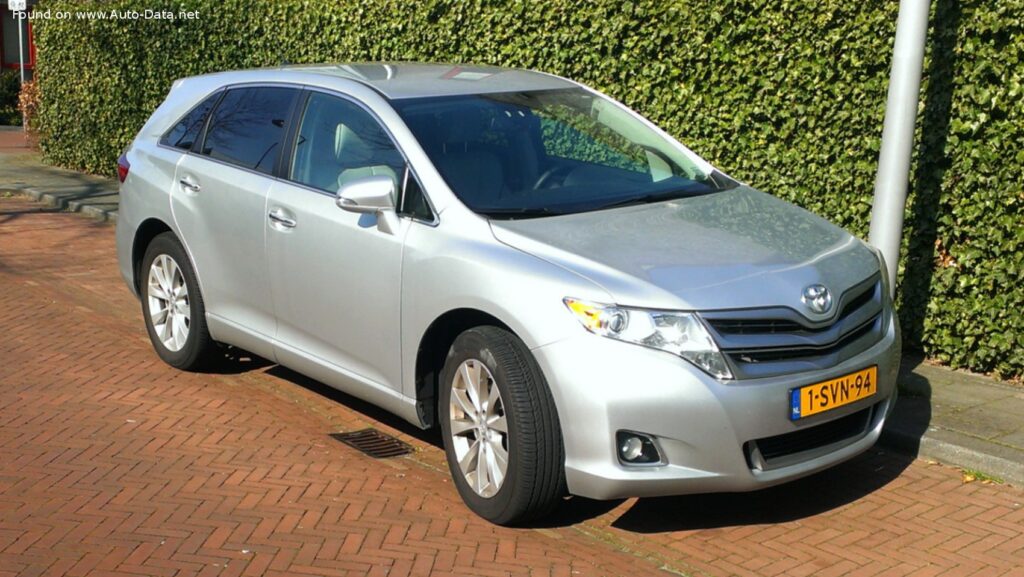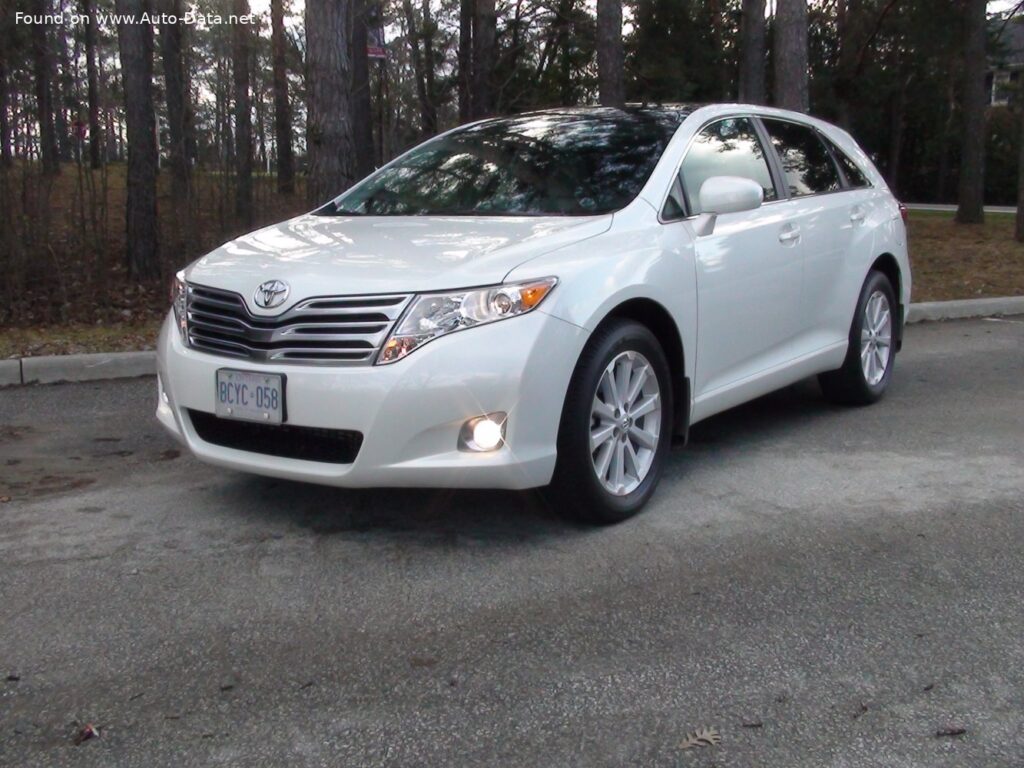
The Toyota Venza I (AV10), produced from 2008 to 2012, carved out a unique niche in the North American automotive market by expertly blending characteristics typically found in sedans, traditional station wagons, and sport utility vehicles (SUVs). This innovative approach positioned the Toyota Venza I (AV10) as a compelling option for consumers seeking the comfortable ride and refined handling of a car, coupled with the elevated driving position, enhanced cargo capacity, and versatile utility of a crossover. The 3.5 (268 Hp) AWD variant, in particular, represented the pinnacle of the first-generation Venza’s performance and capability, offering a powerful V6 engine, all-weather traction, and a comprehensive suite of features. It was a vehicle designed for practicality without sacrificing style or driving enjoyment, embodying Toyota’s enduring commitment to reliability and thoughtful engineering in a package that defied conventional categorization and appealed to a broad demographic seeking a sophisticated, adaptable family vehicle.
Powertrain and Performance of the Toyota Venza I (AV10)
Central to the dynamic capabilities of the Toyota Venza I (AV10) 3.5 AWD is its robust 2GR-FE engine. This 3.5-liter (3456 cm³, or 210.9 cubic inches) V6 gasoline engine is a naturally aspirated powerhouse, widely acclaimed for its smooth operation, impressive durability, and widespread use across a range of Toyota and Lexus models. It delivers a substantial 268 horsepower, providing ample acceleration and confident highway merging. The specific power output translates to 77.5 horsepower per liter, showcasing the engine’s efficient design. Engineered with a V-configuration and featuring a Double Overhead Camshaft (DOHC) valvetrain with four valves per cylinder, the 2GR-FE ensures optimized airflow and combustion, contributing to both its power delivery and overall refinement. Fuel is precisely managed by a multi-port manifold injection system, a proven technology chosen for its balance of performance and efficiency.
The engine generates a peak torque of 334 Newton-meters, which equates to 246.35 pound-feet, available at 4700 revolutions per minute (rpm). This generous torque figure is crucial for the Venza’s responsive throttle feel and strong pulling power, making it adept at navigating urban environments and effortlessly tackling long-distance drives. The engine’s front, transverse mounting optimizes the vehicle’s weight distribution and interior packaging. Power is delivered to the wheels through a 6-speed manual transmission, a feature that offers drivers a more direct and engaging connection to the powertrain, allowing for precise control over gear selection and a more involved driving experience. This robust transmission works in concert with the advanced all-wheel-drive (AWD) system.
The permanent all-wheel-drive (4×4) system significantly enhances the Toyota Venza I (AV10)‘s traction and stability across various driving conditions, from slippery roads to light off-road trails. This capability, combined with the potent V6 engine, results in highly competitive performance metrics. The vehicle boasts a weight-to-power ratio of 6.8 kilograms per horsepower, or 146 horsepower per tonne, indicating a strong power-to-weight balance. Similarly, its weight-to-torque ratio stands at 5.5 kilograms per Newton-meter, or 182 Newton-meters per tonne, further underscoring its ability to effectively manage its 4045.48-pound (1835 kg) curb weight. For maintenance, the engine requires 6.1 liters (6.45 US quarts) of engine oil, and the cooling system holds 10.3 liters (10.88 US quarts) of coolant, ensuring the vehicle operates within optimal temperature parameters.
Design and Features of the Toyota Venza I (AV10)
The design ethos of the Toyota Venza I (AV10) was rooted in versatility and broad appeal, creating a vehicle that was both aesthetically pleasing and highly practical. While technically classified as a five-door station wagon (estate) with seating for five, its visual presence and market positioning in North America leaned heavily towards a crossover SUV. This intentional hybridization allowed it to provide the comfortable ingress and egress of a sedan, the expansive interior volume and flexible cargo space typically associated with a wagon, and the elevated seating position and commanding road view of an SUV. Its distinctive silhouette and elegant lines aimed to attract buyers who desired the utility of a larger vehicle without the often cumbersome dimensions or rugged aesthetic of traditional SUVs.
Dimensionally, the Venza presented a substantial yet well-proportioned figure. It measured 189.02 inches (4801 mm) in length, 75 inches (1905 mm) in width, and 63.39 inches (16