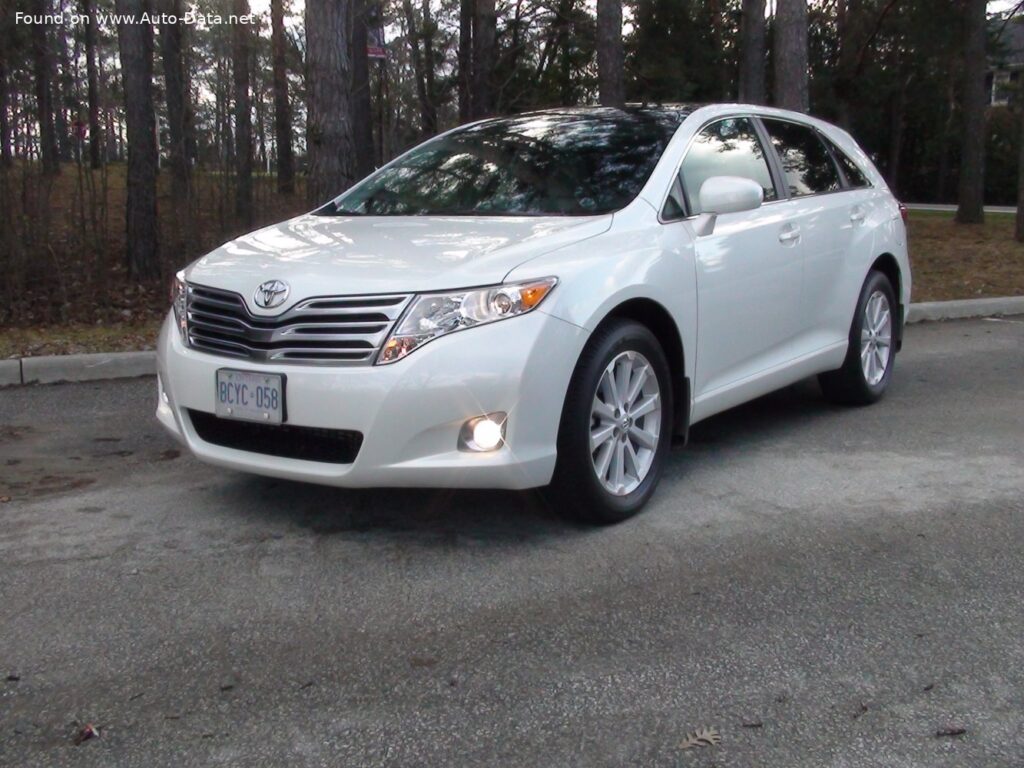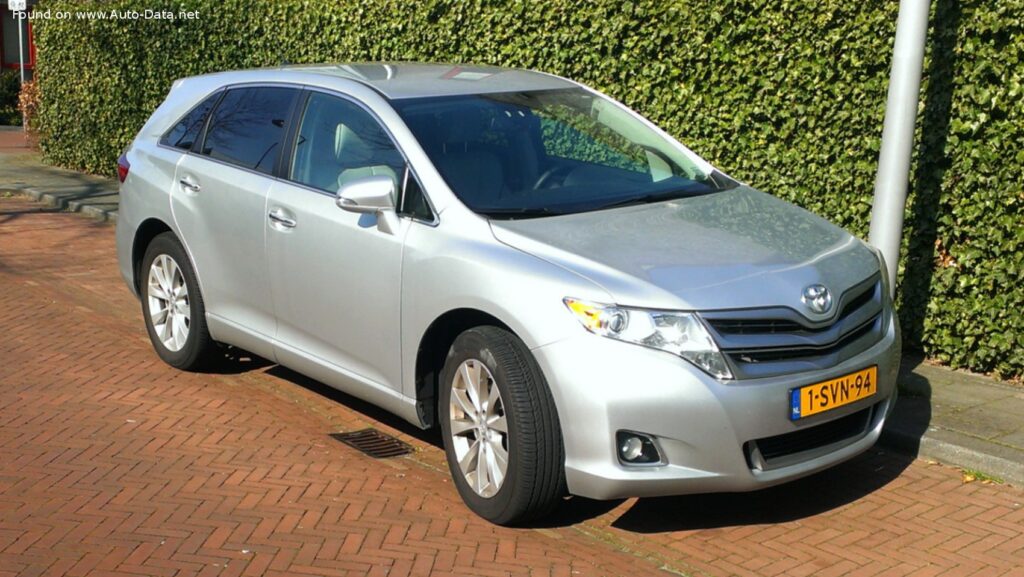
The Toyota Venza, particularly its first generation (AV10) with the 2012 facelift, represented a distinctive entry into the North American automotive market. Positioned strategically between traditional sedans and larger SUVs, the Toyota Venza I (AV10, facelift 2012) 3.5i V6 (268 Hp) AWD ECT-i carved out a niche as a versatile, family-oriented crossover. Launched in May 2012 as a refreshed model, this iteration continued the Venza’s legacy until its production concluded in 2017. Designed primarily for the demands of American consumers, it offered a compelling blend of spaciousness, car-like driving dynamics, and the elevated seating position often sought in sport utility vehicles. Its unique station wagon (estate) body type, though often marketed as a crossover utility vehicle (CUV) in the U.S., underscored its emphasis on practicality and cargo versatility, providing five comfortable seats and ample room for passengers and luggage alike. This particular variant, equipped with the robust 3.5-liter V6 engine and all-wheel drive, aimed to deliver a confident and capable driving experience, whether navigating urban environments or embarking on longer highway journeys.
Engine and Performance: The Heart of the Toyota Venza I (AV10, facelift 2012)
At the core of the 2012 facelifted Toyota Venza was the highly regarded 3.5-liter V6 engine, designated as the 2GR-FE. This naturally aspirated, all-aluminum powerplant was engineered for a balance of smooth power delivery and reliable performance. With a displacement of 3456 cubic centimeters (210.9 cubic inches), the V-engine configuration featured six cylinders and a sophisticated DOHC (Double Overhead Camshaft) valvetrain with D-VVT-i (Dual Variable Valve Timing with intelligence). This advanced valve timing system optimized valve overlap and lift for improved efficiency and power across the RPM range. The engine generated a substantial 268 horsepower at 6200 rpm, providing ample acceleration and passing power. Torque figures stood at 334 Newton-meters (246.35 lb.-ft.) delivered at a relatively accessible 4700 rpm, ensuring responsive throttle input in various driving conditions.
Power was seamlessly managed by a 6-speed automatic transmission, specifically Toyota’s Electronically Controlled Transmission with intelligence (ECT-i). This gearbox was praised for its smooth shifts and intelligent adaptation to driving styles, contributing to both comfort and efficiency. The particular variant under discussion featured an All-Wheel Drive (AWD) system, providing enhanced traction and stability, especially beneficial in adverse weather conditions or on uneven terrain. This drivetrain architecture, combined with the potent V6 engine, resulted in a respectable weight-to-power ratio of 6.8 kg per horsepower (146 Hp per tonne) and a weight-to-torque ratio of 5.5 kg per Newton-meter (182 Nm per tonne), indicating strong real-world performance for a vehicle of its class and size.
Despite its robust performance, the Venza 3.5i V6 aimed for reasonable fuel economy for its era and segment. Official figures indicated an urban fuel consumption of 13.1 liters per 100 kilometers (approximately 18 US miles per gallon) and an extra-urban consumption of 9.4 liters per 100 kilometers (approximately 25 US miles per gallon). It operated on standard petrol (gasoline) and met the ULEV-II (Ultra-Low Emission Vehicle II) emission standard, reflecting Toyota’s commitment to environmental responsibility. The engine’s oil capacity was 6.1 liters (6.45 US quarts), while the cooling system held 10.3 liters (10.88 US quarts) of coolant, emphasizing the robust engineering designed for long-term durability and performance.
Design and Features: Practicality Meets Refinement in the Toyota Venza
The 2012 facelift brought subtle yet effective enhancements to the Venza’s exterior, refining its distinctive aesthetic. The vehicle retained its characteristic five-door station wagon (estate) body type, which was a deliberate design choice to offer a lower step-in height and more car-like driving dynamics than traditional SUVs, while still providing generous cargo capacity. The Venza’s styling was characterized by its sleek profile, raked windshield, and muscular wheel arches, presenting a sophisticated yet rugged appearance. The facelift typically included updated front fascia elements such as a revised grille, headlamp designs, and fog lamp surrounds, giving it a more contemporary look.
Inside, the Venza was designed with passenger comfort and utility in mind. It offered