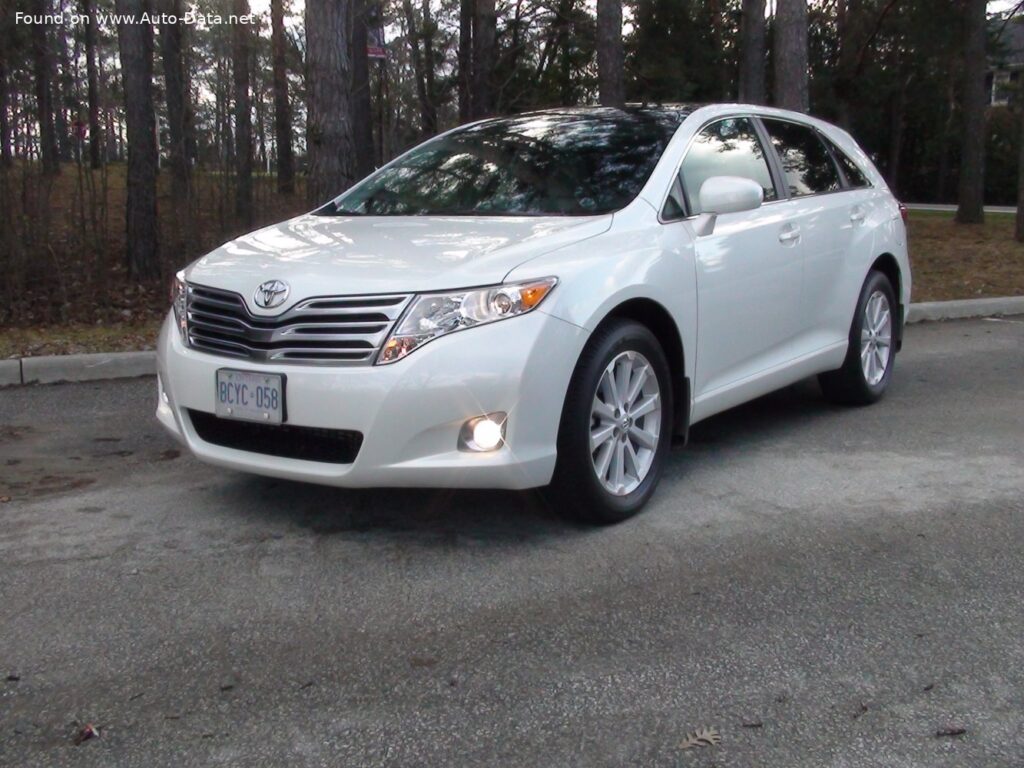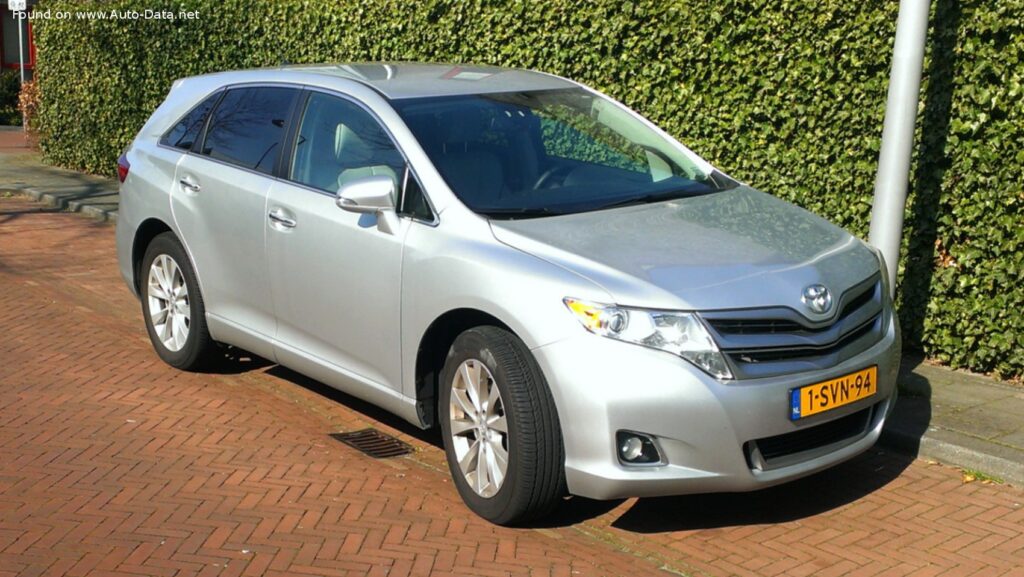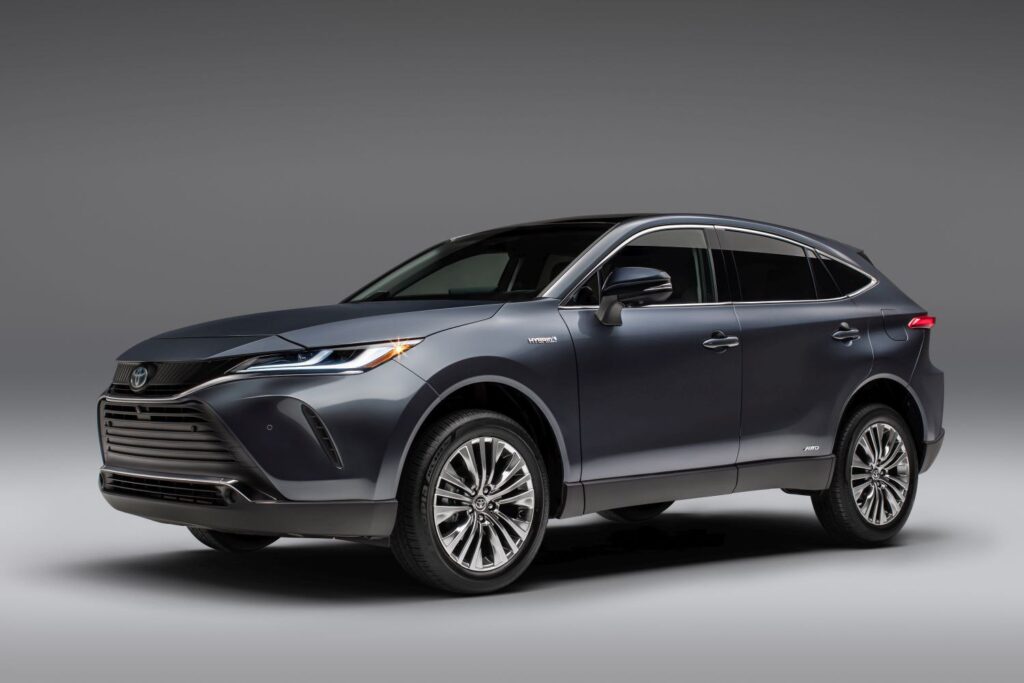
The Toyota Venza, in its second generation (XU80), represents a sophisticated and highly efficient entry into the competitive mid-size SUV segment, specifically tailored for markets like North America where it was reintroduced as a hybrid-exclusive model. Launched in May 2020, the Toyota Venza II (XU80) 2.5 (219 Hp) Hybrid E-Four e-CVT immediately distinguished itself with a blend of elegant styling, premium interior appointments, and Toyota’s renowned hybrid powertrain technology. Unlike its first generation, which was more of a wagon-crossover, the XU80 Venza firmly embraced the SUV identity, drawing inspiration from the global Harrier model and positioning itself as a more refined, upscale alternative to the RAV4 Hybrid, emphasizing comfort, quietness, and fuel efficiency. This strategic shift underscored Toyota’s commitment to hybrid powertrains as a cornerstone of its vehicle lineup, offering consumers a compelling option that marries environmental responsibility with everyday practicality and a touch of luxury.
Engine and Performance: The Toyota Venza II (XU80) 2.5 (219 Hp) Hybrid E-Four e-CVT Powertrain
At the heart of the Toyota Venza II (XU80) lies a sophisticated Full Hybrid Electric Vehicle (FHEV) powertrain architecture, engineered for optimal balance between power delivery and exceptional fuel economy. This advanced system combines a naturally aspirated 2.5-liter A25A-FXS inline-four gasoline engine with a pair of electric motors, delivering a robust total system output of 219 horsepower. The internal combustion engine itself produces 176 horsepower at 5700 rpm and 163 lb.-ft. of torque at 5200 rpm. This engine is a marvel of efficiency, featuring a high 14:1 compression ratio, DOHC valvetrain with VVT-i (Variable Valve Timing with intelligence), and a sophisticated fuel injection system that utilizes both direct and multi-port manifold injection to maximize combustion efficiency and reduce emissions. With a displacement of 2487 cm³ (151.77 cu. in.) and four valves per cylinder, it is designed for smooth, reliable operation.
The hybrid system integrates two synchronous electric motors that play distinct but crucial roles. The primary electric motor, integrated into the e-CVT transmission and driving the front wheels, contributes 120 horsepower and a substantial 148.99 lb.-ft. of torque. A second electric motor, transversely mounted on the rear axle, provides 54 horsepower and 89.25 lb.-ft. of torque. This dual-motor setup enables Toyota’s E-Four all-wheel-drive system, which intelligently distributes power to all four wheels as needed, enhancing traction and stability in varying driving conditions without a mechanical connection between the front and rear axles. The system can operate in full electric mode for short distances at low speeds, or in a mixed mode, seamlessly blending power from the gasoline engine and electric motors for optimal performance and efficiency.
Power is transmitted through an electronic Continuously Variable Transmission (e-CVT), which ensures smooth, seamless acceleration and optimizes engine speed for efficiency. The entire powertrain is fed by a 252V Lithium-ion (Li-Ion) battery strategically located under the rear seats to maintain a low center of gravity and preserve cargo space. This meticulous engineering results in remarkable fuel economy figures: an impressive 39.9 US mpg (5.9 l/100 km) in urban driving, 36.8 US mpg (6.4 l/100 km) on the extra-urban cycle, and a combined 39.2 US mpg (6.0 l/100 km). Furthermore, the Venza meets the stringent SULEV (Super Ultra-Low Emission Vehicle) standard, underscoring its commitment to environmental performance. With a weight-to-power ratio of 8 kg/Hp (125.5 Hp/tonne) and a weight-to-torque ratio of 7.9 kg/Nm (126.6 Nm/tonne), the Venza delivers responsive acceleration and confident passing power for its segment.
Design and Features
The Toyota Venza II (XU80) presents a distinctive and upscale design that sets it apart in the crowded SUV market. Its body type is a traditional SUV, offering five doors and comfortable seating for five occupants. Aesthetically, the Venza adopts a sleek, coupe-like silhouette, characterized by flowing lines, a prominent front grille, and sophisticated lighting elements that contribute to its premium appearance. The vehicle’s dimensions are well-proportioned for a mid-size SUV, with a length of 186.61 inches (4740 mm), a width of 72.99 inches (1854 mm), and a height of 65.91 inches (1674 mm). A wheelbase of 105.91 inches (2690 mm) provides a stable ride and contributes to generous interior space, while a ground clearance of 7.8 inches (198 mm) offers sufficient capability for light off-road excursions and navigating varied urban terrain.
Inside, the Venza emphasizes comfort, refinement, and modern technology. The cabin is designed with high-quality materials and thoughtful ergonomics, creating an inviting atmosphere for both driver and passengers. Practicality is also a strong suit, with a versatile cargo area offering a minimum trunk space of 28.71 cubic feet (813 liters), which expands significantly to 54.91 cubic feet (1555 liters) with the rear seats folded, accommodating a wide range of luggage or gear. The vehicle’s kerb weight ranges from 3847.07 to 3913.21 lbs (1745-1775 kg), reflecting its solid construction and comprehensive feature set.
Underneath its stylish exterior, the Venza is built on a robust platform featuring an independent MacPherson strut front suspension with coil springs and an anti-roll bar, paired with an independent multi-link spring suspension with a stabilizer bar at the rear. This setup provides a balanced ride, absorbing road imperfections while maintaining composure during cornering. Braking performance is handled by ventilated discs measuring 305 mm at the front and solid discs measuring 282 mm at the rear, complemented by an Anti-lock Braking System (ABS) for enhanced safety. The electric power steering system, a rack and pinion type, offers precise control and light effort, contributing to an agile driving experience. The Venza is equipped with either 225/60 R18 or 225/55 R19 tires, mounted on 7J x 18 or 7J x 19 wheel rims, respectively, providing a confident grip and contributing to its refined ride quality. Key features such as a Start & Stop System and a Particulate filter further underscore its modern engineering and commitment to efficiency and reduced environmental impact.
Technical Specifications: Toyota Venza II (XU80) 2.5 (219 Hp) Hybrid E-Four e-CVT
| General Information | |
| Brand | Toyota |
| Model | Venza |
| Generation | Venza II (XU80) |
| Type (Engine) | 2.5 (219 Hp) Hybrid E-Four e-CVT |
| Start of production | May, 2020 year |
| Powertrain Architecture | FHEV (Full Hybrid Electric Vehicle) |
| Body type | SUV |
| Seats | 5 |
| Doors | 5 |
| Performance Specs | |
| Fuel consumption (economy) – urban | 39.9 US mpg (5.9 l/100 km) |
| Fuel consumption (economy) – extra urban | 36.8 US mpg (6.4 l/100 km) |
| Fuel consumption (economy) – combined | 39.2 US mpg (6.0 l/100 km) |
| Fuel Type | Petrol (Gasoline) |
| Emission standard | SULEV |
| Weight-to-power ratio | 8 kg/Hp, 125.5 Hp/tonne |
| Weight-to-torque ratio | 7.9 kg/Nm, 126.6 Nm/tonne |
| Electric Cars and Hybrids Specs | |
| Battery voltage | 252 V |
| Battery technology | Lithium-ion (Li-Ion) |
| Battery location | Under the rear seats |
| Electric motor 1 power | 120 Hp |
| Electric motor 1 Torque | 148.99 lb.-ft. (202 Nm) |
| Electric motor 1 location | Integrated into the transmission |
| Electric motor 1 type | Synchronous |
| Electric motor 2 power | 54 Hp |
| Electric motor 2 Torque | 89.25 lb.-ft. (121 Nm) |
| Electric motor 2 location | Rear axle, Transverse |
| Electric motor 2 type | Synchronous |
| System power | 219 Hp |
| Internal Combustion Engine Specs | |
| Power | 176 Hp @ 5700 rpm |
| Power per liter | 70.8 Hp/l |
| Torque | 163 lb.-ft. @ 5200 rpm (221 Nm @ 5200 rpm) |
| Engine layout | Front, Transverse |
| Engine Model/Code | A25A-FXS |
| Engine displacement | 2487 cm³ (151.77 cu. in.) |
| Number of cylinders | 4 |
| Engine configuration | Inline |
| Cylinder Bore | 3.44 in. (87.38 mm) |
| Piston Stroke | 4.07 in. (103.38 mm) |
| Compression ratio | 14:1 |
| Number of valves per cylinder | 4 |
| Fuel injection system | Direct injection and Multi-port manifold injection |
| Engine aspiration | Naturally aspirated engine |
| Valvetrain | DOHC, VVT-i |
| Engine oil capacity | 4.76 US qt (4.5 l) |
| Coolant | 6.97 US qt (6.6 l) |
| Engine systems | Start & Stop System, Particulate filter |
| Space, Volume and Weights | |
| Kerb Weight | 3847.07 – 3913.21 lbs. (1745-1775 kg) |
| Trunk (boot) space – minimum | 28.71 cu. ft. (813 l) |
| Trunk (boot) space – maximum | 54.91 cu. ft. (1555 l) |
| Fuel tank capacity | 14.53 US gal (55 l) |
| Dimensions | |
| Length | 186.61 in. (4740 mm) |
| Width | 72.99 in. (1854 mm) |
| Height | 65.91 in. (1674 mm) |
| Wheelbase | 105.91 in. (2690 mm) |
| Ride height (ground clearance) | 7.8 in. (198 mm) |
| Minimum turning circle (turning diameter) | 36.09 – 37.4 ft. (11-11.4 m) |
| Drivetrain, Brakes and Suspension Specs | |
| Drivetrain Architecture | ICE drives front wheels, 1 electric motor drives front wheels, 1 electric motor drives rear wheels. Ability for running in full electric or mixed mode. |
| Drive wheel | All wheel drive (4×4) |
| Number of gears and type of gearbox | Automatic transmission e-CVT |
| Front suspension | Independent, type McPherson with coil spring and anti-roll bar |
| Rear suspension | Independent multi-link spring suspension with stabilizer |
| Front brakes | Ventilated discs, 305 mm |
| Rear brakes | Disc, 282 mm |
| Assisting systems | ABS (Anti-lock braking system) |
| Steering type | Steering rack and pinion |
| Power steering | Electric Steering |
| Tires size | 225/60 R18; 225/55 R19 |
| Wheel rims size | 7J x 18; 7J x 19 |