
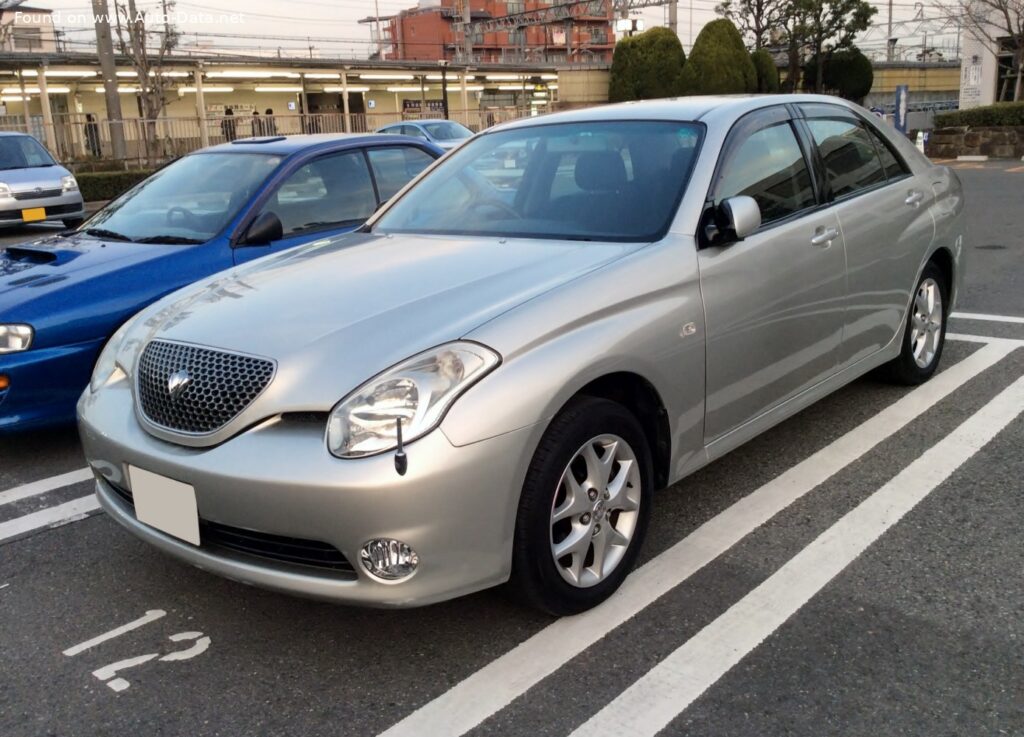
The Toyota Verossa represents a distinctive chapter in the history of Japanese domestic market (JDM) automotive design, offering a unique blend of luxury, performance, and idiosyncratic styling. Launched in 2001, the Verossa was conceived as a successor to the popular Toyota Chaser and Cresta models, positioned within Toyota’s mid-size luxury sports sedan lineup. Unlike its more conventional stablemates, the Verossa was characterized by its bold, somewhat polarizing aesthetic, aimed at a discerning clientele seeking individuality. The model under scrutiny here, the Toyota Verossa 2.5i 24V Turbo (280 Hp) Automatic, exemplifies the pinnacle of its performance offerings, combining a potent turbocharged inline-six engine with a sophisticated rear-wheel-drive platform, a configuration highly coveted by enthusiasts. Its production run was relatively short, concluding in April 2004, cementing its status as a unique and somewhat rare find, particularly outside of Japan.
Engine and Performance: The Heart of the Toyota Verossa
At the core of the Verossa’s appeal, especially in its 2.5i 24V Turbo variant, lies its legendary powertrain: the 1JZ-GTE engine. This 2.5-liter, 24-valve, DOHC (Double Overhead Camshaft) inline-six is a celebrated unit within the automotive community, renowned for its robust construction, smooth operation, and considerable tuning potential. Equipped with a turbocharger and an intercooler, this engine delivers an impressive 280 horsepower at 6200 rpm, a figure that placed it squarely among the most powerful sedans of its era. The torque output is equally compelling, peaking at 278.8 lb.-ft. (378 Nm) at a relatively low 2400 rpm, ensuring brisk acceleration and strong mid-range pull. This combination of high power and accessible torque provides a driving experience that is both exhilarating and refined.
The engine’s layout is front-longitudinal, optimizing weight distribution and contributing to the vehicle’s dynamic handling characteristics. With a bore of 3.39 inches (86 mm) and a piston stroke of 2.81 inches (71.5 mm), the 1JZ-GTE boasts a compression ratio of 9:1, indicative of its forced-induction design. Fuel is delivered via a multi-port manifold injection system, ensuring precise fuel metering and efficient combustion. The engine’s aspiration system, featuring a turbocharger and intercooler, is instrumental in achieving its high power-per-liter rating of 112.4 Hp/l, making it a highly efficient performer for its size. Lubrication is handled by an engine oil capacity of 5.71 US quarts (5.4 liters), while the cooling system holds 8.88 US quarts (8.4 liters) of coolant, vital for maintaining optimal operating temperatures under demanding conditions.
Power is transmitted to the rear wheels through a 4-speed automatic transmission, a common choice for luxury and performance sedans of its time, balancing smooth shifts with responsive power delivery. This rear-wheel-drive architecture, combined with a curb weight of 3373.07 lbs (1530 kg), results in a favorable weight-to-power ratio of 5.5 kg/Hp (183 Hp/tonne) and a weight-to-torque ratio of 4 kg/Nm (247.1 Nm/tonne). These figures underscore the Verossa’s capability to deliver a genuinely engaging driving experience, characteristic of a true sports sedan.
Design and Features: A Distinctive Presence
The Toyota Verossa distinguishes itself with a design language that deviated significantly from Toyota’s more conservative offerings. As a 4-door, 5-seat sedan, it offered practical utility without compromising its unique aesthetic. Its exterior styling was marked by flowing lines, a prominent grille, and distinctive headlamps, giving it a somewhat “neo-retro” or avant-garde appearance that set it apart from its contemporaries. This bold design choice was part of Toyota’s strategy to infuse more character and emotional appeal into its JDM lineup.
In terms of dimensions, the Verossa measures 185.24 inches (4705 mm) in length, 69.29 inches (1760 mm) in width, and 57.09 inches (1450 mm) in height. Its generous wheelbase of 109.45 inches (2780 mm) contributed to a stable ride and a spacious cabin, accommodating five occupants comfortably. The front track width is 58.86 inches (1495 mm), while the rear track measures 58.07 inches (1475 mm), further enhancing its planted stance and handling stability.
Underneath its distinctive skin, the Verossa featured a sophisticated chassis designed for both comfort and dynamic performance. The suspension system utilized a double wishbone setup at both the front and rear axles, a configuration typically found in higher-end sports and luxury vehicles. This design provides excellent control over wheel geometry, leading to superior handling, precise steering response, and a supple ride quality. Braking performance was handled by ventilated discs at the front and solid discs at the rear, ensuring ample stopping power for a vehicle of its caliber. An Anti-lock Braking System (ABS) was standard, enhancing safety by preventing wheel lock-up during hard braking.
Steering was managed by a rack and pinion system with hydraulic power steering, providing direct feedback and a natural feel to the driver. The vehicle rode on 17-inch wheel rims, shod with performance-oriented tires sized 215/45 R17 at the front and 225/45 R17 at the rear. This staggered tire setup, common in rear-wheel-drive sports cars, further optimized grip and handling balance. The maximum load capacity for the Verossa was 606.27 lbs (275 kg), with a maximum permissible weight of 3979.34 lbs (1805 kg). A fuel tank capacity of 18.49 US gallons (70 liters) provided a respectable cruising range, suitable for both daily commuting and longer journeys.
The interior, while not explicitly detailed in the specifications, typically reflected Toyota’s commitment to quality and ergonomic design, with a focus on driver-centric controls and comfortable appointments. As a luxury-sports sedan, it would have offered a comprehensive suite of features aimed at convenience and occupant comfort, consistent with its market positioning in Japan.
Technical Specifications
| Brand | Toyota |
| Model | Verossa |
| Generation | Verossa |
| Type (Engine) | 2.5i 24V Turbo (280 Hp) Automatic |
| Start of production | 2001 year |
| End of production | April, 2004 year |
| Powertrain Architecture | Internal Combustion engine |
| Body type | Sedan |
| Seats | 5 |
| Doors | 4 |
| Fuel Type | Petrol (Gasoline) |
| Weight-to-power ratio | 5.5 kg/Hp, 183 Hp/tonne |
| Weight-to-torque ratio | 4 kg/Nm, 247.1 Nm/tonne |
| Power | 280 Hp @ 6200 rpm. |
| Power per liter | 112.4 Hp/l |
| Torque | 278.8 lb.-ft. (378 Nm) @ 2400 rpm. |
| Engine layout | Front, Longitudinal |
| Engine Model/Code | 1JZ-GTE |
| Engine displacement | 2.5 liters (2492 cm3 / 152.07 cu. in.) |
| Number of cylinders | 6 |
| Engine configuration | Inline |
| Cylinder Bore | 3.39 in. (86 mm) |
| Piston Stroke | 2.81 in. (71.5 mm) |
| Compression ratio | 9:1 |
| Number of valves per cylinder | 4 |
| Fuel injection system | Multi-port manifold injection |
| Engine aspiration | Turbocharger, Intercooler |
| Valvetrain | DOHC |
| Engine oil capacity | 5.71 US qt (5.4 l) |
| Coolant | 8.88 US qt (8.4 l) |
| Kerb Weight | 3373.07 lbs (1530 kg) |
| Max. weight | 3979.34 lbs (1805 kg) |
| Max load | 606.27 lbs (275 kg) |
| Fuel tank capacity | 18.49 US gal (70 l) |
| Length | 185.24 in. (4705 mm) |
| Width | 69.29 in. (1760 mm) |
| Height | 57.09 in. (1450 mm) |
| Wheelbase | 109.45 in. (2780 mm) |
| Front track | 58.86 in. (1495 mm) |
| Rear (Back) track | 58.07 in. (1475 mm) |
| Drivetrain Architecture | The Internal combustion engine (ICE) drives the rear wheels of the vehicle. |
| Drive wheel | Rear wheel drive |
| Number of gears and type of gearbox | 4 gears, automatic transmission |
| Front suspension | Double wishbone |
| Rear suspension | Double wishbone |
| Front brakes | Ventilated discs |
| Rear brakes | Disc |
| Assisting systems | ABS (Anti-lock braking system) |
| Steering type | Steering rack and pinion |
| Power steering | Hydraulic Steering |
| Tires size | 215/45 R17; 225/45 R17 |
| Wheel rims size | 17 |

