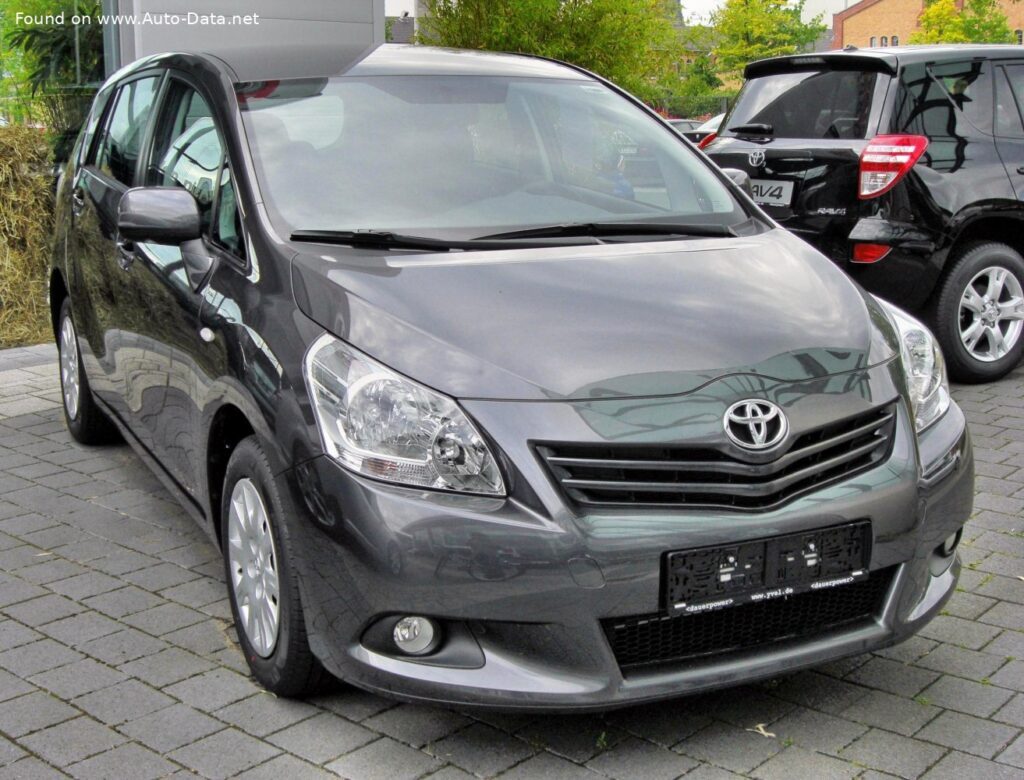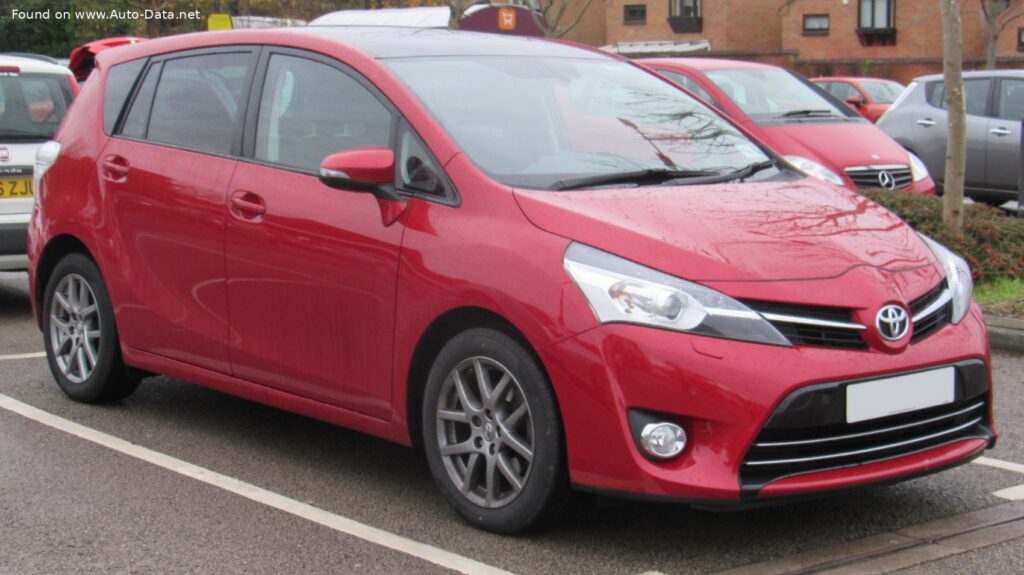
The Toyota Verso, particularly the facelifted model introduced in 2013, is a compact multi-purpose vehicle (MPV) designed to cater to families seeking practicality and versatility. While not initially a major seller in the United States, the Verso held a significant position in the European market, competing with vehicles like the Renault Scenic and Citroën C4 Picasso. The 2013 facelift brought styling updates and refinements to the engine lineup, including the 1.6 D-4D diesel engine, offering a balance of fuel efficiency and reasonable performance. This generation of Verso aimed to provide a spacious and adaptable interior within a relatively compact footprint.
Toyota Verso (Facelift 2013) 1.6 D-4D: An Overview
The Verso, known as the Toyota Ractis in Japan, was conceived as a more affordable and practical alternative to larger, more expensive MPVs. The facelifted version, produced from February 2014 to June 2018, focused on enhancing the vehicle’s appeal through cosmetic changes and improvements to its already efficient powertrain options. The 1.6 D-4D variant, producing 112 horsepower, was a popular choice in Europe due to its low running costs and suitability for long-distance travel. It represented Toyota’s commitment to diesel technology, offering a compelling option for buyers prioritizing fuel economy.
Engine & Performance
The heart of the Toyota Verso 1.6 D-4D is a 1.6-liter, four-cylinder diesel engine (model code 1WW). This engine utilizes a turbocharger with an intercooler and a diesel common rail fuel injection system to deliver a power output of 112 horsepower. Torque figures stand at 270 Nm (199.14 lb.-ft.) available at 2000 rpm, providing adequate pulling power for everyday driving and carrying passengers or cargo. The engine features a double overhead camshaft (DOHC) valvetrain with four valves per cylinder, contributing to its efficiency and responsiveness. Acceleration from 0 to 100 km/h (0-62 mph) takes 12.7 seconds, while 0-60 mph is achieved in approximately 12.1 seconds. The Verso 1.6 D-4D reaches a maximum speed of 180 km/h (111.85 mph). A key feature of this engine is its Euro 6 emission standard compliance, incorporating a particulate filter to minimize harmful emissions. The engine’s power-to-weight ratio is 13.6 kg/Hp, and its torque-to-weight ratio is 5.6 kg/Nm.
Design & Features
The Toyota Verso (facelift 2013) is a five-door MPV with seating for five passengers. Its design prioritizes practicality and space utilization. The body style is characterized by a relatively high roofline and a compact overall length of 4460 mm (175.59 in), making it manageable in urban environments. The interior is designed to be flexible, with a focus on maximizing passenger space and cargo capacity. The trunk offers a minimum volume of 484 liters (17.09 cu. ft.), expanding to a substantial 1740 liters (61.45 cu. ft.) with the rear seats folded down. Safety features, typical for its era, include ABS (Anti-lock Braking System). The vehicle’s drag coefficient of 0.295 contributes to its fuel efficiency. The Verso’s suspension utilizes an independent McPherson strut setup at the front and an independent coil spring arrangement at the rear, providing a comfortable ride. Electric power steering enhances maneuverability.
Technical Specifications
| Brand | Toyota |
| Model | Verso |
| Generation | Verso (facelift 2013) |
| Type (Engine) | 1.6 D-4D (112 Hp) |
| Start of production | February, 2014 |
| End of production | June, 2018 |
| Powertrain Architecture | Internal Combustion engine |
| Body type | MPV |
| Seats | 5 |
| Doors | 5 |
| Fuel consumption (urban) | 5.3 l/100 km (44.4 US mpg, 53.3 UK mpg, 18.9 km/l) |
| Fuel consumption (extra urban) | 4.1 l/100 km (57.4 US mpg, 68.9 UK mpg, 24.4 km/l) |
| Fuel consumption (combined) | 4.5 l/100 km (52.3 US mpg, 62.8 UK mpg, 22.2 km/l) |
| CO2 emissions | 119 g/km |
| Fuel Type | Diesel |
| Acceleration 0 – 100 km/h | 12.7 sec |
| Acceleration 0 – 62 mph | 12.7 sec |
| Acceleration 0 – 60 mph | 12.1 sec |
| Maximum speed | 180 km/h (111.85 mph) |
| Emission standard | Euro 6 w |
| Weight-to-power ratio | 13.6 kg/Hp |
| Weight-to-torque ratio | 5.6 kg/Nm |
| Power | 112 Hp |
| Power per litre | 70.1 Hp/l |
| Torque | 270 Nm @ 2000 rpm (199.14 lb.-ft. @ 2000 rpm) |
| Engine layout | Front, Transverse |
| Engine Model/Code | 1WW |
| Engine displacement | 1598 cm3 (97.52 cu. in.) |
| Number of cylinders | 4 |
| Compression ratio | 16.5:1 |
| Number of valves per cylinder | 4 |
| Fuel injection system | Diesel Commonrail |
| Engine aspiration | Turbocharger, Intercooler |
| Valvetrain | DOHC |
| Engine oil capacity | 5.2 l (5.49 US qt | 4.58 UK qt) |
| Coolant | 7 l (7.4 US qt | 6.16 UK qt) |
| Kerb Weight | 1520-1620 kg (3351.03 – 3571.49 lbs.) |
| Max. weight | 2260 kg (4982.45 lbs.) |
| Max load | 640-740 kg (1410.96 – 1631.42 lbs.) |
| Trunk (boot) space – minimum | 484 l (17.09 cu. ft.) |
| Trunk (boot) space – maximum | 1740 l (61.45 cu. ft.) |
| Fuel tank capacity | 55 l (14.53 US gal | 12.1 UK gal) |
| Max. roof load | 100 kg (220.46 lbs.) |
| Permitted trailer load with brakes (12%) | 1300 kg (2866.01 lbs.) |
| Permitted trailer load without brakes | 450 kg (992.08 lbs.) |
| Permitted towbar download | 55 kg (121.25 lbs.) |
| Length | 4460 mm (175.59 in.) |
| Width | 1790 mm (70.47 in.) |
| Height | 1620-1630 mm (63.78 – 64.17 in.) |
| Wheelbase | 2780 mm (109.45 in.) |
| Front track | 1540 mm (60.63 in.) |
| Rear (Back) track | 1540 mm (60.63 in.) |
| Drag coefficient (Cd) | 0.295 |
| Minimum turning circle (turning diameter) | 11.6 m (38.06 ft.) |
| Drive wheel | Front wheel drive |
| Number of gears and type of gearbox | 6 gears, manual transmission |
| Front suspension | Independent, type McPherson with coil spring and anti-roll bar |
| Rear suspension | Independent coil spring |
| Front brakes | Ventilated discs |
| Rear brakes | Disc |
| Steering type | Steering rack and pinion |
| Power steering | Electric Steering |
| Tires size | 205/60 R16; 215/55 R17 |
| Wheel rims size | 6.5J x 16; 7.0J x 17 |