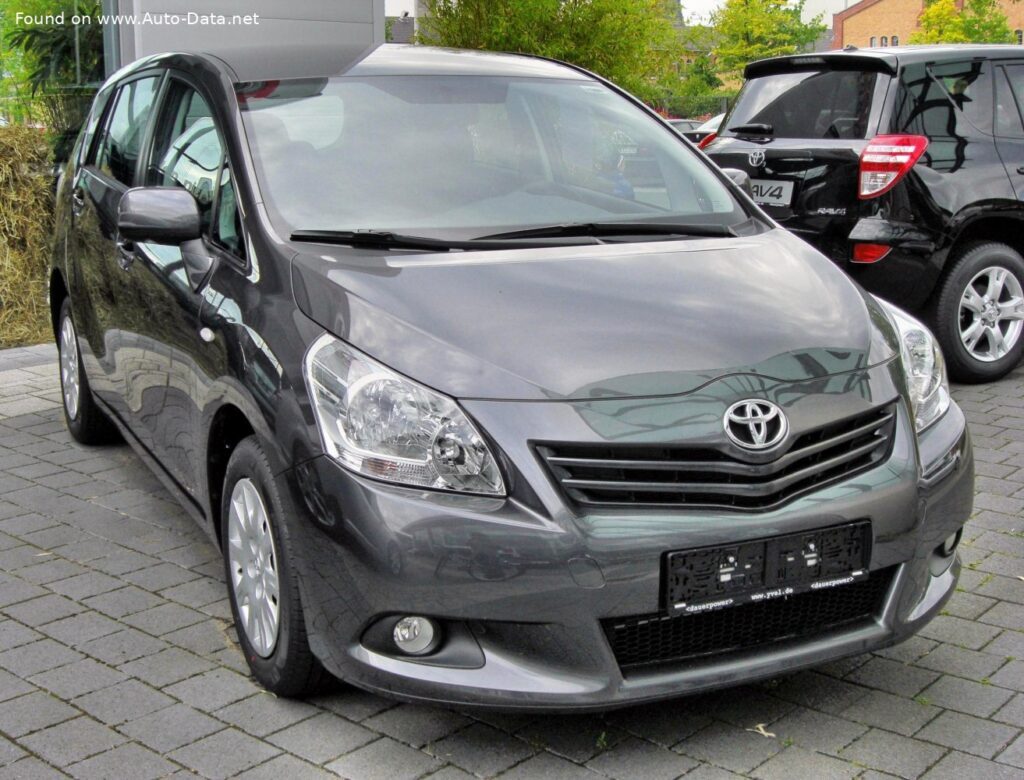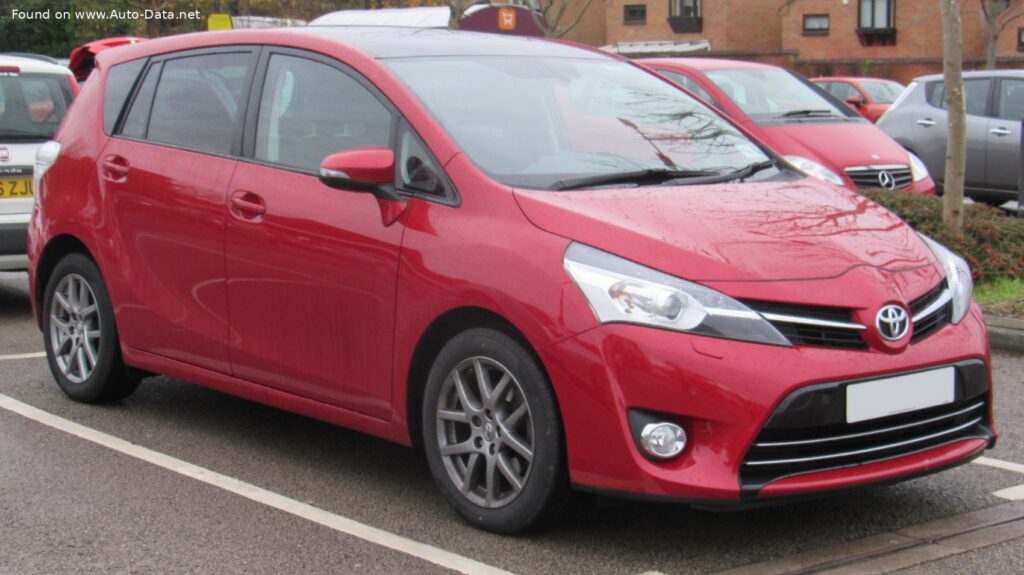
The Toyota Verso, specifically the facelifted model introduced in 2013, is a compact multi-purpose vehicle (MPV) designed to cater to families seeking versatility and practicality. Sold primarily in the European market, the Verso occupied a competitive segment alongside vehicles like the Citroën C4 Picasso and Renault Scenic. This generation of the Verso, powered by a 1.6-liter Valvematic engine producing 132 horsepower, offered a seven-seat configuration as standard, emphasizing its family-oriented design. The 2013 facelift brought styling updates and refinements to the interior, aiming to enhance the vehicle’s appeal and functionality.
Toyota Verso (Facelift 2013): An Overview
The Toyota Verso, known as the Toyota Ractis in Japan, was conceived as a more space-efficient and versatile alternative to traditional station wagons and larger MPVs. The facelifted 2013 model represented a mid-cycle refresh, building upon the strengths of the previous generation. While not officially sold in the United States, the Verso exemplifies Toyota’s commitment to providing practical and fuel-efficient vehicles for global markets. The focus of this iteration was to improve fuel economy, refine the driving experience, and enhance the overall passenger comfort. It was produced from January 2013 to June 2018.
Engine & Performance
The heart of the 2013 Toyota Verso 1.6 Valvematic is a 1.6-liter inline four-cylinder gasoline engine, designated the 1ZR-FAE. This engine utilizes Toyota’s Valvematic technology, a variable valve lift system that optimizes engine performance and fuel efficiency across a wider range of engine speeds. Producing 132 horsepower and 160 Nm (118 lb-ft) of torque at 4400 rpm, the engine provides adequate power for everyday driving and family transportation. The engine is naturally aspirated, meaning it doesn’t rely on turbocharging or supercharging for increased power. Power delivery is smooth and linear, prioritizing usability over outright performance. Acceleration from 0 to 100 km/h (0-62 mph) takes 11.7 seconds, while 0-60 mph is achieved in approximately 11.1 seconds. The Verso achieves a maximum speed of 185 km/h (114.95 mph). Fuel economy is a strong point, with combined cycle consumption rated at 6.6 l/100 km (35.6 US mpg or 42.8 UK mpg). The engine meets Euro 5 emission standards.
Design & Features
The Toyota Verso (facelift 2013) is a five-door MPV designed with practicality in mind. Its most defining feature is its seven-seat configuration, offering flexible seating arrangements to accommodate varying passenger and cargo needs. The rear seats can be folded flat or even removed entirely, maximizing cargo space. The interior design prioritizes functionality and ease of use, with a focus on durable materials and intuitive controls. The 2013 facelift brought subtle styling changes to the exterior, including a revised front grille, headlights, and bumper. Safety features include ABS (Anti-lock Braking System) as standard. The Verso’s compact dimensions – 4460 mm in length, 1790 mm in width, and 1620 mm in height – make it relatively easy to maneuver in urban environments. Trunk space ranges from a minimum of 178 liters (6.29 cu ft) with all seats in use to a maximum of 1696 liters (59.89 cu ft) with the rear seats folded down. The vehicle utilizes a front-wheel-drive layout and a six-speed manual transmission.
Technical Specifications
| Brand | Toyota |
| Model | Verso |
| Generation | Verso (facelift 2013) |
| Type (Engine) | 1.6 Valvematic (132 Hp) 7 Seat |
| Start of production | January, 2013 |
| End of production | June, 2018 |
| Powertrain Architecture | Internal Combustion engine |
| Body type | MPV |
| Seats | 7 |
| Doors | 5 |
| Fuel consumption (urban) | 8.3 l/100 km (28.3 US mpg, 34 UK mpg, 12 km/l) |
| Fuel consumption (extra urban) | 5.6 l/100 km (42 US mpg, 50.4 UK mpg, 17.9 km/l) |
| Fuel consumption (combined) | 6.6 l/100 km (35.6 US mpg, 42.8 UK mpg, 15.2 km/l) |
| CO2 emissions | 154 g/km |
| Fuel Type | Petrol (Gasoline) |
| Acceleration 0 – 100 km/h | 11.7 sec |
| Acceleration 0 – 62 mph | 11.7 sec |
| Acceleration 0 – 60 mph | 11.1 sec |
| Maximum speed | 185 km/h (114.95 mph) |
| Emission standard | Euro 5 |
| Power | 132 Hp |
| Power per litre | 82.6 Hp/l |
| Torque | 160 Nm @ 4400 rpm (118.01 lb.-ft. @ 4400 rpm) |
| Engine layout | Front, Transverse |
| Engine Model/Code | 1ZR-FAE |
| Engine displacement | 1598 cm3 (97.52 cu. in.) |
| Number of cylinders | 4 |
| Engine configuration | Inline |
| Number of valves per cylinder | 4 |
| Fuel injection system | Multi-port manifold injection |
| Engine aspiration | Naturally aspirated engine |
| Valvetrain | DOHC |
| Engine oil capacity | 4.2 l (4.44 US qt | 3.7 UK qt) |
| Coolant | 5.6 l (5.92 US qt | 4.93 UK qt) |
| Max. weight | 2125 kg (4684.82 lbs.) |
| Trunk (boot) space – minimum | 178 l (6.29 cu. ft.) |
| Trunk (boot) space – maximum | 1696 l (59.89 cu. ft.) |
| Fuel tank capacity | 60 l (15.85 US gal | 13.2 UK gal) |
| Length | 4460 mm (175.59 in.) |
| Width | 1790 mm (70.47 in.) |
| Height | 1620 mm (63.78 in.) |
| Wheelbase | 2780 mm (109.45 in.) |
| Minimum turning circle | 11.6 m (38.06 ft.) |
| Drivetrain Architecture | ICE, Front wheel drive |
| Drive wheel | Front wheel drive |
| Number of gears | 6 gears, manual transmission |
| Front brakes | Ventilated discs |
| Rear brakes | Drum |
| Assisting systems | ABS (Anti-lock braking system) |
| Steering type | Steering rack and pinion |