The Toyota Verso, specifically the facelifted model introduced in 2013 with the 1.8 Valvematic engine producing 147 horsepower, is a compact multi-purpose vehicle (MPV) designed to cater to families seeking practicality and versatility. While not officially sold in the United States, the Verso played a significant role in the European market as a competitor to vehicles like the Renault Scenic and Citroën C4 Picasso. This generation of the Verso, produced from 2013 to 2018, represented a refinement of the second-generation model, focusing on improved fuel efficiency, enhanced interior features, and a more contemporary exterior design.
Toyota Verso (Facelift 2013) 1.8 Valvematic: An Overview
The Verso, known as the Toyota Ractis in Japan, was conceived as a more space-efficient and family-oriented alternative to traditional station wagons and larger MPVs. The facelifted 2013 model brought with it Toyota’s Valvematic technology, a variable valve lift system designed to optimize engine performance and fuel economy. The vehicle’s core appeal lay in its flexible seating arrangements, generous cargo capacity, and relatively compact footprint, making it well-suited for navigating urban environments while still providing ample space for passengers and luggage. The 1.8 Valvematic engine was a key component in positioning the Verso as a practical and economical choice for European families.
Engine & Performance
The heart of the 2013 Toyota Verso 1.8 Valvematic is the 2ZR-FAE 1.8-liter inline four-cylinder gasoline engine. This naturally aspirated engine utilizes Toyota’s Valvematic system, which continuously adjusts the lift and timing of the intake valves, optimizing combustion efficiency across a wider range of engine speeds. This results in a power output of 147 horsepower. Power is delivered to the front wheels via a six-speed manual transmission. The engine’s design prioritizes fuel efficiency without sacrificing acceptable performance. Acceleration from 0 to 62 mph (0-100 km/h) takes approximately 10.4 seconds, while 0-60 mph is achieved in a calculated 9.9 seconds. The Verso achieves a maximum speed of 118.06 mph (190 km/h). Fuel economy figures are respectable for its class, with combined fuel consumption rated at 6.8 liters per 100 kilometers (34.6 US mpg or 41.5 UK mpg). The engine requires 4.2 liters (4.44 US quarts or 3.7 UK quarts) of engine oil and 5.6 liters (5.92 US quarts or 4.93 UK quarts) of coolant.
Design & Features
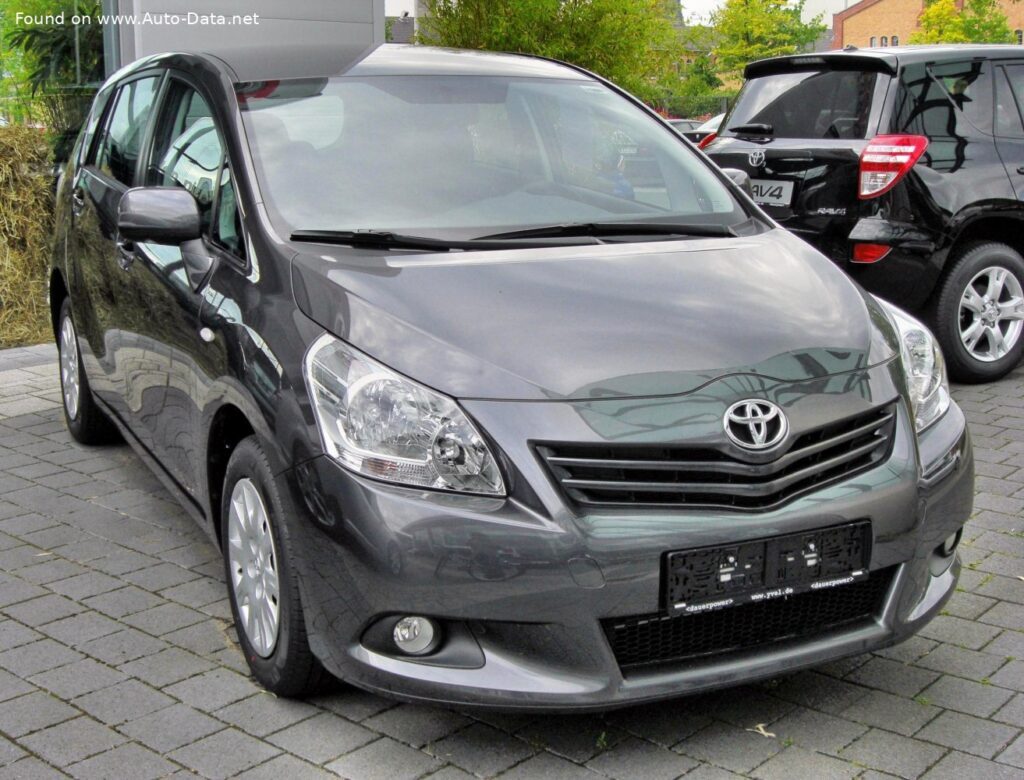
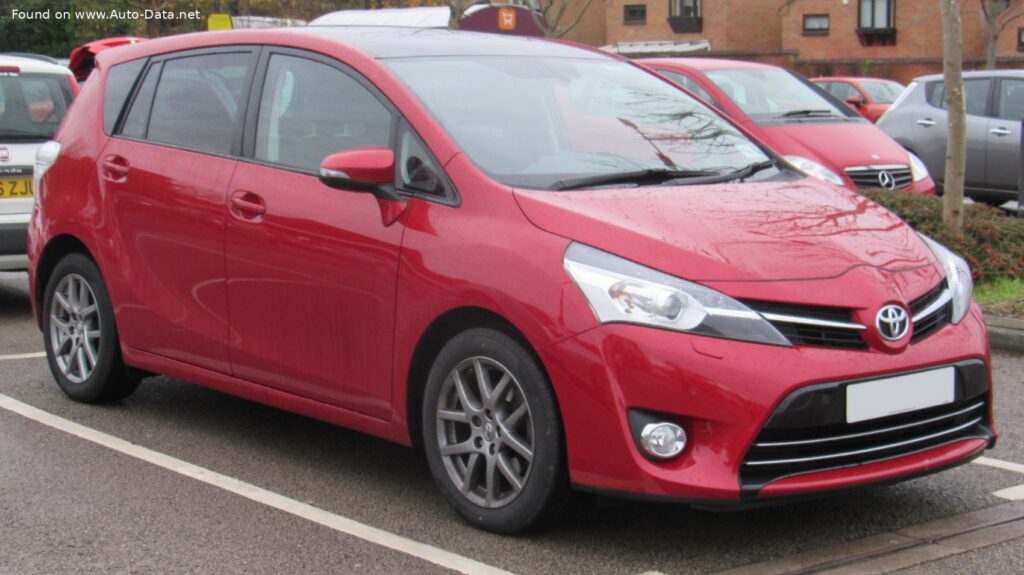
The Toyota Verso (facelift 2013) is a five-door MPV with a seating capacity for five passengers. Its body style is characterized by a relatively high roofline and a short, upright front end, maximizing interior space. The facelift brought subtle styling updates to the front fascia, including a revised grille and headlights, giving the vehicle a more modern appearance. Inside, the Verso offers a flexible seating configuration, with the rear seats capable of sliding and folding to accommodate varying cargo and passenger needs. The trunk space is generous, ranging from a minimum of 484 liters (17.09 cubic feet) with all seats in place to a maximum of 1740 liters (61.45 cubic feet) with the rear seats folded down. Safety features included ABS (Anti-lock Braking System) as standard. The vehicle’s dimensions are 4460 mm (175.59 inches) in length, 1790 mm (70.47 inches) in width, and 1620 mm (63.78 inches) in height, with a wheelbase of 2780 mm (109.45 inches). The minimum turning circle is 11.6 meters (38.06 feet).
Technical Specifications
| Brand | Toyota |
| Model | Verso |
| Generation | Verso (facelift 2013) |
| Type (Engine) | 1.8 Valvematic (147 Hp) |
| Start of production | January, 2013 |
| End of production | June, 2018 |
| Powertrain Architecture | Internal Combustion engine |
| Body type | MPV |
| Seats | 5 |
| Doors | 5 |
| Fuel consumption (urban) | 8.7 l/100 km (27 US mpg, 32.5 UK mpg, 11.5 km/l) |
| Fuel consumption (extra urban) | 5.7 l/100 km (41.3 US mpg, 49.6 UK mpg, 17.5 km/l) |
| Fuel consumption (combined) | 6.8 l/100 km (34.6 US mpg, 41.5 UK mpg, 14.7 km/l) |
| Fuel Type | Petrol (Gasoline) |
| Acceleration 0 – 100 km/h | 10.4 sec |
| Acceleration 0 – 62 mph | 10.4 sec |
| Acceleration 0 – 60 mph | 9.9 sec |
| Maximum speed | 190 km/h (118.06 mph) |
| Emission standard | Euro 5 |
| Power | 147 Hp |
| Engine layout | Front, Transverse |
| Engine Model/Code | 2ZR-FAE |
| Number of cylinders | 4 |
| Engine configuration | Inline |
| Number of valves per cylinder | 4 |
| Fuel injection system | Multi-port manifold injection |
| Engine aspiration | Naturally aspirated engine |
| Valvetrain | DOHC |
| Engine oil capacity | 4.2 l (4.44 US qt, 3.7 UK qt) |
| Coolant | 5.6 l (5.92 US qt, 4.93 UK qt) |
| Trunk (boot) space – minimum | 484 l (17.09 cu. ft.) |
| Trunk (boot) space – maximum | 1740 l (61.45 cu. ft.) |
| Length | 4460 mm (175.59 in.) |
| Width | 1790 mm (70.47 in.) |
| Height | 1620 mm (63.78 in.) |
| Wheelbase | 2780 mm (109.45 in.) |
| Minimum turning circle | 11.6 m (38.06 ft.) |
| Drivetrain Architecture | ICE drives front wheels |
| Drive wheel | Front wheel drive |
| Number of gears and type of gearbox | 6 gears, manual transmission |
| Front brakes | Ventilated discs |
| Rear brakes | Drum |
| Assisting systems | ABS (Anti-lock braking system) |
| Steering type | Steering rack and pinion |
In conclusion, the 2013 Toyota Verso 1.8 Valvematic offered a compelling package for families in the European market. Its blend of practicality, fuel efficiency, and flexible interior space made it a popular choice in the competitive compact MPV segment. While not available in the US, the Verso represents a significant example of Toyota’s engineering prowess in designing vehicles tailored to specific regional needs and preferences.