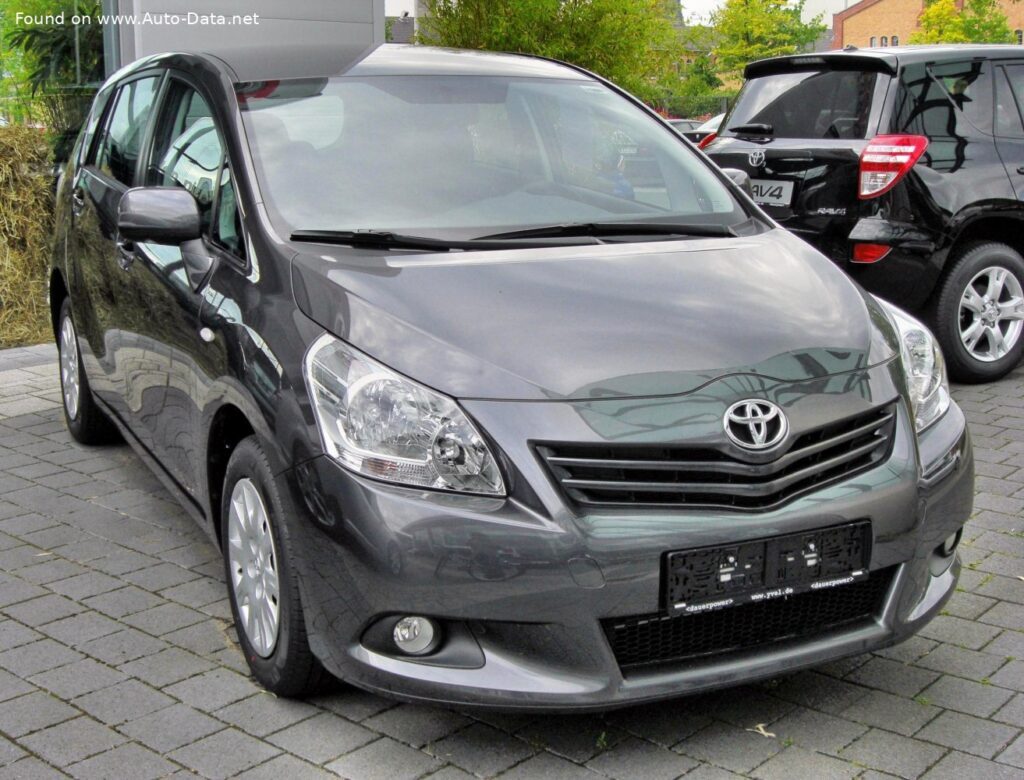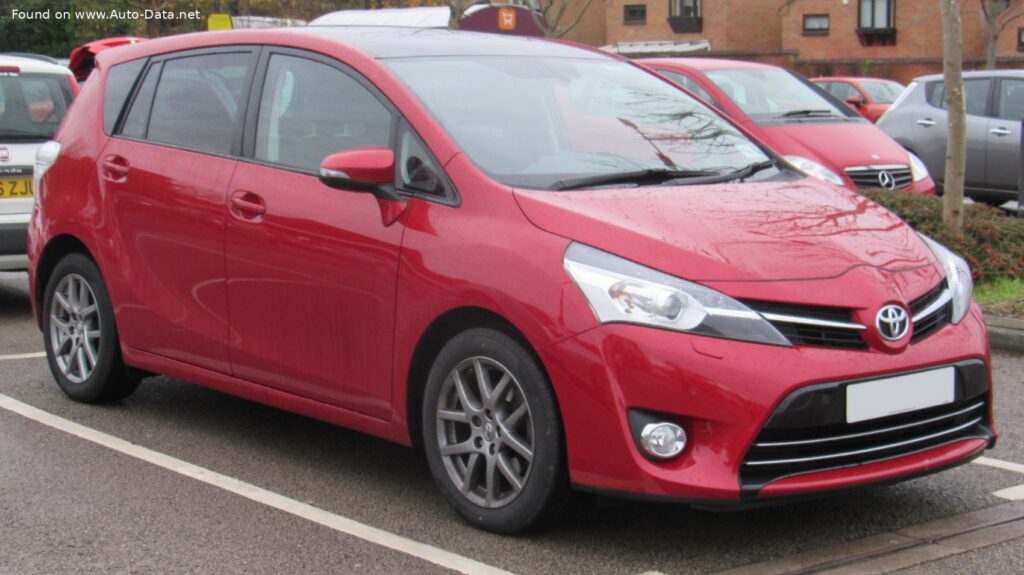
The Toyota Verso, specifically the facelifted model produced from 2013 to 2014, represents Toyota’s entry into the compact multi-purpose vehicle (MPV) segment. While not widely sold in the United States, the Verso was a significant vehicle in the European market, designed to compete with offerings like the Renault Scenic and Citroën C4 Picasso. This generation, characterized by its refreshed styling and efficient diesel engine options, aimed to provide a practical and family-oriented transportation solution. The 2.0 D-4D DPF variant, equipped with a 124 horsepower engine, was a popular choice for buyers prioritizing fuel economy and reasonable performance.
Toyota Verso (Facelift 2013) 2.0 D-4D DPF: An Overview
The Verso, known as the Toyota Ractis in Japan, was initially introduced in 2002. The facelifted version of the second-generation Verso, launched in 2013, brought with it updated exterior styling, interior enhancements, and improvements to the vehicle’s overall refinement. The primary focus of this update was to enhance the Verso’s appeal in a competitive market segment. The 2.0 D-4D DPF model was particularly noteworthy for its combination of a diesel engine, particulate filter (DPF) for reduced emissions, and a manual transmission. This configuration catered to European regulations and consumer preferences for fuel-efficient vehicles.
Engine & Performance
The heart of the 2013 Toyota Verso 2.0 D-4D DPF is a 2.0-liter inline-four cylinder diesel engine, designated as the 1AD-FTV. This engine produces 124 horsepower (Hp) and utilizes a turbocharger with an intercooler to enhance power output and efficiency. The engine employs a diesel common rail fuel injection system, contributing to improved combustion and reduced noise. The engine’s front, transverse mounting optimizes space utilization within the engine bay. Performance figures indicate a 0-60 mph (0-96 km/h) acceleration time of approximately 10.7 seconds, and a 0-62 mph (0-100 km/h) time of 11.3 seconds. The vehicle achieves a maximum speed of 114.95 mph (185 km/h). A key aspect of this engine is its adherence to Euro 5 emission standards, achieved through the inclusion of a diesel particulate filter (DPF) which traps soot particles, reducing harmful emissions. Fuel economy is a strong point, with combined cycle consumption rated at 4.9 liters per 100 kilometers (48 US mpg or 57.6 UK mpg).
Design & Features
The 2013 Toyota Verso is a five-door MPV designed to comfortably accommodate five passengers. Its body style prioritizes practicality and versatility, offering a spacious interior and flexible seating arrangements. The facelifted model features revised front-end styling, including a redesigned grille and headlights, giving it a more modern appearance. Inside, the Verso offers a functional and well-equipped cabin. Key features include a comfortable driving position, user-friendly controls, and ample storage compartments. The Verso’s rear seats can be folded or removed to create a larger cargo area, providing up to 1740 liters (61.45 cubic feet) of space with the seats down, and 484 liters (17.09 cubic feet) with all seats in place. Safety features, typical for its class and era, include ABS (Anti-lock Braking System) and a robust chassis designed for occupant protection. The steering utilizes a rack and pinion system for precise handling.
Practicality and Market Positioning
The Toyota Verso was specifically designed for the European market, where compact MPVs were highly popular due to their practicality and suitability for family life. Unlike the US market, where minivans and larger SUVs dominate the family vehicle segment, European consumers often prefer smaller, more fuel-efficient vehicles that are easier to maneuver in congested urban environments. The Verso filled this niche effectively, offering a balance of space, efficiency, and affordability. The manual transmission was a common preference in Europe, contributing to the Verso’s appeal to drivers who enjoy a more engaging driving experience.
Technical Specifications
| Brand | Toyota |
| Model | Verso |
| Generation | Verso (facelift 2013) |
| Type (Engine) | 2.0 D-4D DPF (124 Hp) |
| Start of production | January, 2013 |
| End of production | February, 2014 |
| Powertrain Architecture | Internal Combustion engine |
| Body type | MPV |
| Seats | 5 |
| Doors | 5 |
| Fuel consumption (urban) | 5.9 l/100 km (39.9 US mpg, 47.9 UK mpg, 16.9 km/l) |
| Fuel consumption (extra urban) | 4.4 l/100 km (53.5 US mpg, 64.2 UK mpg, 22.7 km/l) |
| Fuel consumption (combined) | 4.9 l/100 km (48 US mpg, 57.6 UK mpg, 20.4 km/l) |
| Fuel Type | Diesel |
| Acceleration 0 – 100 km/h | 11.3 sec |
| Acceleration 0 – 62 mph | 11.3 sec |
| Acceleration 0 – 60 mph | 10.7 sec |
| Maximum speed | 185 km/h (114.95 mph) |
| Emission standard | Euro 5 |
| Power | 124 Hp |
| Engine layout | Front, Transverse |
| Engine Model/Code | 1AD-FTV |
| Number of cylinders | 4 |
| Engine configuration | Inline |
| Number of valves per cylinder | 4 |
| Fuel injection system | Diesel Commonrail |
| Engine aspiration | Turbocharger, Intercooler |
| Valvetrain | DOHC |
| Engine oil capacity | 6.3 l (6.66 US qt, 5.54 UK qt) |
| Coolant capacity | 7.4 l (7.82 US qt, 6.51 UK qt) |
| Trunk (boot) space – minimum | 484 l (17.09 cu. ft.) |
| Trunk (boot) space – maximum | 1740 l (61.45 cu. ft.) |
| Length | 4460 mm (175.59 in.) |
| Width | 1790 mm (70.47 in.) |
| Height | 1620 mm (63.78 in.) |
| Wheelbase | 2780 mm (109.45 in.) |
| Minimum turning circle | 11.6 m (38.06 ft.) |
| Drivetrain Architecture | ICE drives front wheels |
| Drive wheel | Front wheel drive |
| Number of gears | 6 gears, manual transmission |
| Front brakes | Ventilated discs |
| Rear brakes | Drum |
| Assisting systems | ABS (Anti-lock braking system) |
| Steering type | Steering rack and pinion |