
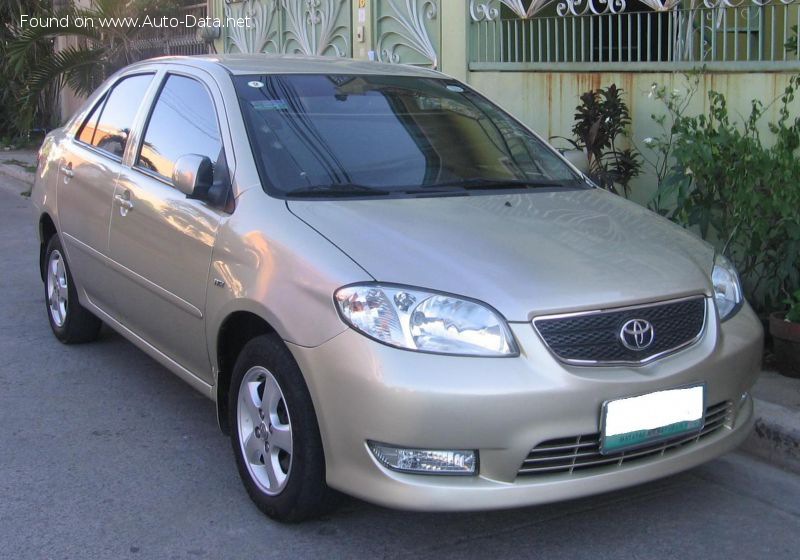
The Toyota Vios, specifically the first generation (Vios I) produced between 2002 and 2007, represents Toyota’s entry into the subcompact sedan market, primarily targeted towards developing nations in Southeast Asia, Latin America, and parts of Africa. While not officially sold in the United States during this period, the Vios played a crucial role in Toyota’s global sales strategy, offering an affordable and reliable transportation solution. The Vios I 1.5, equipped with a 1.5-liter engine producing 110 horsepower, was a popular choice due to its balance of fuel efficiency, practicality, and cost-effectiveness. It served as a successor to the Toyota Soluna, aiming to provide a more modern and refined experience.
Toyota Vios I 1.5: A Detailed Overview
The Vios I was designed to appeal to a broad customer base seeking a dependable and economical vehicle. It quickly gained traction in markets where affordability and fuel economy were paramount. The first generation Vios established a foundation for subsequent iterations, which would eventually see the model offered in a wider range of global markets. The 1.5-liter engine variant was particularly significant, offering a sweet spot between performance and fuel consumption for everyday driving.
Engine & Performance
The heart of the Toyota Vios I 1.5 is a 1.5-liter (1496 cm3 or 91.29 cu. in.) inline four-cylinder gasoline engine. This naturally aspirated engine produces 110 horsepower at 6000 rpm and 140 Nm (103.26 lb.-ft.) of torque at 4400 rpm. The engine utilizes a multi-port fuel injection system to optimize fuel delivery and combustion efficiency. With a compression ratio of 10.5:1, the engine delivers a respectable power-to-weight ratio of 8.5 kg/Hp (117 Hp/tonne) and a torque-to-weight ratio of 6.7 kg/Nm (148.9 Nm/tonne). Power per liter is rated at 73.5 Hp/l. The engine is transversely mounted at the front of the vehicle, driving the front wheels. The Vios I 1.5 was typically equipped with a 5-speed manual transmission, providing drivers with direct control over gear selection. This configuration contributed to the vehicle’s relatively fuel-efficient operation and responsive driving experience.
Design & Features
The Toyota Vios I is a four-door sedan with a relatively conservative and functional design. Its exterior styling prioritized practicality and affordability over flamboyant aesthetics. The vehicle comfortably seats five passengers and offers a trunk capacity of 400 liters (14.13 cu. ft.). The body dimensions are 4285 mm (168.7 in.) in length, 1695 mm (66.73 in.) in width, and 1435 mm (56.5 in.) in height, with a wheelbase of 2500 mm (98.43 in.). Ground clearance is 143 mm (5.63 in.).
Inside, the Vios I offered a basic but functional interior. Features were generally limited to the essentials, reflecting its target market. Standard equipment typically included air conditioning, basic instrumentation, and cloth upholstery. Safety features were also relatively modest by modern standards, but included front ventilated disc brakes and rear disc brakes. The suspension system comprised an independent McPherson strut setup at the front and a semi-independent coil spring arrangement at the rear, providing a reasonable level of ride comfort. The vehicle rides on 14-inch wheels with tire size 175/65 R14.
Technical Specifications
| Brand | Toyota |
| Model | Vios |
| Generation | Vios I |
| Type (Engine) | 1.5 (110 Hp) |
| Start of production | 2002 |
| End of production | 2007 |
| Powertrain Architecture | Internal Combustion engine |
| Body type | Sedan |
| Seats | 5 |
| Doors | 4 |
| Fuel Type | Petrol (Gasoline) |
| Weight-to-power ratio | 8.5 kg/Hp, 117 Hp/tonne |
| Weight-to-torque ratio | 6.7 kg/Nm, 148.9 Nm/tonne |
| Power | 110 Hp @ 6000 rpm |
| Power per litre | 73.5 Hp/l |
| Torque | 140 Nm @ 4400 rpm / 103.26 lb.-ft. @ 4400 rpm |
| Engine layout | Front, Transverse |
| Engine displacement | 1496 cm3 / 91.29 cu. in. |
| Number of cylinders | 4 |
| Engine configuration | Inline |
| Cylinder Bore | 75 mm / 2.95 in. |
| Piston Stroke | 84.7 mm / 3.33 in. |
| Compression ratio | 10.5:1 |
| Number of valves per cylinder | 4 |
| Fuel injection system | Multi-port manifold injection |
| Engine aspiration | Naturally aspirated engine |
| Kerb Weight | 940 kg / 2072.35 lbs |
| Max. weight | 1480 kg / 3262.84 lbs |
| Max load | 540 kg / 1190.5 lbs |
| Trunk (boot) space – minimum | 400 l / 14.13 cu. ft. |
| Fuel tank capacity | 45 l / 11.89 US gal | 9.9 UK gal |
| Length | 4285 mm / 168.7 in. |
| Width | 1695 mm / 66.73 in. |
| Height | 1435 mm / 56.5 in. |
| Wheelbase | 2500 mm / 98.43 in. |
| Front track | 1455 mm / 57.28 in. |
| Rear (Back) track | 1430 mm / 56.3 in. |
| Ride height (ground clearance) | 143 mm / 5.63 in. |
| Drivetrain Architecture | The Internal combustion engine (ICE) drives the front wheels of the vehicle. |
| Drive wheel | Front wheel drive |
| Number of gears and type of gearbox | 5 gears, manual transmission |
| Front suspension | Independent type McPherson |
| Rear suspension | Semi-independent, coil spring |
| Front brakes | Ventilated discs |
| Rear brakes | Disc |
| Tires size | 175/65 R14 |
| Wheel rims size | 14 |
The Toyota Vios I 1.5, while not a performance car, offered a reliable and economical transportation solution for a wide range of drivers. Its simple design, coupled with Toyota’s reputation for durability, made it a popular choice in its target markets. The Vios I laid the groundwork for future generations, solidifying Toyota’s presence in the subcompact sedan segment globally.

