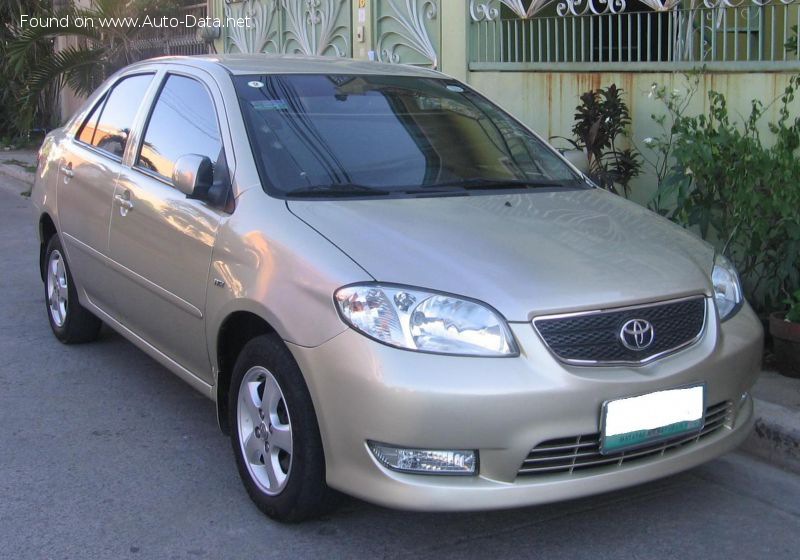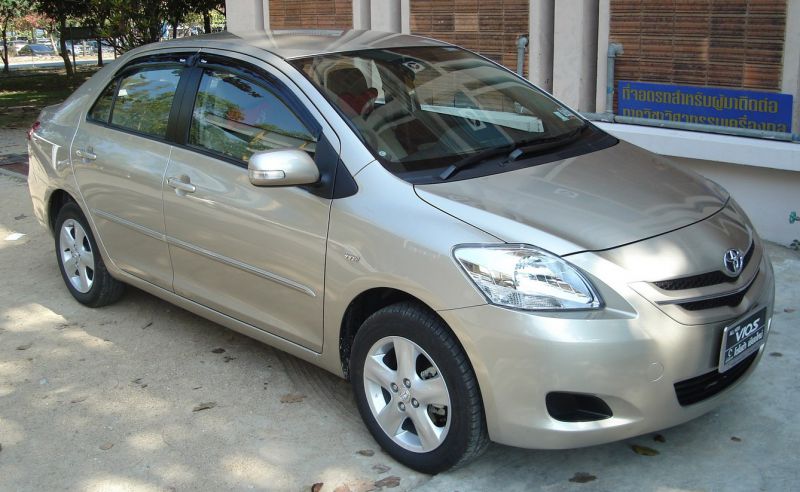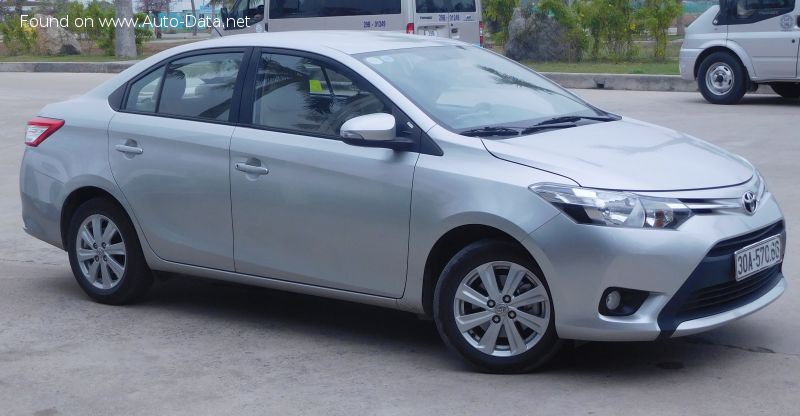
The Toyota Vios III 1.5 VVTi Automatic, produced between 2013 and 2016, represents the third generation of Toyota’s subcompact sedan, primarily aimed at the Asian market. While not officially sold in the United States, the Vios holds significant importance in regions like Thailand, the Philippines, and Indonesia, where it consistently ranks among the best-selling vehicles in its class. This generation of the Vios offered a blend of affordability, fuel efficiency, and practicality, making it a popular choice for families and commuters. It served as a crucial entry point into the Toyota brand for many consumers in these developing markets.
Toyota Vios III: An Overview
The Vios III, built on the Toyota B platform, was designed to offer a more refined and spacious interior compared to its predecessors. It featured updated styling, improved safety features, and a more efficient engine. The 1.5 VVTi variant, equipped with a 1.5-liter gasoline engine and a four-speed automatic transmission, was a common configuration, balancing performance with fuel economy. The vehicle’s focus was on providing reliable transportation at a competitive price point, catering to the needs of a broad customer base.
Engine & Performance
The heart of the Toyota Vios III 1.5 VVTi Automatic is the 2NR-FE 1.5-liter inline-four cylinder gasoline engine. This naturally aspirated engine produces 109 horsepower at 6000 rpm and 141 Nm (104 lb.-ft.) of torque at 4200 rpm. While not a performance-oriented vehicle, the engine provides adequate power for daily commuting and highway driving. The four-speed automatic transmission delivers smooth gear changes, contributing to a comfortable driving experience. Acceleration from 0 to 100 km/h (0-62 mph) takes approximately 12 seconds, and it reaches a top speed of 170 km/h (105.63 mph). The engine’s power-to-weight ratio is 9.7 kg/Hp, and the torque-to-weight ratio is 7.5 kg/Nm, indicating a reasonable balance between power and vehicle weight. Fuel consumption is rated at 6.3 liters per 100 kilometers (37.3 US mpg, 44.8 UK mpg), and CO2 emissions are 147 g/km, making it relatively efficient for its class.
Design & Features
The Toyota Vios III is a traditional four-door sedan with a relatively conservative design. The exterior styling features a prominent front grille, swept-back headlights, and a simple, yet functional, body shape. The interior is designed with practicality in mind, offering comfortable seating for five passengers. The trunk provides 475 liters (16.77 cu. ft.) of cargo space, sufficient for everyday needs. Safety features included ABS (Anti-lock Braking System) as standard, enhancing braking performance and stability. The vehicle’s dimensions are 4410 mm (173.62 in.) in length, 1700 mm (66.93 in.) in width, and 1475 mm (58.07 in.) in height, with a wheelbase of 2550 mm (100.39 in.). The ride height (ground clearance) is 147 mm (5.79 in.). The Vios III aimed to provide a comfortable and reliable driving experience, prioritizing practicality and affordability over sporty aesthetics.
Technical Specifications
| Brand | Toyota |
| Model | Vios |
| Generation | Vios III |
| Type (Engine) | 1.5 VVTi (109 Hp) Automatic |
| Start of production | 2013 |
| End of production | 2016 |
| Powertrain Architecture | Internal Combustion engine |
| Body type | Sedan |
| Seats | 5 |
| Doors | 4 |
| Fuel consumption (combined) | 6.3 l/100 km |
| Fuel consumption (US mpg) | 37.3 US mpg |
| Fuel consumption (UK mpg) | 44.8 UK mpg |
| CO2 emissions | 147 g/km |
| Fuel Type | Petrol (Gasoline) |
| Acceleration 0 – 100 km/h | 12 sec |
| Acceleration 0 – 62 mph | 12 sec |
| Acceleration 0 – 60 mph | 11.4 sec |
| Maximum speed | 170 km/h (105.63 mph) |
| Weight-to-power ratio | 9.7 kg/Hp |
| Weight-to-torque ratio | 7.5 kg/Nm |
| Power | 109 Hp @ 6000 rpm |
| Power per litre | 72.8 Hp/l |
| Torque | 141 Nm @ 4200 rpm (104 lb.-ft. @ 4200 rpm) |
| Engine layout | Front, Transverse |
| Engine Model/Code | 2NR-FE |
| Engine displacement | 1497 cm3 (91.35 cu. in.) |
| Number of cylinders | 4 |
| Engine configuration | Inline |
| Cylinder Bore | 75 mm (2.95 in.) |
| Piston Stroke | 84.7 mm (3.33 in.) |
| Compression ratio | 10.5:1 |
| Number of valves per cylinder | 4 |
| Fuel injection system | Multi-port manifold injection |
| Engine aspiration | Naturally aspirated engine |
| Valvetrain | DOHC |
| Engine oil capacity | 3.3 l (3.49 US qt | 2.9 UK qt) |
| Kerb Weight | 1060 kg (2336.9 lbs.) |
| Trunk (boot) space – minimum | 475 l (16.77 cu. ft.) |
| Fuel tank capacity | 42 l (11.1 US gal | 9.24 UK gal) |
| Length | 4410 mm (173.62 in.) |
| Width | 1700 mm (66.93 in.) |
| Height | 1475 mm (58.07 in.) |
| Wheelbase | 2550 mm (100.39 in.) |
| Front track | 1455 mm (57.28 in.) |
| Rear (Back) track | 1445 mm (56.89 in.) |
| Ride height (ground clearance) | 147 mm (5.79 in.) |
| Minimum turning circle (turning diameter) | 10.2 m (33.46 ft.) |
| Drivetrain Architecture | Front wheel drive |
| Number of gears and type of gearbox | 4 gears, automatic transmission |
| Front suspension | Independent, type McPherson with coil spring and anti-roll bar |
| Rear suspension | Semi-independent, coil spring |
| Front brakes | Ventilated discs |
| Rear brakes | Drum |
| Assisting systems | ABS (Anti-lock braking system) |
| Tires size | 195/50 R16 |
| Wheel rims size | 16 |
In conclusion, the Toyota Vios III 1.5 VVTi Automatic was a significant vehicle in its target markets, offering a practical, reliable, and affordable transportation solution. While not available in the US, its success highlights Toyota’s ability to cater to the specific needs of diverse automotive markets around the world.