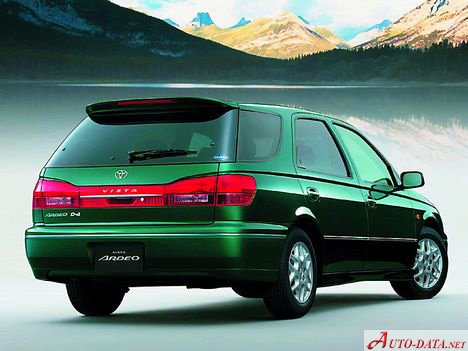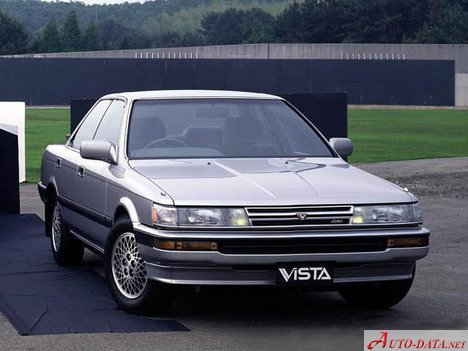
The Toyota Vista (V20) 2.0i, produced between 1986 and 1990, represents a significant offering from Toyota during a period of evolving automotive design and technology. While not officially sold in the United States, the Vista held a prominent position in the Japanese domestic market (JDM) as a comfortable and reliable mid-size sedan. It served as a more upscale alternative to the Toyota Corolla, offering a larger interior and more refined driving experience. The V20 generation, specifically the 2.0i variant, was characterized by its fuel-efficient engine, front-wheel-drive configuration, and focus on practicality for family transportation. This model competed with other Japanese sedans like the Honda Accord and Nissan Bluebird, emphasizing Toyota’s commitment to quality and innovation within the competitive JDM landscape.
Toyota Vista (V20) 2.0i: A Detailed Overview
The Toyota Vista, in its various iterations, was a key model for Toyota, demonstrating the company’s ability to cater to diverse consumer needs. The V20 generation, launched in 1986, marked a step forward in terms of styling and engineering compared to its predecessors. It was designed to appeal to buyers seeking a spacious, comfortable, and dependable sedan. The 2.0i trim level, equipped with the 3S-FE engine, provided a balance of performance and fuel economy, making it a popular choice for daily commuting and family trips. The Vista’s design language reflected the aesthetic trends of the late 1980s, with clean lines and a focus on aerodynamic efficiency. It was available exclusively as a four-door sedan, prioritizing practicality and passenger comfort.
Engine & Performance
The heart of the Toyota Vista (V20) 2.0i is the 3S-FE 2.0-liter inline-four cylinder engine. This naturally aspirated engine produces 90 horsepower at 5,600 rpm and 169 Nm (124.65 lb.-ft.) of torque at 4,400 rpm. While not a performance-oriented engine, the 3S-FE was known for its reliability and smooth operation. The engine’s power output translates to a power-to-weight ratio of 74.4 horsepower per tonne and a torque-to-weight ratio of 139.7 Nm per tonne. The engine features a longitudinal front-engine layout, contributing to balanced handling characteristics. The Vista 2.0i was equipped with a five-speed manual transmission, providing drivers with precise control over gear selection. This configuration allowed for a reasonably engaging driving experience, while still prioritizing fuel efficiency. The engine’s 9:1 compression ratio and multi-port fuel injection system contributed to its overall efficiency and responsiveness. The 3S-FE engine was a mainstay in Toyota’s lineup for many years, renowned for its durability and ease of maintenance.
Design & Features
The Toyota Vista (V20) 2.0i boasts a classic four-door sedan body style, designed with practicality and comfort in mind. Its dimensions – 4,520 mm (177.95 in) in length, 1,690 mm (66.54 in) in width, and 1,370 mm (53.94 in) in height – provide ample interior space for passengers and cargo. The wheelbase of 2,600 mm (102.36 in) contributes to a comfortable ride quality. The exterior design is characterized by clean lines and a relatively understated aesthetic, typical of Japanese sedans of the era. Inside, the Vista 2.0i offered a comfortable and functional cabin, with seating for five passengers. While not laden with luxury features, the interior was well-appointed for its time, with durable materials and a focus on ergonomics. Safety features were relatively basic by modern standards, but included seatbelts and a robust chassis construction. The Vista’s design prioritized passenger comfort and practicality, making it a suitable vehicle for families and commuters. The front-wheel-drive configuration maximized interior space and contributed to improved fuel efficiency.
Technical Specifications
| Brand | Toyota |
| Model | Vista |
| Generation | Vista (V20) |
| Type (Engine) | 2.0i (90 Hp) |
| Start of production | 1986 |
| End of production | 1990 |
| Powertrain Architecture | Internal Combustion engine |
| Body type | Sedan |
| Seats | 5 |
| Doors | 4 |
| Fuel Type | Petrol (Gasoline) |
| Weight-to-power ratio | 13.4 kg/Hp |
| Hp/tonne | 74.4 Hp/tonne |
| Weight-to-torque ratio | 7.2 kg/Nm |
| Nm/tonne | 139.7 Nm/tonne |
| Power | 90 Hp @ 5600 rpm |
| Power per litre | 45 Hp/l |
| Torque | 169 Nm @ 4400 rpm |
| Torque (lb.-ft.) | 124.65 lb.-ft. @ 4400 rpm |
| Engine layout | Front, Longitudinal |
| Engine Model/Code | 3S-FE |
| Engine displacement | 1998 cm3 |
| Engine displacement (cu. in.) | 121.93 cu. in. |
| Number of cylinders | 4 |
| Engine configuration | V-engine |
| Cylinder Bore | 86 mm |
| Cylinder Bore (in.) | 3.39 in. |
| Piston Stroke | 86 mm |
| Piston Stroke (in.) | 3.39 in. |
| Compression ratio | 9:1 |
| Engine aspiration | Naturally aspirated engine |
| Kerb Weight | 1210 kg |
| Kerb Weight (lbs.) | 2667.59 lbs. |
| Length | 4520 mm |
| Length (in.) | 177.95 in. |
| Width | 1690 mm |
| Width (in.) | 66.54 in. |
| Height | 1370 mm |
| Height (in.) | 53.94 in. |
| Wheelbase | 2600 mm |
| Wheelbase (in.) | 102.36 in. |
| Drivetrain Architecture | The Internal combustion engine (ICE) drives the front wheels of the vehicle. |
| Drive wheel | Front wheel drive |
| Number of gears and type of gearbox | 5 gears, manual transmission |
In conclusion, the Toyota Vista (V20) 2.0i was a well-rounded and reliable sedan that served as a popular choice for Japanese buyers in the late 1980s. While not a high-performance vehicle, it offered a comfortable ride, good fuel economy, and Toyota’s renowned build quality. Its significance lies in its representation of Toyota’s commitment to providing practical and dependable transportation solutions for a wide range of consumers. Though never officially available in the US market, the Vista remains a notable example of Japanese automotive engineering from a pivotal era.