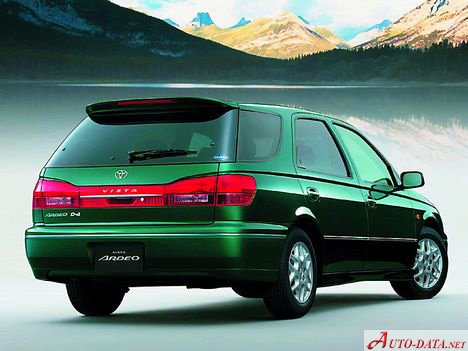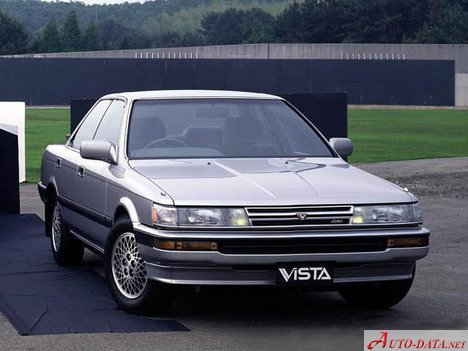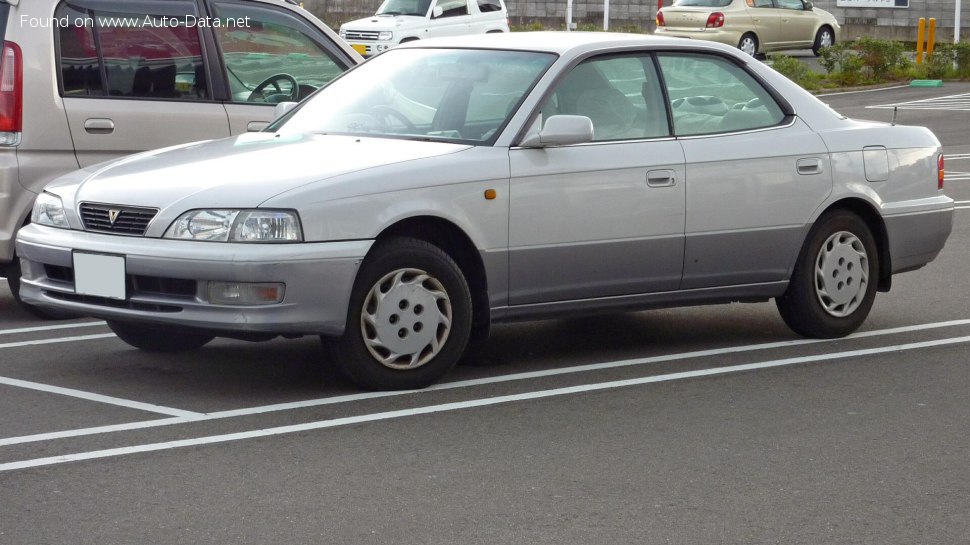
The Toyota Vista (V40), produced between 1995 and 1998, represents a significant iteration in Toyota’s lineup, primarily aimed at the Japanese domestic market (JDM). While not officially sold in the United States, the Vista occupied a crucial space as a comfortable, well-equipped, and reliable family sedan. It served as a slightly more upscale alternative to the Toyota Corolla and Camry, offering a blend of practicality and refinement. The V40 generation, specifically the 2.0 i 16V variant with its 133 horsepower engine, was a popular choice for Japanese buyers seeking a dependable and efficient vehicle.
Toyota Vista (V40) 2.0 i 16V: An Overview
The Vista, throughout its various generations, was known for its focus on passenger comfort and build quality. The V40 continued this tradition, offering a spacious interior and a smooth ride. It was positioned as a competitor to other Japanese sedans like the Honda Accord and Nissan Bluebird, emphasizing reliability and ease of use. The 2.0 i 16V model, with its 16-valve engine, provided a noticeable step up in performance compared to lower-spec models, making it suitable for both city driving and longer highway journeys.
Engine & Performance
The heart of the Toyota Vista (V40) 2.0 i 16V is a naturally aspirated, 1998 cc (121.93 cubic inches) inline-four cylinder engine. This engine produces 133 horsepower at 5800 rpm and 183 Nm (134.97 lb.-ft.) of torque at 4400 rpm. The power-to-weight ratio of 9 kg/Hp (110.8 Hp/tonne) and torque-to-weight ratio of 6.6 kg/Nm (152.5 Nm/tonne) contribute to a responsive driving experience. The engine features multi-port fuel injection and a double overhead camshaft (DOHC) valvetrain, optimizing airflow and combustion efficiency. Power is delivered to the front wheels via a four-speed automatic transmission. Fuel economy is rated at 6.2 liters per 100 kilometers (37.9 US mpg, 45.6 UK mpg, 16.1 km/l), reflecting Toyota’s commitment to efficiency. The engine’s 9.5:1 compression ratio further aids in balancing performance and fuel consumption.
Design & Features
The Toyota Vista (V40) is a four-door sedan with a classic, understated design typical of Japanese cars from the mid-1990s. It comfortably seats five passengers and offers a practical amount of interior space. The exterior styling is characterized by clean lines and a relatively conservative aesthetic. Inside, the Vista prioritizes comfort and functionality. Features included power steering, ventilated front disc brakes, and disc brakes on the rear wheels. An Anti-lock Braking System (ABS) was included as a safety feature. The suspension utilizes a spring strut setup for both the front and rear axles, providing a comfortable ride quality. The vehicle’s dimensions – 4625 mm (182.09 in) in length, 1695 mm (66.73 in) in width, and 1410 mm (55.51 in) in height – place it squarely within the mid-size sedan category. The wheelbase measures 2650 mm (104.33 in), contributing to a stable and balanced ride.
Technical Specifications
| Brand | Toyota |
| Model | Vista |
| Generation | Vista (V40) |
| Type (Engine) | 2.0 i 16V (133 Hp) |
| Start of production | 1995 |
| End of production | 1998 |
| Powertrain Architecture | Internal Combustion engine |
| Body type | Sedan |
| Seats | 5 |
| Doors | 4 |
| Fuel consumption (combined) | 6.2 l/100 km |
| Fuel consumption (US mpg) | 37.9 US mpg |
| Fuel consumption (UK mpg) | 45.6 UK mpg |
| Fuel consumption (km/l) | 16.1 km/l |
| Fuel Type | Petrol (Gasoline) |
| Weight-to-power ratio | 9 kg/Hp |
| Hp/tonne | 110.8 Hp/tonne |
| Weight-to-torque ratio | 6.6 kg/Nm |
| Nm/tonne | 152.5 Nm/tonne |
| Power | 133 Hp @ 5800 rpm |
| Power per litre | 66.6 Hp/l |
| Torque | 183 Nm @ 4400 rpm |
| Torque (lb.-ft.) | 134.97 lb.-ft. @ 4400 rpm |
| Engine layout | Front, Transverse |
| Engine displacement | 1998 cm3 |
| Engine displacement (cu. in.) | 121.93 cu. in. |
| Number of cylinders | 4 |
| Engine configuration | Inline |
| Cylinder Bore | 86 mm |
| Cylinder Bore (in.) | 3.39 in. |
| Piston Stroke | 86 mm |
| Piston Stroke (in.) | 3.39 in. |
| Compression ratio | 9.5:1 |
| Number of valves per cylinder | 4 |
| Fuel injection system | Multi-port manifold injection |
| Engine aspiration | Naturally aspirated engine |
| Valvetrain | DOHC |
| Kerb Weight | 1200 kg |
| Kerb Weight (lbs.) | 2645.55 lbs. |
| Max. weight | 1475 kg |
| Max. weight (lbs.) | 3251.82 lbs. |
| Max load | 275 kg |
| Max load (lbs.) | 606.27 lbs. |
| Fuel tank capacity | 60 l |
| Fuel tank capacity (US gal) | 15.85 US gal |
| Fuel tank capacity (UK gal) | 13.2 UK gal |
| Length | 4625 mm |
| Length (in.) | 182.09 in. |
| Width | 1695 mm |
| Width (in.) | 66.73 in. |
| Height | 1410 mm |
| Height (in.) | 55.51 in. |
| Wheelbase | 2650 mm |
| Wheelbase (in.) | 104.33 in. |
| Front track | 1480 mm |
| Front track (in.) | 58.27 in. |
| Rear track | 1450 mm |
| Rear track (in.) | 57.09 in. |
| Drivetrain Architecture | ICE, Front wheel drive |
| Drive wheel | Front wheel drive |
| Number of gears | 4 |
| Gearbox type | automatic transmission |
| Front suspension | Spring Strut |
| Rear suspension | Spring Strut |
| Front brakes | Ventilated discs |
| Rear brakes | Disc |
| Assisting systems | ABS (Anti-lock braking system) |
| Steering type | Steering rack and pinion |
| Tires size | 185/70 R14 S |
The Toyota Vista (V40) 2.0 i 16V, while never officially available in the US market, remains a testament to Toyota’s engineering prowess and commitment to building reliable and comfortable vehicles. Its blend of efficiency, practicality, and refinement made it a popular choice in Japan during its production run, and it continues to be appreciated by enthusiasts today.