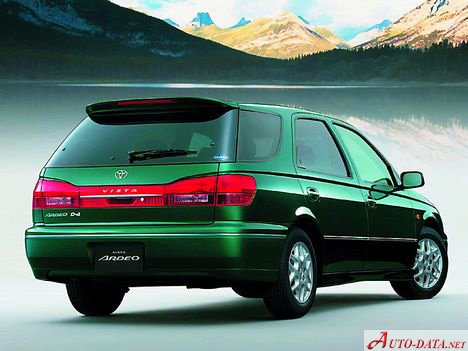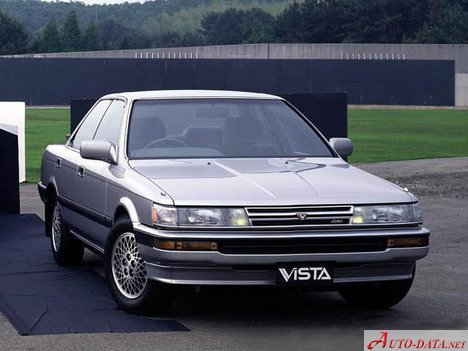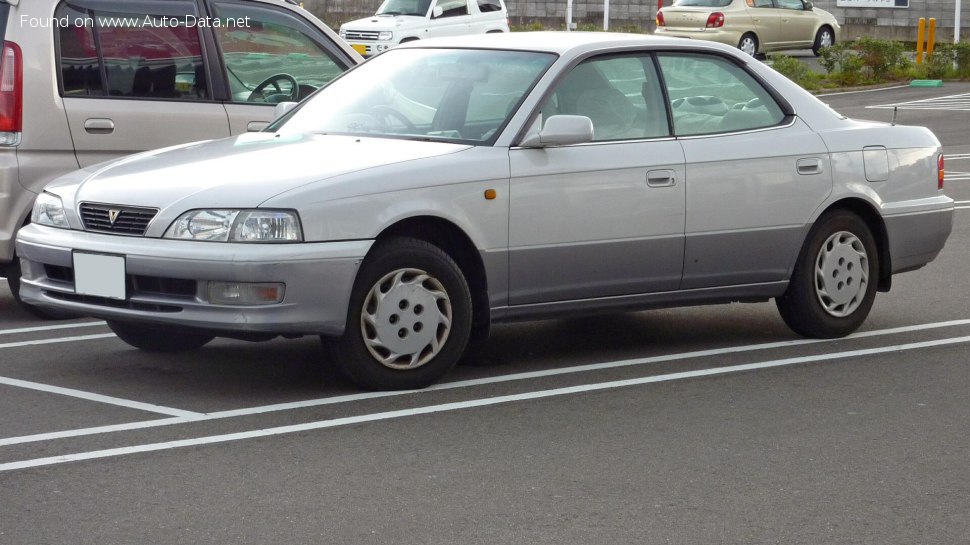
The Toyota Vista (V40), produced between 1994 and 1998, was a compact sedan primarily aimed at the Japanese domestic market (JDM). While not officially sold in the United States, the Vista occupied an important niche in Japan as a comfortable, practical, and relatively affordable family vehicle. It represented Toyota’s commitment to offering a range of options within the competitive Japanese automotive landscape. The V40 generation, specifically the 2.0 TD variant with its turbocharged diesel engine and automatic transmission, offered a blend of fuel efficiency and reasonable performance, catering to drivers seeking a dependable and economical mode of transportation. This model competed with other Japanese sedans like the Honda Accord Cielo and Nissan Sentra.
Toyota Vista (V40) 2.0 TD: An Overview
The Vista, throughout its various generations, served as a more conservatively styled alternative to the Toyota Camry, often appealing to buyers who preferred a less flamboyant aesthetic. The V40 generation continued this tradition, offering a practical and well-equipped sedan. The 2.0 TD model, powered by a 1.974-liter turbocharged diesel engine, was particularly notable for its fuel economy and torque output, making it suitable for both city driving and longer highway journeys. The inclusion of an automatic transmission further enhanced its appeal to a broader range of drivers.
Engine & Performance
The heart of the Toyota Vista V40 2.0 TD is its 1974 cc inline-four cylinder diesel engine. This engine, equipped with a turbocharger and precombustion chamber fuel injection, produced 91 horsepower at 4400 rpm and 190 Nm (140.14 lb.-ft.) of torque at 2600 rpm. While the horsepower figure might seem modest by modern standards, the diesel engine’s torque characteristics provided ample pulling power for everyday driving. The engine’s power-to-weight ratio of 72.8 hp per tonne and torque-to-weight ratio of 152 Nm per tonne contributed to a reasonably responsive driving experience. The engine’s compression ratio of 23:1 is typical for a diesel engine, contributing to its efficiency. The overhead camshaft (OHC) valvetrain design helped optimize engine breathing and performance. The four-speed automatic transmission provided smooth and convenient gear changes, further enhancing the vehicle’s usability.
Design & Features
The Toyota Vista V40 was a traditional four-door sedan, offering seating for five passengers. Its design was characterized by clean lines and a relatively understated appearance, reflecting the conservative tastes of many Japanese buyers. The vehicle’s dimensions – 4640 mm in length, 1695 mm in width, and 1395 mm in height – positioned it squarely within the compact sedan segment. The 2600 mm wheelbase provided a comfortable ride and adequate interior space. Features included ventilated disc brakes on the front wheels and drum brakes on the rear, providing adequate stopping power. The inclusion of an Anti-lock Braking System (ABS) was a notable safety feature for its time, enhancing braking stability, particularly on slippery surfaces. The steering system utilized a rack and pinion setup, offering precise and responsive handling. The vehicle rode on 14-inch wheels fitted with 185/70 R14 tires.
Technical Specifications
| Brand | Toyota |
| Model | Vista |
| Generation | Vista (V40) |
| Type | 2.0 TD (91 Hp) Automatic |
| Start of production | 1994 |
| End of production | 1998 |
| Powertrain Architecture | Internal Combustion engine |
| Body type | Sedan |
| Seats | 5 |
| Doors | 4 |
| Fuel Type | Diesel |
| Weight-to-power ratio | 13.7 kg/Hp |
| Weight-to-torque ratio | 6.6 kg/Nm |
| Power | 91 Hp @ 4400 rpm |
| Power per litre | 46.1 Hp/l |
| Torque | 190 Nm @ 2600 rpm / 140.14 lb.-ft. @ 2600 rpm |
| Engine layout | Front, Transverse |
| Engine displacement | 1974 cm3 / 120.46 cu. in. |
| Number of cylinders | 4 |
| Engine configuration | Inline |
| Cylinder Bore | 86 mm / 3.39 in. |
| Piston Stroke | 85 mm / 3.35 in. |
| Compression ratio | 23:1 |
| Number of valves per cylinder | 2 |
| Fuel injection system | Precombustion chamber injection |
| Engine aspiration | Turbocharger |
| Valvetrain | OHC |
| Kerb Weight | 1250 kg / 2755.78 lbs |
| Max. weight | 1525 kg / 3362.05 lbs |
| Max load | 275 kg / 606.27 lbs |
| Fuel tank capacity | 60 l / 15.85 US gal | 13.2 UK gal |
| Length | 4640 mm / 182.68 in. |
| Width | 1695 mm / 66.73 in. |
| Height | 1395 mm / 54.92 in. |
| Wheelbase | 2600 mm / 102.36 in. |
| Front track | 1480 mm / 58.27 in. |
| Rear track | 1440 mm / 56.69 in. |
| Drivetrain Architecture | ICE, Front wheel drive |
| Drive wheel | Front wheel drive |
| Number of gears and type of gearbox | 4 gears, automatic transmission |
| Front suspension | Spring Strut |
| Rear suspension | Spring Strut |
| Front brakes | Ventilated discs |
| Rear brakes | Drum |
| Assisting systems | ABS |
| Steering type | Steering rack and pinion |
| Tires size | 185/70 R14 S |
| Wheel rims size | 14 |
The Toyota Vista V40 2.0 TD, while not a vehicle widely recognized in the United States, represents a significant example of Japanese automotive engineering and design during the mid-1990s. Its focus on fuel efficiency, practicality, and reliability made it a popular choice for Japanese families, and its turbocharged diesel engine provided a compelling combination of performance and economy.