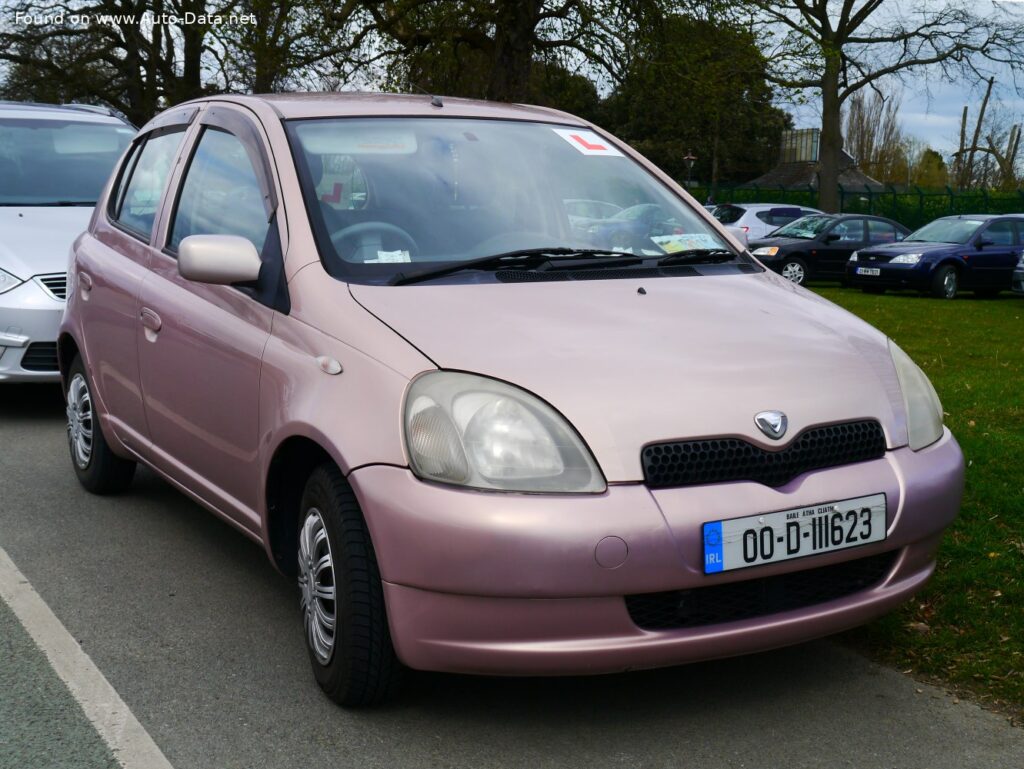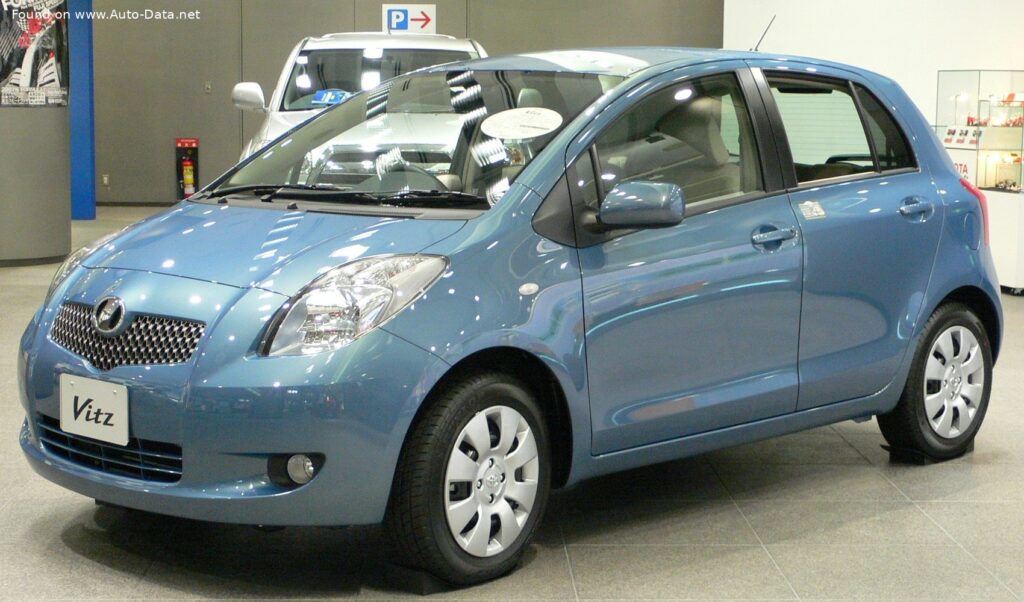
The Toyota Vitz, known as the Toyota Yaris in many global markets including the United States, is a subcompact hatchback produced by Toyota Motor Corporation. The Vitz II, manufactured between 2005 and 2011, represents the second generation of this popular model. While not directly sold as the Vitz in the US during this period, the Yaris shared a similar platform and targeted the same segment – economical, fuel-efficient transportation for urban environments. The Vitz II 1.0 i 12V, powered by a 1.0-liter engine producing 71 horsepower, was a mainstay in the Japanese and European markets, offering a practical and affordable option for first-time car buyers and city commuters.
Toyota Vitz II 1.0 i 12V: An Overview
The second-generation Vitz (XP90 chassis) marked a significant evolution from its predecessor, boasting a more refined design, improved interior space, and enhanced safety features. It was designed to appeal to a broader audience, moving beyond a purely utilitarian image. The 1.0 i 12V variant, with its small displacement engine, was particularly popular in regions with high fuel costs and stringent emissions regulations. Its focus was on maximizing fuel economy and minimizing environmental impact, making it a responsible choice for environmentally conscious drivers. The Vitz II competed with other subcompact hatchbacks like the Honda Fit, Suzuki Swift, and Peugeot 206.
Engine & Performance
The heart of the Vitz II 1.0 i 12V is the 1KR-FE engine, a 996 cc (60.78 cubic inches) inline-four cylinder gasoline engine. This engine utilizes a multi-port fuel injection system and a double overhead camshaft (DOHC) valvetrain with four valves per cylinder. It produces a maximum power output of 71 horsepower at 6000 rpm and 94 Nm (69.33 lb-ft) of torque at 3600 rpm. While not a performance-oriented engine, it provides adequate power for city driving and short highway trips. The engine’s relatively light weight contributes to a favorable weight-to-power ratio of 14.1 kg/Hp (71 Hp/tonne) and a weight-to-torque ratio of 10.6 kg/Nm (94 Nm/tonne). The naturally aspirated configuration and compact size prioritize efficiency over outright power. The engine is transversely mounted at the front of the vehicle, driving the front wheels.
Design & Features
The Vitz II adopted a more contemporary and rounded design compared to the first generation. The five-door hatchback body style provides easy access to the cabin and a relatively spacious interior for its size. The interior was designed with practicality in mind, featuring durable materials and a functional layout. Safety features, while not as comprehensive as those found in larger vehicles, were improved over the previous generation and included an Anti-lock Braking System (ABS) as standard equipment. The Vitz II prioritized maximizing interior space within a small footprint, making it ideal for navigating congested urban streets and parking in tight spaces. The electric power steering system further enhanced maneuverability. The vehicle’s design focused on creating a cheerful and approachable aesthetic, appealing to a younger demographic.
Technical Specifications
| Brand | Toyota |
| Model | Vitz |
| Generation | Vitz II |
| Type (Engine) | 1.0 i 12V (71 Hp) |
| Start of production | 2005 |
| End of production | 2011 |
| Powertrain Architecture | Internal Combustion engine |
| Body type | Hatchback |
| Seats | 5 |
| Doors | 5 |
| Fuel Type | Petrol (Gasoline) |
| Weight-to-power ratio | 14.1 kg/Hp |
| Weight-to-torque ratio | 10.6 kg/Nm |
| Power | 71 Hp @ 6000 rpm |
| Power per litre | 71.3 Hp/l |
| Torque | 94 Nm @ 3600 rpm |
| Torque (lb-ft) | 69.33 lb.-ft. @ 3600 rpm |
| Engine layout | Front, Transverse |
| Engine Model/Code | 1KR-FE |
| Engine displacement | 996 cm3 |
| Engine displacement (cu. in.) | 60.78 cu. in. |
| Number of cylinders | 4 |
| Engine configuration | Inline |
| Cylinder Bore | 69 mm |
| Cylinder Bore (in.) | 2.72 in. |
| Piston Stroke | 66.7 mm |
| Piston Stroke (in.) | 2.63 in. |
| Compression ratio | 10:1 |
| Number of valves per cylinder | 4 |
| Fuel injection system | Multi-port manifold injection |
| Engine aspiration | Naturally aspirated engine |
| Valvetrain | DOHC |
| Engine oil capacity | 3.2 l |
| Engine oil capacity (US qt) | 3.38 US qt |
| Engine oil capacity (UK qt) | 2.82 UK qt |
| Coolant capacity | 4.8 l |
| Coolant capacity (US qt) | 5.07 US qt |
| Coolant capacity (UK qt) | 4.22 UK qt |
| Kerb Weight | 1000 kg |
| Kerb Weight (lbs) | 2204.62 lbs. |
| Max. weight | 1275 kg |
| Max. weight (lbs) | 2810.89 lbs. |
| Max load | 275 kg |
| Max load (lbs) | 606.27 lbs. |
| Fuel tank capacity | 42 l |
| Fuel tank capacity (US gal) | 11.1 US gal |
| Fuel tank capacity (UK gal) | 9.24 UK gal |
| Length | 3750 mm |
| Length (in.) | 147.64 in. |
| Width | 1695 mm |
| Width (in.) | 66.73 in. |
| Height | 1520 mm |
| Height (in.) | 59.84 in. |
| Wheelbase | 2460 mm |
| Wheelbase (in.) | 96.85 in. |
| Front track | 1470 mm |
| Front track (in.) | 57.87 in. |
| Rear track | 1460 mm |
| Rear track (in.) | 57.48 in. |
| Drivetrain Architecture | Front wheel drive |
| Front suspension | Independent, type McPherson with coil spring and anti-roll bar |
| Rear suspension | Torsion |
| Front brakes | Disc |
| Rear brakes | Drum |
| Assisting systems | ABS (Anti-lock braking system) |
| Steering type | Steering rack and pinion |
| Power steering | Electric Steering |
The Toyota Vitz II 1.0 i 12V, while not a high-performance vehicle, represented a well-rounded package for buyers seeking an economical, reliable, and practical subcompact hatchback. Its focus on fuel efficiency, compact dimensions, and ease of use made it a popular choice in its target markets, and laid the groundwork for the continued success of the Yaris/Vitz nameplate.